After its September nosedive, is the super peso gone for good?
The peso in September suffered its largest monthly depreciation since June 2024, which has naturally led to talk that the "super peso" from previous months has ended its reign. But some analysts are confident that it will regain strength. The post After its September nosedive, is the super peso gone for good? appeared first on Mexico News Daily
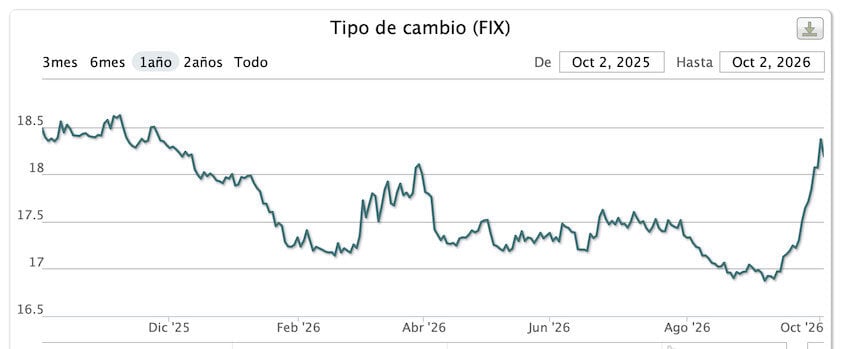
In September, Mexico's peso saw a significant 6.32% decline against the US dollar, marking its largest monthly depreciation since June 2024. This decline, driven by monetary tightening and a less attractive interest rate differential with the United States, has led to questions about whether the so-called "super peso" has run its course or is merely experiencing a setback.
The decline in the peso, which necessitated 18 pesos to buy a dollar by the end of September, prompted comparisons to a "super peso" given its strength. However, the dollar's recovery after the U.S. Federal Reserve raised its benchmark interest rate to 4% on Sept. 16 contributed to the peso's resurgence. The peso's performance was further complicated by oil price fluctuations, the potential for a wider Middle East conflict, and a loss of appeal for carry trade operations due to an increasingly narrow spread between U.S. and Mexican interest rates.
Central bank decisions, such as maintaining its rate at 6.50% on Sept. 24, further intensified the peso's decline as it reduced the differential with U.S. long-term bond yields. While some economists, like BBVA Mexico's Carlos Serrano, attribute the peso's depreciation to external factors like the U.S.-Mexico-Canada Agreement (USMCA), others argue that the peso is still relatively strong or even overvalued.
Despite the peso's depreciation, Mexican households stand to benefit from receiving dollar remittances and gain purchasing power. However, imported goods and fuel could become more expensive if the weaker peso persists. Market forecasts suggest the peso may appreciate to 17.50 pesos per US dollar by the end of 2026.
Written by urgent.news from Mexico News Daily's reporting — not their text. Machine-written — may contain errors; check the original before relying on it.