A Footpath For Mrs Biswas To Enjoy An Uninterrupted Walk
The de-pedestrianisation of India’s cities since the rise of personal automobiles in the 1980s is a constantly expanding project, and the sole metric of healthy urbanisation is now a continuous flow of vehicular traffic. In the frenetic life of Indian citizens, being able to walk easily to the local train station or bus terminus, to a park or lake, sit at a quiet roadside cafe at dusk, take…
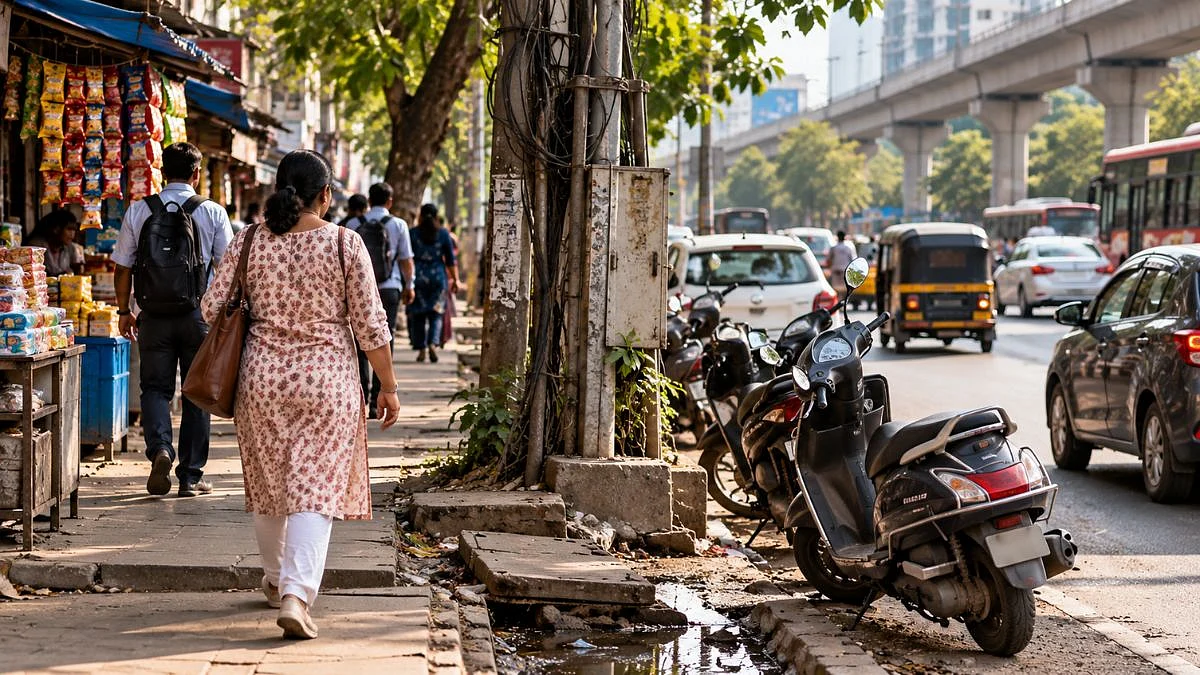
India's cities have been rapidly converting into car-centric spaces since the 1980s, with uninterrupted traffic being the primary measure of healthy urbanization. Walking, a fundamental need for citizens, has become a challenging and arduous task. The Supreme Court's recent ruling on a motor vehicle accident case has highlighted the right to walk, under Articles 19(1)(d) and 21 of the Constitution, as a fundamental citizen's right.
This has prompted some city administrations to initiate pedestrianisation programmes. However, opposition from various groups, citing the rights of hawkers and calling for a balanced approach, has arisen.
European cities offer valuable lessons in footpath design. In Paris, Boulevard Voltaire's footpaths are occupied by vendors on Sundays but return to normalcy by Monday, showcasing the balance between commerce and pedestrian movement. Berlin prioritizes walkability, with traffic lights featuring iconic Ampelmann characters and free, unlimited public transport for €63 a month.
Istanbul maintains its Byzantine-Ottoman charm while providing ample walking space, unlike Kolkata and other Indian cities that have removed tram lines.
The importance of footpaths becomes evident when one considers the hazards pedestrians face daily, such as obstructing electricity pillars, commercial encroachments, and garbage. A wider footpath, at least two meters wide, with kerb cuts for wheelchair users and enforced traffic signals, can significantly improve urban life. European cities demonstrate that wide avenues, devoid of new car space at the expense of footpaths, can foster thriving economies, safe spaces for all, and a high quality of life for citizens.
Written by urgent.news from Free Press Journal's reporting — not their text. Machine-written — may contain errors; check the original before relying on it.