(3rd LD) Consumer prices up 2.9 pct in Sept., fall to 2 pct levels
SEOUL, Oct. 2 (Yonhap) -- South Korea's consumer prices rose 2.9 percent in Sept...
According to data released by South Korea's Ministry of Data and Statistics, the country's consumer prices increased by 2.9 percent in September compared to the previous year. Energy costs remained high during this period, while prices for agricultural goods experienced a decline. Consumer price growth returned to 2 percent levels in September, following increases of 2.8 percent in July and 3.1 percent in August.
This data comes at a time when geopolitical tensions in the Middle East have led to elevated petroleum product prices, which rose by 14.8 percent on-year in September. Diesel prices surged by 20 percent, and gasoline prices increased by 11.8 percent. The government's fuel price cap is believed to have limited the overall increase in consumer prices by 0.6 percentage points.
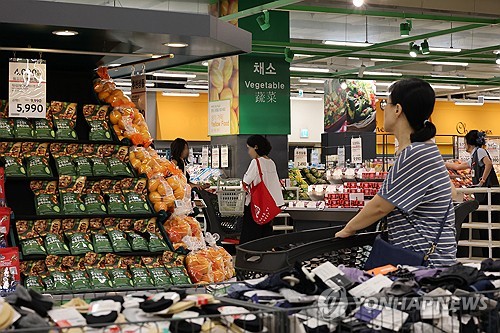
Industrial products' prices grew by 4.2 percent in September, while computer prices jumped 27.4 percent, driven by higher semiconductor costs. Smartphone prices rose by 8.3 percent following the release of new Galaxy and iPhone models. Agricultural, livestock, and fishery product prices decreased by 0.3 percent, mainly due to lower prices for napa cabbage and apples, which fell by 9.2 percent and 15.2 percent, respectively.
Prices of domestically produced beef and pumpkins rose by 6.6 percent and 46.9 percent, respectively. Lower prices for fruits, such as apples and pears, were attributed to a good harvest and increased shipments prior to the Chuseok holiday, according to Lee Doo-won, a senior statistics official. The government's discount events also contributed to the price decline.
Agricultural product prices faced upward pressure in September, following the Chuseok holiday in October of the previous year. However, prices fell for two consecutive months thanks to government discount programs and supply expansion, as reported by the finance ministry. Agricultural, livestock, and fishery product prices declined by 2.6 percent on-year in August.
Service sector prices rose by 2.7 percent, driven by higher insurance premiums and overseas package tour prices, which increased by 13.4 percent and 19.3 percent, respectively. Electricity, gas, and water prices rose by 0.4 percent over the same period. Core inflation, which excludes volatile food and energy prices, advanced by 2.8 percent on-year in September.
The Bank of Korea anticipates consumer price growth to remain around 3 percent in October, despite signs of price increases in core items. The central bank expects service prices, including airfares, and electronics prices to continue rising due to higher chip prices. With tensions in the Middle East persisting, core inflation is expected to remain on an upward trend due to cost pass-through and growing demand-side pressures. The Bank of Korea stated that they will remain vigilant and closely monitor consumer price trends.
Written by urgent.news from Yonhap News's reporting — not their text. Machine-written — may contain errors; check the original before relying on it.