You know history’s famous quotes — but do you understand them?
Marie Antoinette was done dirty. No, that’s not a reference to her beheading at the zealous whims of French revolutionaries. Decapitation by guillotine is over in an instant. Slander, on the other hand, lasts for centuries. As dissidents successfully roiled public fervor against the aristocracy in the late-18th century, they launched a libelous campaign against their well-known queen. Antoinette…
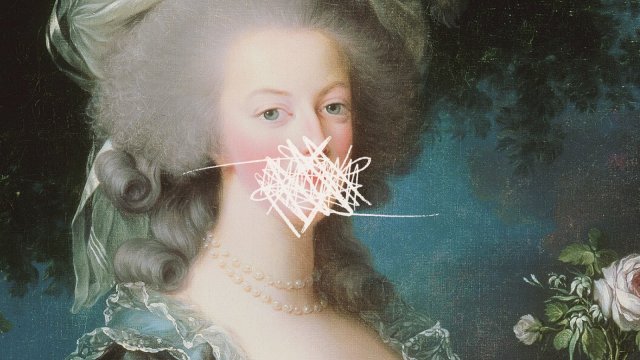
Marie Antoinette's legacy is marred by a false quote attributed to her, but the real story is far more complex. This Canadian humorist and author, Eli Burnstein, has set out to unravel the true meanings of some of history's most famous phrases. Many quotes attributed to historical figures are actually misconceptions. For example, Robert Frost never advocated for "the road less traveled," and Paul the Apostle didn't say "money is the root of all evil."
Even well-known phrases like "don't mess with Texas" have evolved over time, initially being an anti-littering slogan.
Burnstein's book, Phrased & Confused: The Curious Meanings of Timeless Quotations, offers a fascinating journey through the intricate world of famous quotations. Each phrase is presented as a unique piece of literature, inviting readers to delve deeper into their meanings and significance. The author's own research reveals that some of these phrases are baffling, comical, or even thought-provoking, adding an element of mystery to what we consider commonplace sayings.
Confusion is a recurring theme in Burnstein's work, as the beauty and allure of great art often lie in their enigmatic nature. He explains that phrases like "A rose is a rose is a rose," "If you meet the Buddha, kill the Buddha," and "Beauty is truth, truth beauty" hold deeper meanings that require careful examination. Burnstein emphasizes the importance of researching the full context of these quotes, consulting with scholars, studying authors and their other works, and exploring multiple translations.
In today's fast-paced world, the art of writing and thoughtful reflection has taken a backseat to quick, one-sided social media posts. This shift has led to misunderstandings and a decline in deep, critical thinking. Burnstein encourages readers to dedicate more time to reading and writing, a solution that resonates with the rise of AI-assisted writing. As we increasingly rely on technology to assist us in our writing, the challenge remains to maintain the quality and depth of our communication.
Written by urgent.news from Big Think's reporting — not their text. Machine-written — may contain errors; check the original before relying on it.