Venus' mysterious haze is actually cosmic dust
A physical model show that iron dust and sulfuric acid create the right properties.
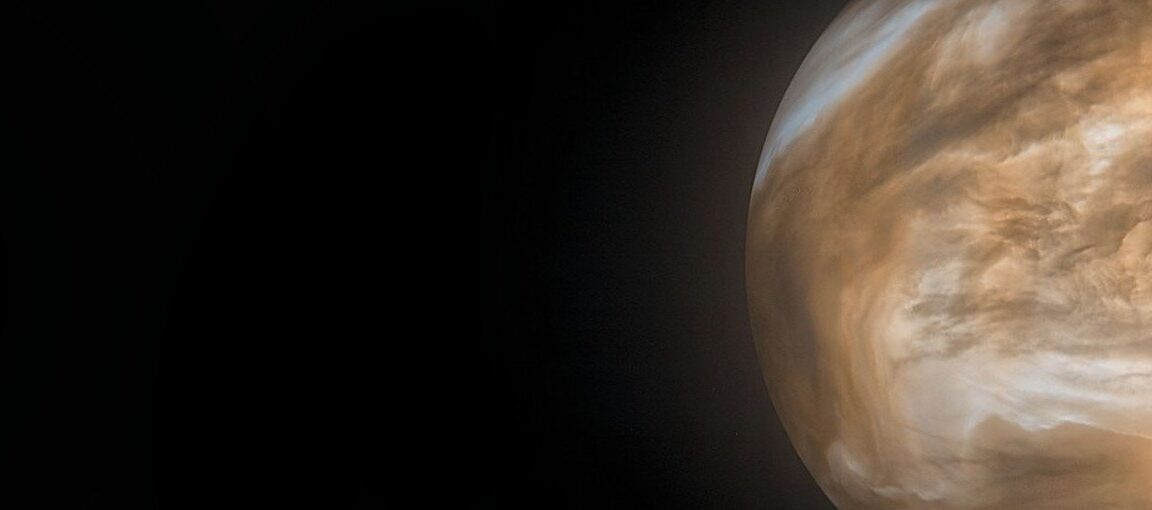
Venus's yellowish lower haze, a mystery since the 1970s, has finally been solved by planetary scientists. The haze, first observed by the Venera and Pioneer Venus probes, was thought to be unexplained for decades. However, new research reveals that the veil is actually comprised of cosmic dust particles. These particles, left behind by "shooting stars" or meteors that burn up in Venus's atmosphere, interact with sulfuric acid to form a haze.
Hiroki Karyu, a scientist from Tohoku University in Sendai City, Japan, used a microphysical model to explain the formation of this haze. According to Karyu, the continuous influx of cosmic dust is enough to maintain the haze layer, with the particle size distribution matching that seen by entry probes. These cosmic particles act as efficient condensation nuclei, facilitating cloud formation in Venus's main cloud deck, even far from their origin.
Written by urgent.news from Ars Technica's reporting — not their text. Machine-written — may contain errors; check the original before relying on it.
Also reported by 1 other outlet
- Venus' mysterious haze is actually cosmic dust arstechnica.com