Startup Founder Interview: How AI Search Is Becoming a Revenue Attribution Problem
Discover why AI visibility is becoming a revenue attribution problem and how brands can connect ChatGPT citations, AI search, and pipeline revenue.
Welcome to HackerNoon's Writing Prompts! In this interview, an AI visibility startup founder explains the changing landscape of AI search and its impact on revenue attribution.
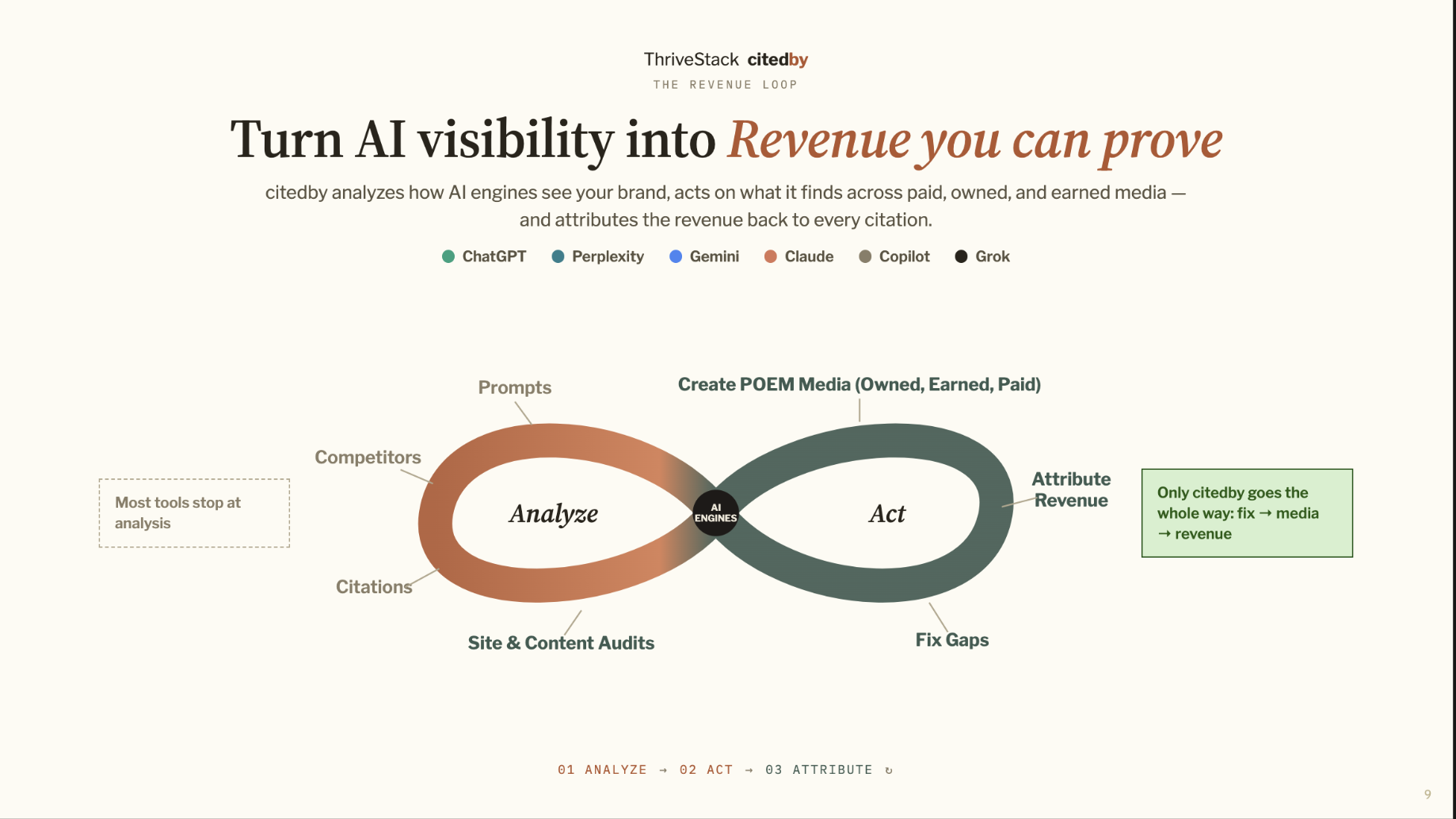
The startup, called ThriveStack, connects AI-generated citations to the revenue pipeline. As buyers now ask AI assistants full questions instead of typing keywords, traditional SEO and AEO strategies no longer suffice. AI search engines, such as ChatGPT, Perplexity, Gemini, and Copilot, provide one answer with named sources, influencing the buyer's decision quickly.
ThriveStack's unique value proposition lies in its ability to attribute AI-generated citations to closed revenue. While other tools offer visibility scores, ThriveStack works backwards from revenue data to connect AI citations with closed deals in CRM and billing systems. This differentiation allows the company to target marketing and revenue teams, augmenting their efforts in content, PR, and paid campaigns.
Success for ThriveStack is measured through three growth metrics: signups per month, activated and converted customers at the end of a trial, and product usage as a retention measure. The company also tracks the speed at which feature requests are fulfilled, aiming to keep this under one to two weeks.
In the interview, the founder highlights the excitement around the traction achieved so far. Despite starting from an existing PLG platform, ThriveStack pivoted to focus on AI visibility and revenue intelligence. In February 2026, the startup landed its first paying customers through a $1 AI Visibility audit campaign, with about 8,000 downloads and 150 returning users requesting further features.
Looking ahead, the founder expects growth to come from two motions: landing new customers and expanding existing ones. The low-price entry point of $35 per month is designed to displace existing solutions quickly, potentially leading to a hundred customers by next year. Additionally, expanding these accounts from $35 to $1,000 and beyond represents a significant revenue opportunity.
The founder also mentions agencies as a key multiplier, as one agency can bring dozens of brands, expanding faster than individual brands could.
Written by urgent.news from HackerNoon's reporting — not their text. Machine-written — may contain errors; check the original before relying on it.