South Korea hits back at Trump’s investment claims in ‘tit-for-tat move’
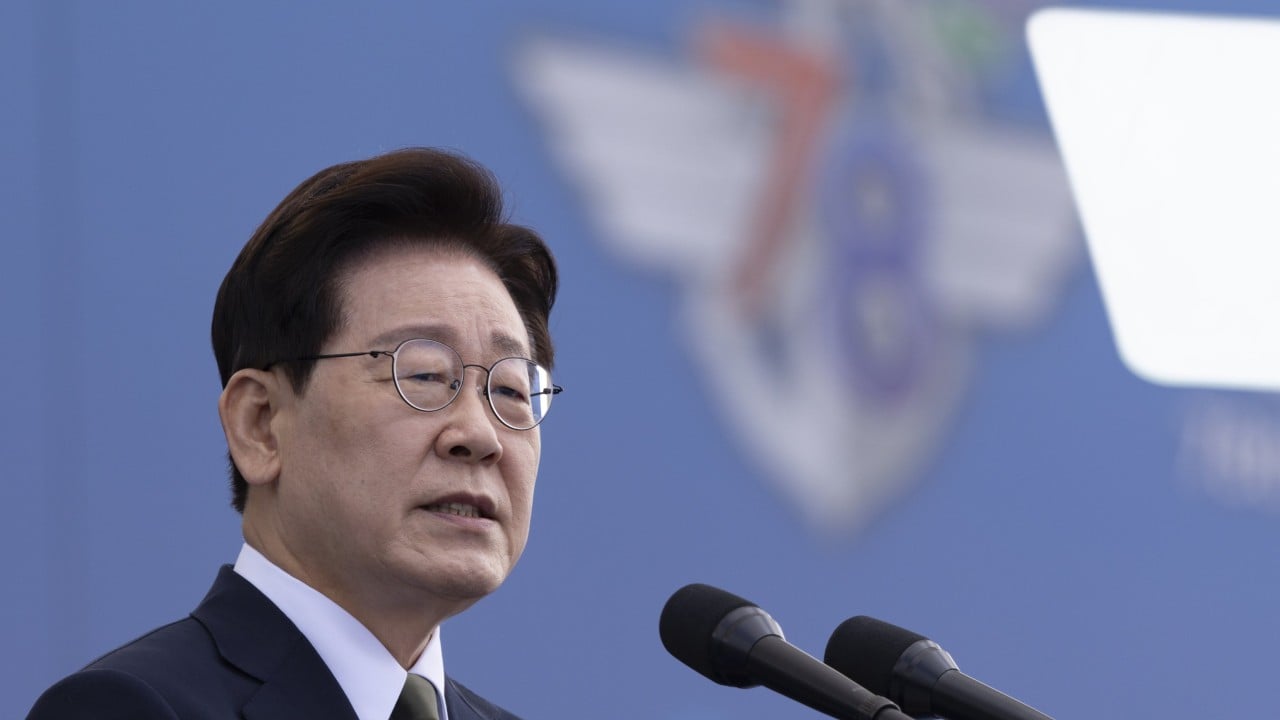
US President Donald Trump’s unilateral announcement of a “colossal” South Korean investment package has prompted Seoul to clarify that the deal is far from finalised, laying bare stark differences between the allies over the terms of their trade agreement, observers have said. On Wednesday, Trump announced that South Korea would invest in the construction of a natural gas-fired power plant in…
The US Space Force recently declared on September 14 that the United States possesses on-orbit space control weapons, capable of defending military forces against hostile actions. This marks the first time a nation has openly acknowledged deploying weapons in space. The orbits have grown crowded and contested, with numerous countries engaging in military activities, including surveillance, early missile warning, satellite communications, and navigation.
While the US is alone among nations with an independent Space Force, others such as China, Russia, Britain, France, and Japan have established dedicated space combat organizations, yet none have acknowledged deploying on-orbit weapons due to fears of global backlash against militarizing outer space.
The Outer Space Treaty of 1967 prohibits nuclear weapons in space, and any other weaponized use would likely draw international condemnation. The Pentagon refers to space weaponization using "kinetic and non-kinetic means to affect adversary capabilities," without specifying the details. Counter-space technology can be categorized into four main types: co-orbital weapons, direct-ascent weapons, directed-energy tools, and electronic/cyber tools.
A gray area exists where civilian systems could be repurposed for military use, such as a satellite extending a robotic arm to seize another spacecraft.
Global space security debates are divided into two opposing views: no weaponization versus responsible behavior. For the past two decades, China, Russia, and many Global South countries have called for a legally binding treaty to ban weaponization entirely. In contrast, the US-led Western bloc argues that militarization is inevitable and suggests establishing non-binding "responsible behaviors" instead.
While China does not oppose "responsible behaviors," recent close approaches of commercial satellites to China's space station demonstrate the potential dangers of weaponized space.
The US, Russia, China, and India have all tested anti-satellite weapons in low-Earth orbit, and these tests pose significant risks, contributing to growing concerns over the Kessler Syndrome. This phenomenon could render low-Earth orbit unusable for everyone if continuous orbital collisions occur. The US, being the largest spacefaring nation with over 10,600 active satellites, stands to lose the most in a space war.
The weaponization of space, which President Donald Trump supports through his Golden Dome project, is a fantasy due to astronomical costs and extreme technical challenges. Moreover, such a scenario could escalate into a full-scale conflict involving critical national infrastructure, potentially triggering a nuclear war.
The Cold War serves as a historical lesson, as the superpowers managed to cooperate in peaceful space exploration, exemplified by the Apollo-Soyuz Test Project. Ironically, the weaponization of space – a taboo during the Cold War – is now a reality. Three centuries after Isaac Newton admitted he couldn't calculate the madness of people, that madness has reached the stars, and marching down this self-destructive path is not just a strategic error but a doomsday scenario of our own making.
Written by urgent.news from South China Morning Post's reporting — not their text. Machine-written — may contain errors; check the original before relying on it.
This story
This is one outlet's version. Read the fullest account.