SEND-Ghana, UCC students march for mandatory food warning labels
SEND-Ghana in collaboration with the Department of Food and Nutrition of the University of Cape Coast (UCC) on Wednesday, held a public education float to advocate the introduction of mandatory Front-of-Pack Warning Labelling (FOPWL) for processed foods.
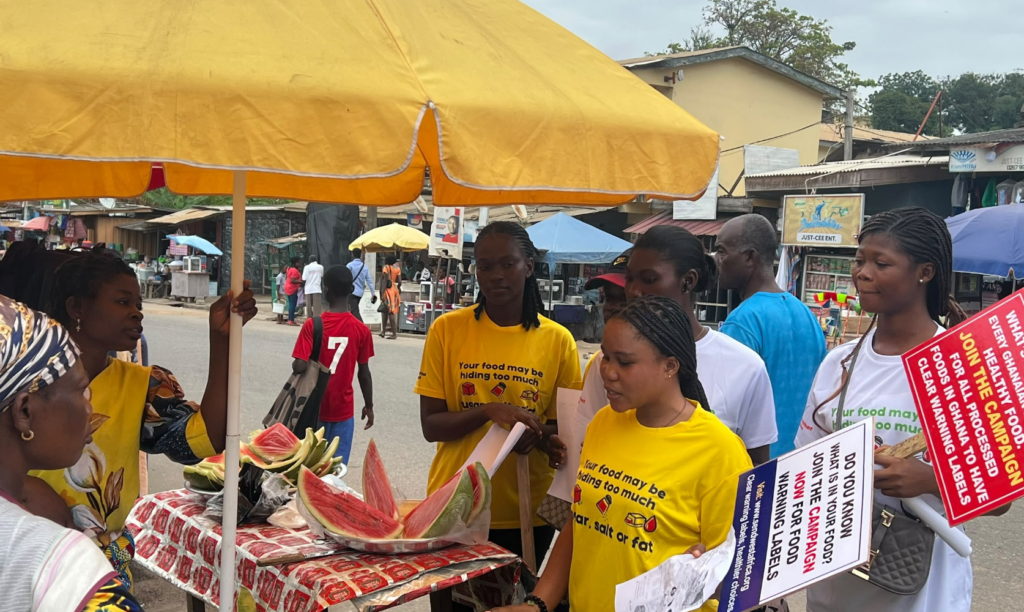
On Wednesday, SEND-Ghana, in partnership with the University of Cape Coast's Department of Food and Nutrition, organized a public education float to push for mandatory Front-of-Pack Warning Labelling (FOPWL) on processed foods in Ghana. The event, themed "Your food may be hiding too much sugar, salt or fat," aimed to highlight the health risks linked to overconsumption of sugar, salt, and unhealthy fats.
The march began at the UCC campus, traversing nearby communities such as Amamoma, Kwaprow, Abura, and Kotokuraba, while participants handed out flyers detailing FOPWL. FOPWL entails clear, easily understood nutrition alerts prominently displayed on the front of packaged foods to warn consumers of high levels of nutrients like sugar, salt, or unhealthy fats.
Unlike detailed nutrition panels, often found in small print on the back of packages, FOPWL allows consumers to swiftly and easily make informed decisions. The campaign displayed signs with messages such as "Four million Ghanaians have diabetes, we need food warning labels," "What's in your food? Every Ghanaian deserves healthy food," "Join the campaign for all processed foods in Ghana to have clear warning labels," and "Your food may be hiding too much salt, sugar or fat."
Many residents appreciated the campaign, accepting the flyers and conversing with the participants about the importance of examining nutritional content before purchasing. The initiative aimed to encourage healthier food choices, shield consumers from misleading or insufficient nutritional information, and urge the Government to introduce a mandatory and standardized warning-label policy for processed foods.
Although Ghana's existing food-labelling regulations require labeling for pre-packaged foods, FOPWL remains a significant concern in public-health advocacy. Ms. Joana Ankomaa Addey, Communication Officer of SEND-Ghana, stated that mandatory FOPWL would assist consumers, especially children and other vulnerable groups, in identifying products high in sugar, salt, and unhealthy fats.
She argued that the measure would lower the risk of diet-related non-communicable diseases (NCDs), such as diabetes, hypertension, and cardiovascular issues. Ms. Addey expressed disappointment that Ghana currently lacks an operational policy mandating simple and standardized FOPWL for products high in sugar, salt, and unhealthy fats, despite the surge in diet-related NCDs and kidney disease.
She urged the Government to expedite the creation and implementation of a mandatory FOPWL policy to assist consumers in making healthier food choices and alleviate the rising burden of NCDs on individuals, families, healthcare systems, and the nation as a whole. Mr. Samuel Mbilka Smart, President of the Ghana Association of Food and Nutrition Students at UCC, also appealed to the public to support the campaign to make nutritional information on packaged foods clearer and simpler to comprehend.
He noted that FOPWL would enable shoppers to quickly identify "high in" products at a glance, empowering them to make healthier choices without requiring in-depth nutrition knowledge. That, he added, would help curb the increasing burden of NCDs on individuals, families, the healthcare system, and the nation.
Written by urgent.news from MyJoyOnline Ghana's reporting — not their text. Machine-written — may contain errors; check the original before relying on it.