Saturn opposition, meteor showers and planetary encounters to light up October skies
JEDDAH — The month of October will see several astronomical events, including Saturn reaching opposition, close approaches between the Moon and Mars and Jupiter, and the Orionid meteor shower associated with debris from Halley’s Comet. According to Jeddah Astronomical Society President Majed Abu Zahra, Saturn will reach opposition on October 4, rising around sunset and remaining visible…
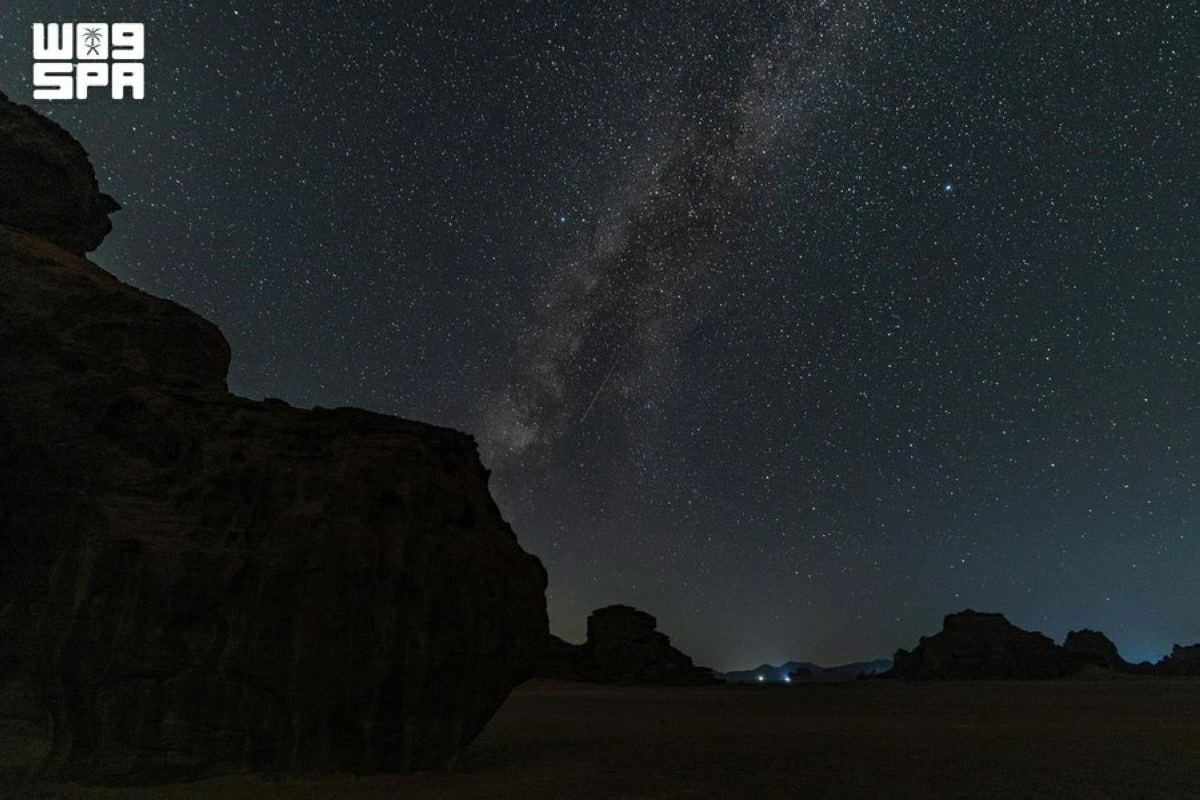
The month of October promises a spectacular display of astronomical events in the sky. Jeddah Astronomical Society President Majed Abu Zahra has highlighted several notable occurrences.
Firstly, Saturn will reach opposition on October 4. This means it will be directly opposite the Sun in the sky, rising around sunset and remaining visible throughout the night. At a distance of approximately 1.26 billion kilometers from Earth, Saturn will appear as a bright, yellowish object in the naked eye. With small telescopes, observers may also be able to see its rings and some of its moons.
The Moon will have close encounters with Mars and Jupiter in the early part of the month. On October 5, it will approach Mars, while on October 6, it will pass close to Jupiter. Depending on the observer's location, a lunar occultation of Jupiter might be visible, or a close conjunction of the two planets could be observed.
Mars will make an appearance close to the Beehive Cluster from October 11 to 13. This planetary grouping will be visible with binoculars or a small telescope. Meanwhile, Venus will become more visible low above the eastern horizon before dawn in the final days of the month.
In addition to these events, two meteor showers will grace the October skies. The Draconid meteor shower will be active from October 6 to 10, with a peak predicted on the night of October 8-9, when observers could see up to five meteors per hour. The Orionid meteor shower, associated with debris from Halley’s Comet, will peak on October 21-22. Theoretically, up to 20 meteors per hour could be spotted, though moonlight during this period may make fainter meteors harder to see.
The Southern Taurids will continue their activity throughout October. Other celestial sights include the Pegasus constellation and its distinctive Great Square, the Andromeda Galaxy, and the Pleiades star cluster, commonly known as the Seven Sisters. The Moon will reach its full phase on October 26, known traditionally as the Hunter’s Moon. This full moon name, however, does not correspond to any specific astronomical phenomenon.
Written by urgent.news from Saudi Gazette's reporting — not their text. Machine-written — may contain errors; check the original before relying on it.