Russland: So will Putin den Ukraine-Krieg im kommenden Jahr finanzieren
Die Kosten für den Krieg gegen die Ukraine steigen weiter, wie der neue russische Haushalt zeigt. Jetzt will Präsident Wladimir Putin die Steuern erhöhen.
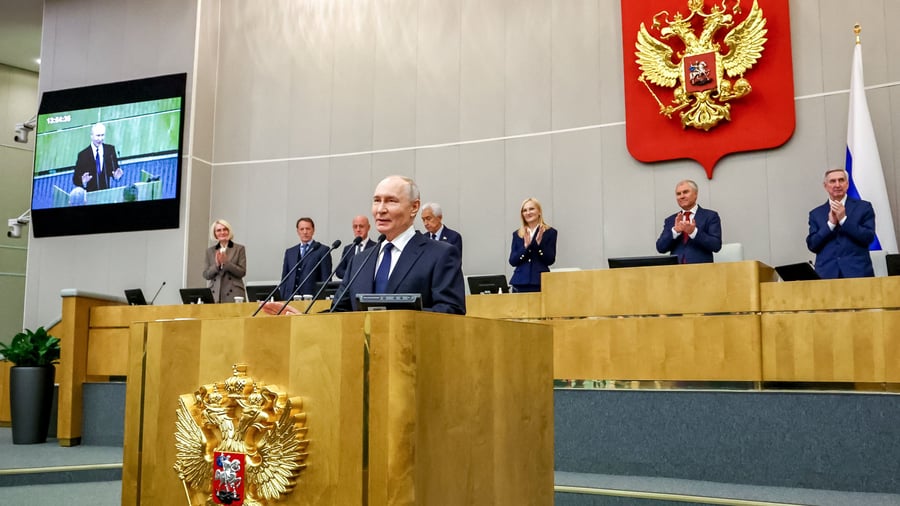
Russian President Vladimir Putin plans to increase the military budget for the upcoming year, according to the government's draft 2027 budget presented to parliament on Wednesday evening. The draft projects total state spending of 48.8 trillion rubles (518 billion euros), with 17.1 trillion rubles (35% of the budget) allocated to defense.
Russia is expected to spend 16 trillion rubles (16% of the budget) on the war against Ukraine this year. While this is not a "massive increase," economist Vasily Astrov of the Vienna Institute for International Economic Comparisons (WIIW) notes that the defense budget is only one part of the overall military expenditure. Total military-related spending in the upcoming year is projected to consume 7.5 to 8% of Russia's economic output, comparable to the level seen in 2025.
The Russian deficit is expected to decline, with the government aiming to reduce the budget deficit from an estimated 3.2% this year to 2.2% next year through higher taxes. Astrov points out that the central message of the budget draft is consolidation, with the deficit to be reduced while various taxes are increased, including capital gains taxes up to 22%, a profit tax for the metals and mining sector, a new tariff on small packages, and a higher value-added tax on international online purchases.
These tax increases amount to 0.6% of economic output, primarily affecting businesses and higher earners rather than the general population. The protests are not expected to be significant, Astrov notes, as resentment is directed more towards Ukrainian drone strikes on Russian targets and the resulting fuel shortages caused by bombardments of oil refineries and warehouses.
Optimistic assumptions about Russia's economy have been wrong every year since the 2022 Russian invasion of Ukraine, as each conflict has proven more costly than expected. This year, the Finance Ministry predicts only 1.4% economic growth, a hopeful projection, but with significant downside risks depending on the war's outcome. The OECD expects just 0.6% growth.
The economic crisis and Western sanctions have driven up financing costs for the Kremlin, with Russian interest rates on 10-year bonds now at 16%. While Russia's debt-to-GDP ratio is low at 19%, domestic borrowing is costly due to sanctions, which limit access to international lenders. The state currently spends 8% of its budget on debt service.
The consolidation pressure is therefore high, as Russia already allocates 8% of its budget to debt repayment. The government is also trying to persuade the central bank to further reduce the key interest rate from the current 14% to encourage borrowing. Central bank officials, however, have resisted cuts, citing concerns about inflation control.
The decline in foreign capital is another factor contributing to high financing costs. In recent months, there have been "massive capital outflows" despite tightened capital controls, reflected in the weakening ruble and deteriorating foreign exchange reserves. This trend indicates growing pessimism in Russian society, Astrov says.
"There is little optimism. People fear further escalation of the war." Ukrainian attacks and rumors of conscription have fueled the negative sentiment. Consequently, Russians are sending money abroad and selling state bonds.
Written by urgent.news from Handelsblatt's reporting — not their text. Machine-written — may contain errors; check the original before relying on it.