ROVING REPORTERS: From stars to soil — ecologist Yadvinder Malhi brings physics to the living world
Science explorer Yadvinder Malhi set out to understand the universe through the fundamental laws of physics. His journey instead led him into the complexity of the living world, where forests, animals, people and places are bound together in ways that continue to surprise him. He’ll present his research at the Oppenheimer Research Conference in Midrand, which runs from 7 to 9 October.
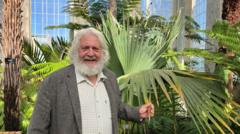
Yadvinder Malhi, a renowned ecologist, began his journey by seeking to understand the universe through the fundamental laws of physics. However, his interests soon turned towards the complexities of the living world. Malhi's passion for the natural world was sparked during his childhood in rural Punjab, where he witnessed the vibrant chaos of the fields and the abundance of wildlife. This early immersion in nature laid the foundation for his future work in ecosystem science.
While studying physics at Cambridge University, Malhi's perspective began to shift. He found the practice of astronomy, involving long periods in front of early computers, less fulfilling than his aspirations. Instead, he turned to geology during his university field trips, discovering a newfound enjoyment in fieldwork and measurement-taking in challenging environments.
As climate change emerged as a significant issue, Malhi saw an opportunity to apply his physics training. He pursued a PhD in meteorology at Reading University, which led to his first experience of Africa in Niger. There, he learned about water flow through crops and natural vegetation, gaining valuable fieldwork experience.
In 1995, Malhi arrived in Brazil as a postdoctoral researcher to study the Amazon rainforest. Initially, he had no formal training in ecology, but climbing a tower within the forest allowed him to witness the vastness and diversity of the ecosystem. This experience ignited his desire to better understand the complex dynamics of the rainforest.
Malhi spent months in the field, installing experimental sensors to measure carbon dioxide and water flows between the rainforest and the atmosphere. Although his equipment faced delays in customs, his resourcefulness led him to adapt by learning Portuguese and immersing himself in tropical ecology through reading. His self-taught education in ecology proved invaluable, setting the stage for his groundbreaking research on the role of tropical forests as potential carbon sinks.
Written by urgent.news from Daily Maverick's reporting — not their text. Machine-written — may contain errors; check the original before relying on it.