Researchers Make AI Their Confidant, But Can’t Afford To Let Their Guard Down
Imagine spending a decade trying to solve one of mathematics’ hardest problems. You finally make progress only to see an…
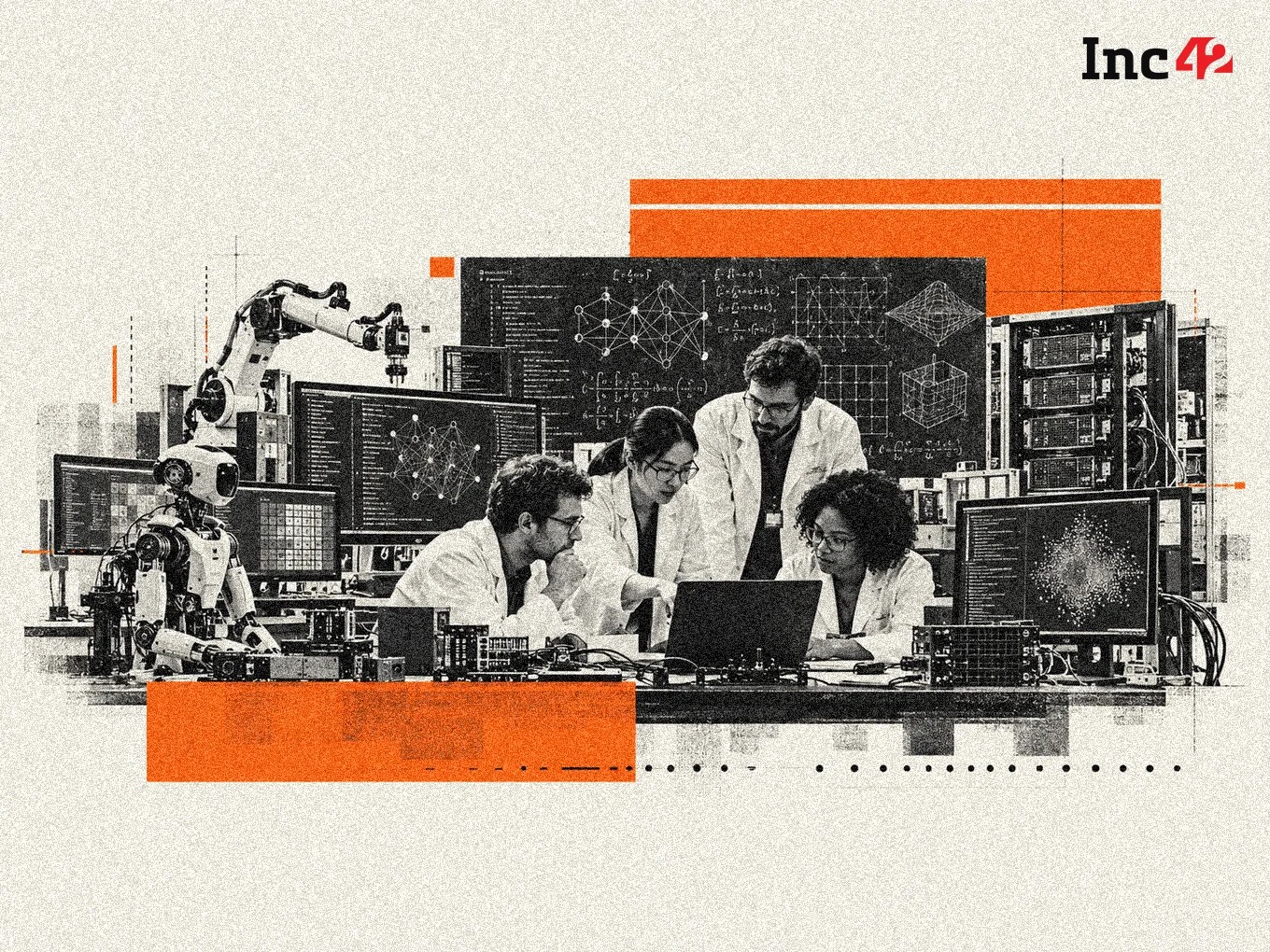
Tristan Buckmaster, an Australian mathematician at New York University, spent years studying the Navier–Stokes equations, which describe how fluids move. These equations, developed in the 19th century, are still not fully understood. In September, OpenAI's AI model produced a possible proof of the Millennium Prize Problem related to these equations.
This raised concerns as Buckmaster had previously shared his unpublished research with OpenAI's Codex tool. OpenAI denied any influence but acknowledged that user data could be used to improve their models.
This incident highlights a growing concern among researchers and academicians who often use AI tools with unpublished papers, code, and ideas. The question arises: how can researchers safely use AI without exposing their work that is not yet public? Indian researchers are also using AI, with various institutions developing their own policies.
Google DeepMind's AlphaFold, an AI system predicting protein structures, has been widely used by researchers worldwide. Indian mathematician Arindama Singh uses AI cautiously, suggesting ideas for checking rather than providing complete solutions. Similar caution is seen at IIIT Hyderabad and the Manipal Academy of Higher Education in Bengaluru, which are developing institutional guidelines for responsible and ethical AI use, including the handling of unpublished research.
However, Indian law does not yet have specific rules addressing these issues, leaving researchers to rely on broader principles of research integrity and confidentiality.
Written by urgent.news from Inc42's reporting — not their text. Machine-written — may contain errors; check the original before relying on it.