Rede bei Friedenspreis: Merz: Wenn Deutschland wankt, dann wankt die Ukraine
Deutschland ist der wichtigste Unterstützer der Ukraine. Die Akzeptanz der Milliardenhilfen nimmt aber ab. Der Kanzler setzt dazu in einer Grundsatzrede ein Zeichen. Es geht darin auch um die AfD.
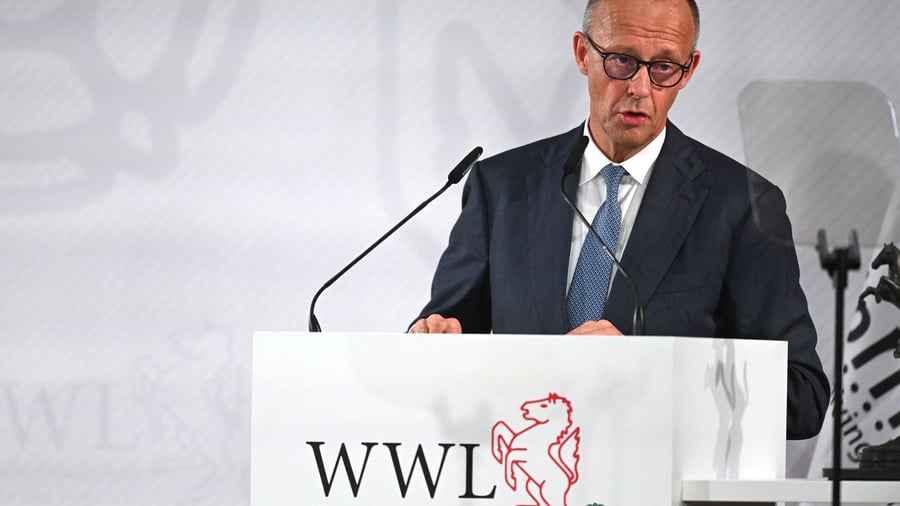
Bundeskanzler Friedrich Merz urged caution against diminishing support for Ukraine's defense against Russia during his address at the Westphalian Peace Prize ceremony in Münster. He warned that if Germany wavered, so too would Europe, and if Ukraine fell, Russia's military might would eventually turn on both Germany and NATO. Merz emphasized that without German assistance, the conflict could devolve into a "forced peace," potentially triggering mass migration to the West and destabilizing the Ukrainian state.
He criticized the Alternative for Germany (AfD) and their Russian backers for opposing the substantial financial and military aid Germany provides to Ukraine. Merz sternly rejected their "slogans of the AfD and their Russian masters," noting that the AfD's electoral success in the September state elections had alarmed observers.
While he assured Ukrainians that Germany would not allow internal division, he acknowledged the growing challenge of polarized public opinion. Merz cautioned that critics of Ukraine aid were misguided, stating that assistance was necessary to protect the freedom and security of Germans. Wüst's brief meeting with Russian Foreign Minister Sergei Lavrov in New York only reinforced Merz's conviction that Germany would continue to resist any attempts to isolate Ukraine diplomatically.
Lavrov's approach was deemed ineffective, as Russia only responds to "the language of strength." Merz vowed to respond swiftly and firmly to any further hybrid attacks, drawing a connection to Leipzig's 2023 drone attack on the airport. He reiterated that Germany stands ready to confront "even severe" hybrid threats. Merz briefly touched upon Foreign Minister Johann Wadephul's recent phone call with Russian Foreign Minister Sergei Lavrov in New York, dismissing it as a futile diplomatic effort.
Russia only responds to "the language of strength," and Merz argued that only such an approach could bring Moscow to the negotiating table. Einheit und Stärke (Unity and Strength) remain essential conditions for negotiating with Moscow, Merz asserted.
Written by urgent.news from Handelsblatt's reporting — not their text. Machine-written — may contain errors; check the original before relying on it.