Protecting reality is Malaysian communicators new job
LETTERS: A rather extraordinary image came across my WhatsApp recently. It purported to show an SUV involved in what looked like an almost unbelievable accident on the PLUS highway — the vehicle apparently lodged against an overhead highway sign.
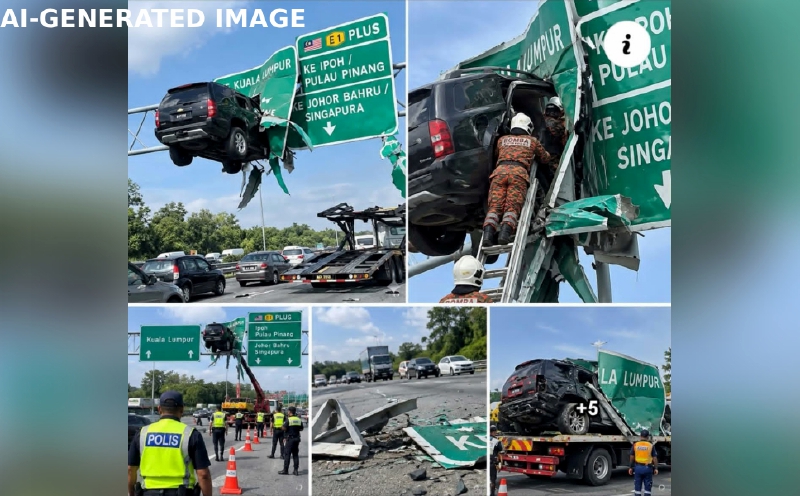
An extraordinary WhatsApp image purporting to show an SUV stuck against a highway sign caught the attention of many Malaysians. However, upon closer inspection, there was no credible Malaysian media or official report to support the image. The incident was eerily similar to a similar scenario that had circulated in India earlier in the year, which was later traced to AI-generated content.
This highlights the need for Malaysian PR and communications practitioners to pay attention to the evolving landscape of fake news and AI-generated content. With the advent of AI, it is now possible to create entire fabricated scenarios, such as accidents, speeches, or documents, that appear authentic. Malaysia, being a country where WhatsApp is deeply embedded in information sharing, is particularly vulnerable to the spread of such false information.
The "Stupid Majority Strategy" suggests that people are more likely to accept information that aligns with their existing beliefs, making it crucial to verify information before accepting or sharing it. Fact-checking and verification should now be considered a professional discipline within Malaysian communications. Before reacting or forwarding any information, it is essential to verify its authenticity to prevent reputational damage, operational risks, and potential human behavior changes.
Malaysia is already taking steps to address the issue, with the government developing AI governance standards and frameworks around digital trust. However, regulation alone is not sufficient; a collaborative ecosystem involving PR practitioners, journalists, corporate affairs teams, public affairs specialists, regulators, technology professionals, risk managers, and boards is needed to establish common verification habits.
In a world where AI-generated content can quickly migrate from social media chatter to operational, regulatory, and financial issues, it is crucial for communicators to move beyond mere public relations and help govern reputation risk, understand AI, misinformation, and cyber risk. Asking for a source before forwarding any unbelievable information on WhatsApp may prove to be one of the most valuable questions a communicator can ask in the age of AI.
Written by urgent.news from New Straits Times's reporting — not their text. Machine-written — may contain errors; check the original before relying on it.