Penal colony in St. Petersburg confiscates books by foreign authors to burn them in a furnace
On Sept. 29, the administration of Penal Colony No. 6 in St. Petersburg's Obukhovo district confiscated books by foreign authors from inmates, the city outlet Fontanka reports . According to the outlet’s source, foreign literature was extracted both from the prison library and from among the inmates' belongings, to later be destroyed in a furnace. The source said only the Bible and Russian…
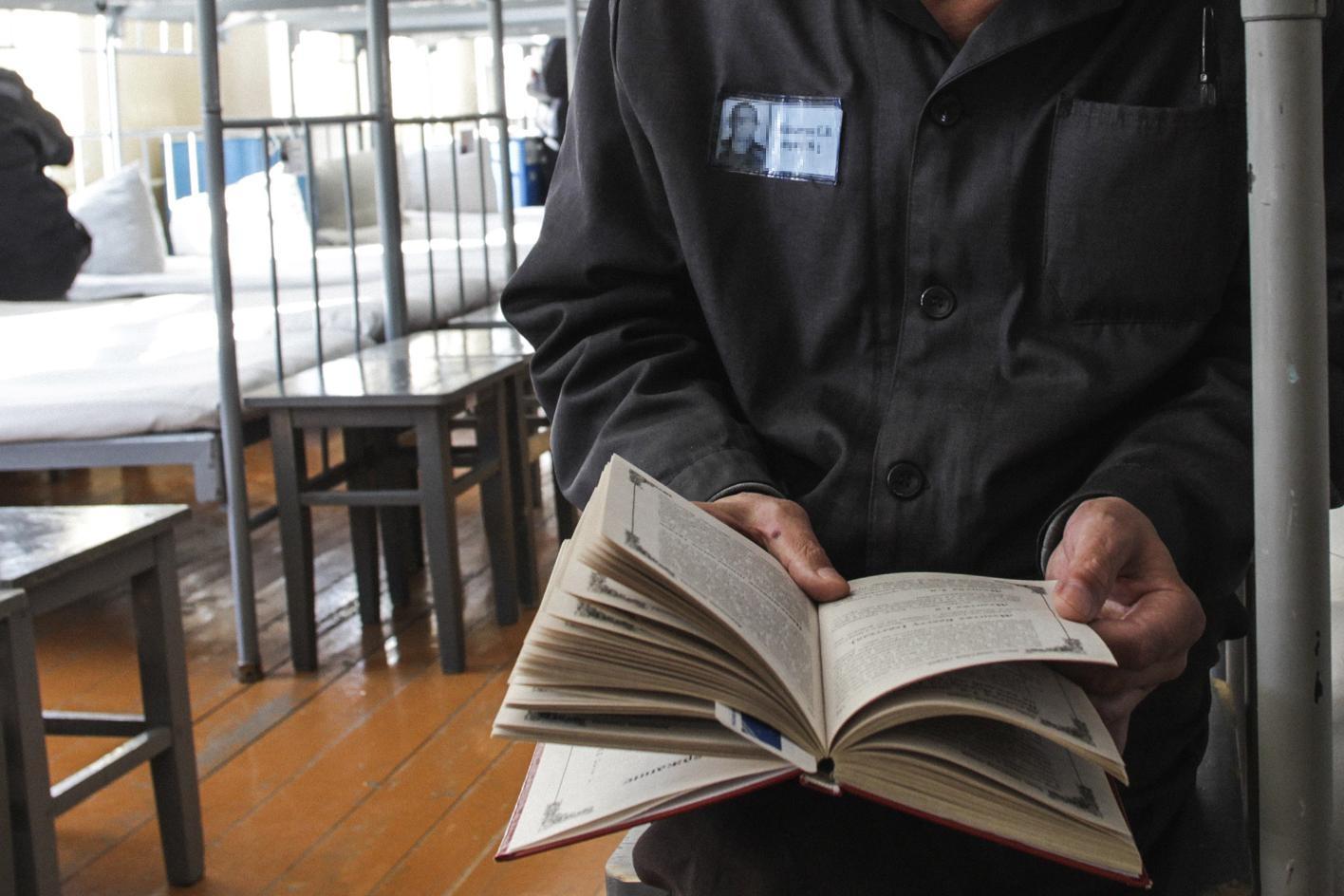
On September 29, the administration of Penal Colony No. 6, situated in St. Petersburg's Obukhovo district, seized books penned by foreign authors from inmates, as reported by the local news outlet Fontanka. According to the outlet's source, these foreign works were extracted from both the prison library and inmates' personal belongings, with the intention of incinerating them in a furnace.
The source specified that only the Bible and Russian classics would be permitted to remain in the collection. When queried by Fontanka, the St. Petersburg and Leningrad Region branch of Russia's Federal Penitentiary Service (FSIN) affirmed that penal colonies perform a routine monthly inventory of library holdings and inmates' books, citing compliance with Russian law and the Federal List of Extremist Materials produced by the Justice Ministry.
Inspectors, the press service explained, also scrutinize publications advocating a "cult of violence" or "criminal subculture," as well as texts detailing the creation of prohibited items or substances. Personal books not listed as extremist materials but failing the inspection are not incinerated; instead, they are returned to relatives or stored with the inmate's belongings until their release.
The FSIN maintains that only outdated library books and publications from the federal extremist list are destroyed. Russian classics and foreign-authored works, according to the agency, continue to be part of the collection and are issued to inmates according to established guidelines. Earlier this month, the business newspaper Kommersant revealed that Russia's Ministry of Digital Development was seeking to preserve books by "foreign agents" and "undesirable organizations" published prior to their designation as such within libraries and bookstores.
Assuming the laws were applied strictly, municipal libraries could potentially lose up to 50-70% of their collections, while academic libraries might face a loss of 10-15%.
Written by urgent.news from The Insider's reporting — not their text. Machine-written — may contain errors; check the original before relying on it.