NASA SmallSats Launch to Advance Science, Technology, Orbital Operations
Three NASA-supported small spacecraft launched at 11:32 a.m. PDT Thursday to demonstrate new propulsion technologies, study how galactic dust and high-energy radiation move through galaxies, and advance capabilities for inspecting inactive satellites. The missions launched aboard a SpaceX Falcon 9 rocket from Space Launch Complex 4 East at Vandenberg Space Force Base in California as […] The post…
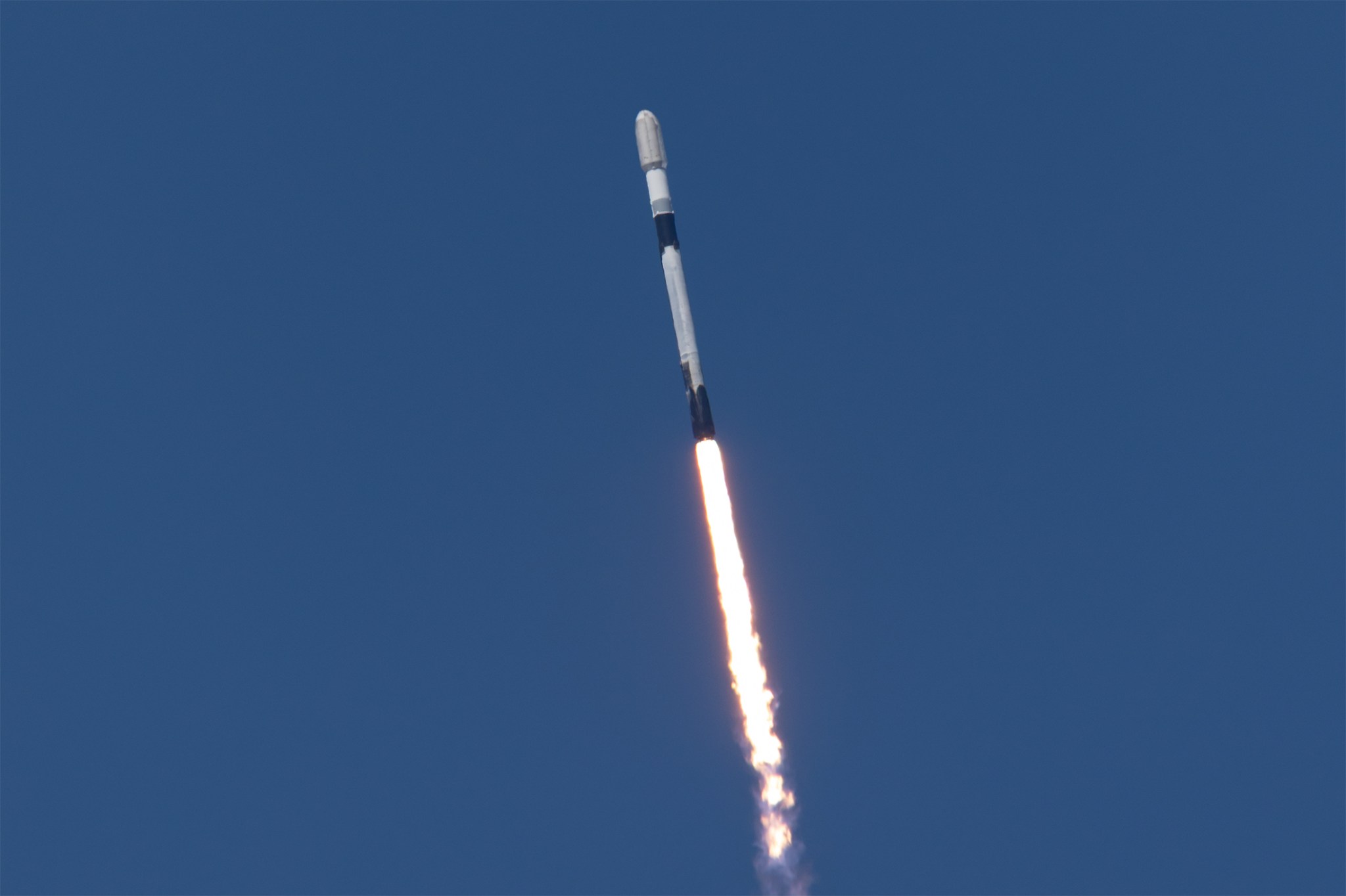
On October 1, 2026, a SpaceX Falcon 9 rocket lifted off from Space Launch Complex 4 East at Vandenberg Space Force Base in California, carrying the 18th Transporter rideshare mission. Among the payloads were three NASA-supported small spacecraft.
The first mission, ASCENT Propulsion Dual Mode CubeSat, demonstrated two types of propulsion. Its single chemical thruster showcased maneuvers needing higher power, while four electrospray thrusters executed lower-power operations. Both systems utilized Advanced Spacecraft Energetic Non-Toxic (ASCENT) propellant, a safer and more efficient alternative to conventional propellants like hydrazine.
The second spacecraft, Supernova Remnants and Proxies for ReIonization Testbed Experiment (SPRITE), investigated how galaxies evolved. This CubeSat detected ultraviolet light, which typically can't be observed from Earth. SPRITE studied star-forming regions and the remnants of exploded stars to understand how radiation reshaped the early universe, clearing the path for light to traverse space.
Lastly, the Small Spacecraft Propulsion and Inspection Capability (SSPICY) mission showcased technology for future in-space satellite inspection and servicing. Starfish Space's Otter 24C spacecraft inspected up to four inactive U.S.-origin satellites, using innovative propulsion, autonomous guidance, navigation, and control, and computer-vision-based navigation software. SSPICY operated for approximately two years, with inspections commencing in 2027.
Both SSPICY and ASCENT Propulsion Dual Mode missions were managed by NASA's Small Spacecraft and Distributed Systems (SSDS) within its Research and Technology Mission Directorate at NASA Headquarters in Washington.
Written by urgent.news from NASA Science's reporting — not their text. Machine-written — may contain errors; check the original before relying on it.