Mobilitätskosten: Tankrabatt: An der Zapfsäule purzeln die Preise
Schon in der Nacht geht es deutlich nach unten. Bis zum Vormittag kommt der Steuernachlass wohl weitgehend bei den Verbrauchern an. Die nutzen die Gelegenheit und tanken rege.
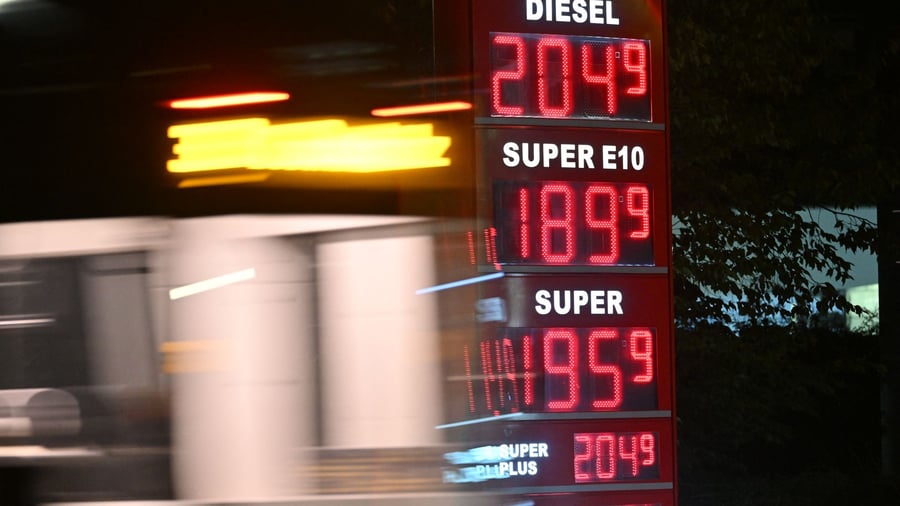
Tankrabatt has led to rapidly falling prices and busy petrol stations at filling stations. Prices dropped suddenly by midnight and continued to decline until early morning, often just a few cents above the 16.7 cent tax rebate. This attracted many drivers to the pumps, with stations frequently busy just before the usual price jump at noon.
At exceptionally low prices, lines even formed around midnight. By midnight, federal average prices had already dropped by 11 to 12 cents, according to data from the "Tankerkönig" fuel price portal. In the following day, the price was slightly clearer under the previous day's values at the same time. By 11:45, the price for E10 was 2.052 euros per liter, and for diesel, it was 2.197 euros.
Lower-priced E10 was offered in many places, but regional differences existed: in Munich, Stuttgart, and Leipzig, there were many offers, while in Berlin, there were numerous, and in Hamburg and Cologne, very few or hardly any offers. However, diesel prices remained clearly over two euros. Typically, prices are lowest in the morning and early afternoon since the 12 o'clock rule was introduced.
They then rise sharply at noon, often by more than 20 cents per liter. Even on Thursday, the price jump was minimal, preventing many offers under 2 euros per liter. But even after noon, the fuel price was much lower than at the same time on Wednesday. "On average, consumers pay 14 to 15 cents less per liter at 12:15 depending on the fuel type," the ADAC reported.
Despite a slight decrease in oil prices, "the reduction of the energy tax is largely passed on to consumers," the ADAC said. Despite a slightly falling oil price, the development still shows that the reduction of the energy tax is at least largely passed on to consumers. The Verkehrsclub called on oil companies to promptly pass on the full energy tax cut.
Since midnight, a tax rebate of 16.7 cents per liter applies to gasoline and diesel leaving storage tanks and refineries. How completely this is passed on to consumers in the coming days remains to be seen. There is no direct obligation for filling stations to lower prices, and calculations are complex. However, the Verkehrsclub warned that price reductions should not be recouped through later increases.
Prices had already dropped on Tuesday and Wednesday. On Wednesday, E10 in the federal average cost 2.242 euros - 3.4 cents less than on Monday, diesel cost 2.390 euros and was 3.5 cents cheaper than on Monday. Even with the previous tax rebate, there was controversy about how fully it was passed on. However, there was a significant decrease already in the night.
Researchers from the Ifo Institute have already announced that they want to analyze the passage - as they did with the first tax rebate. September was by far the most expensive fuel month ever. The federal government introduced the tax rebate as a response to the currently extremely high fuel prices. September was the most expensive fuel month ever.
The rebate is controversial. Tomaso Duso, head of the Monopolkommission, criticized that nothing was learned from the previous tax rebate. "Even then, not the full tax cut reached the pumps. Despite this, the federal government and the states are still spending around 2.5 billion euros in taxes without the money reaching those who need it most," Duso said.
"Those who fill up a lot and drive a large car get the most." Instead of experimenting at the pumps, the federal government should prepare direct payments to low-income households and small businesses. Even Ifo Institute head in Munich, Clemens Fuest, said on request that the tax rebate was not the right answer. Among the profiting drivers with large cars, many can afford the high prices, and it is not justified to shift costs to others.
Fuel companies contradict the claim that the rebate is not fully passed on. They argue that there is currently no better way to relieve drivers. Supporters of the rebate point out that there is currently no better way to relieve drivers.
Written by urgent.news from Handelsblatt's reporting — not their text. Machine-written — may contain errors; check the original before relying on it.