Indian stock market slump: buying opportunity or falling knife?
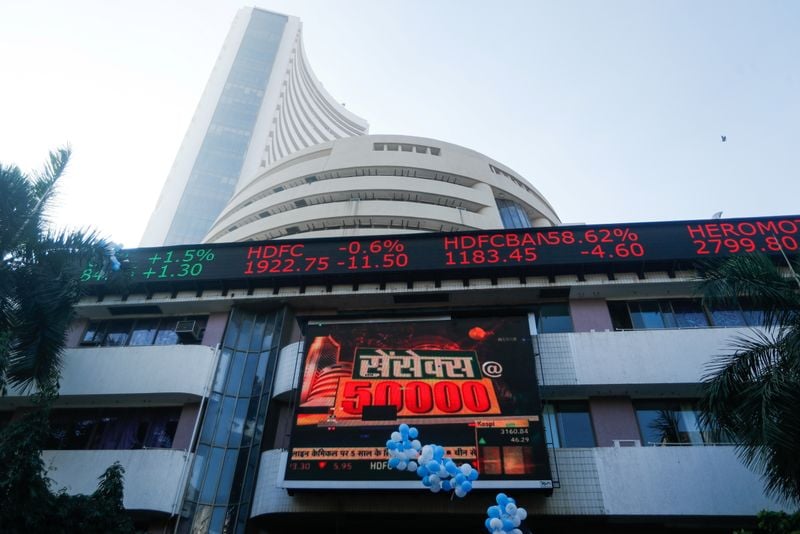
India's benchmark Nifty 50 index has plunged nearly 14% in 2026, with local stocks suffering due to consistent foreign outflows and a dearth of a clear artificial intelligence catalyst, prompting investors to seek opportunities elsewhere. The surge in oil prices has also contributed to the market's woes, as India imports approximately 80% of its annual oil consumption, leading markets to wonder whether this downturn presents a buying opportunity or a falling knife.
As of October 1, the Nifty 50 stands at 22,564.35 (-0.25%), marking a year-to-date decline of 13.75% and a one-year drop of 9.11%. The BSE Sensex (BSESN) follows closely, with a value of 72,387.68 (-0.13%), a year-to-date decrease of 15.05%, and a 52-week range of 22,182.55–26,373.20. The Nifty index remains just 1.7% above its 52-week low, and it has shed another 6% over the past month, indicating that the decline has gained momentum rather than easing.
While brokers issued upbeat calls in July, when oil prices were falling and the rupee was stable, the market has since reached new lows. Goldman Sachs has cautioned that earnings downgrades may not have bottomed out yet. For a genuine investment opportunity, three criteria are typically met: the market should not be a falling knife, as local buying would support prices; it should not be a bargain, due to the premium still present; and a real opportunity should have a trigger awaiting.
Analysts suggest that spreading investments over time may be more advantageous than attempting to catch the exact bottom. Goldman Sachs believes that large-cap banks are likely to benefit if foreign investment returns to India.
Written by urgent.news from Investing.com's reporting — not their text. Machine-written — may contain errors; check the original before relying on it.