How a Ghanaian technology is helping fish farmers detect hidden threats before fish die
Ghana is looking to aquaculture to help close its fish-supply gap. But producing more fish comes with another challenge — keeping them alive. For fish farmers, some of the most dangerous threats begin where the human eye cannot reach. A pond may appear calm and healthy while dissolved oxygen levels are falling, ammonia is rising or the pH is changing.
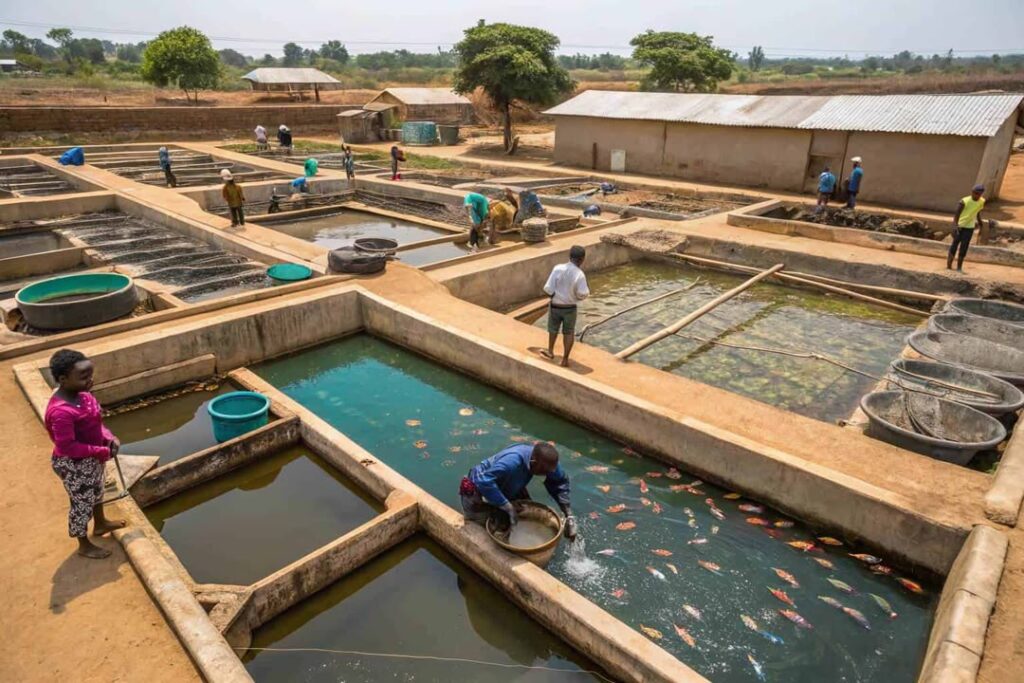
Ghana is embracing aquaculture to address its fish supply gap, but maintaining fish health presents its own set of challenges. Many threats to fish health can occur undetected by human observation. A pond might seem healthy, yet dissolved oxygen levels may drop, ammonia rise, or pH levels change. Fish may begin to struggle at the surface only after significant losses have already occurred.
One fish farmer reported difficulty in recognizing when something was wrong with the water, stating that certain parameters couldn't be detected by sight. The warning often arrived too late, after fish had already started dying. This prompted the farmer to seek assistance from AquaMet, a locally developed water-quality monitoring system.
AquaMet's technology allows farmers to receive real-time data about conditions beneath the surface, effectively converting invisible threats into actionable information. The system comprises sensors placed within ponds, cages, or tanks that monitor critical parameters such as dissolved oxygen, ammonia, temperature, and pH. These data points are transmitted remotely to a mobile platform, enabling farmers to monitor water quality without being physically present.
The ultimate goal is to shift farmers from a reactive stance to a proactive one in managing water quality. AquaMet's water-quality monitoring system provides farmers with a continuous, detailed picture of water conditions, a task that can be challenging to accomplish through visual inspection alone. The system works by recording data and transmitting it to a digital platform or mobile app, allowing farmers to observe changes from any location.
By identifying potentially hazardous shifts before they become visible through fish behavior or mortality, AquaMet aims to help farmers safeguard their stock and minimize avoidable losses. Currently, AquaMet collaborates with over 750 farmers and has established partnerships across the aquaculture sector. To scale this local innovation, the company emphasizes the need for investment and institutional support from both government and private-sector stakeholders.
The Ghanaian government's Ministry of Fisheries and Aquaculture Development is actively partnering with innovators like AquaMet to promote climate-smart solutions. Additionally, AquaMet is exploring further collaborations with government and non-government bodies to expand the reach of its technology. For Ghana's aquaculture sector, research, innovation, and technology adoption are key areas identified for growth.
However, farmers face immediate challenges, as they often cannot wait for water conditions to deteriorate visibly before taking corrective action. Beneath the surface, the earliest indicator of trouble may not be murky water or weakened fish but rather hundreds of dead fish. AquaMet believes that leveraging data can empower farmers to detect these invisible changes earlier, potentially protecting their fish, investments, and livelihoods.
Written by urgent.news from Joy Business's reporting — not their text. Machine-written — may contain errors; check the original before relying on it.
This story
This is one outlet's version. Read the fullest account.