Greer says no specific timeline set for enforcing US-China Board of Trade
United States Trade Representative Jamieson Greer said on Thursday that there is no timeline yet for implementing the US-China Board of Trade, one of the key economic outcomes of Chinese President Xi Jinping’s state visit to Washington last week. Speaking on the sidelines of the Group of 20 Trade Ministers’ meeting in Milwaukee, Wisconsin, Greer said the tariff reductions under the mechanism were…
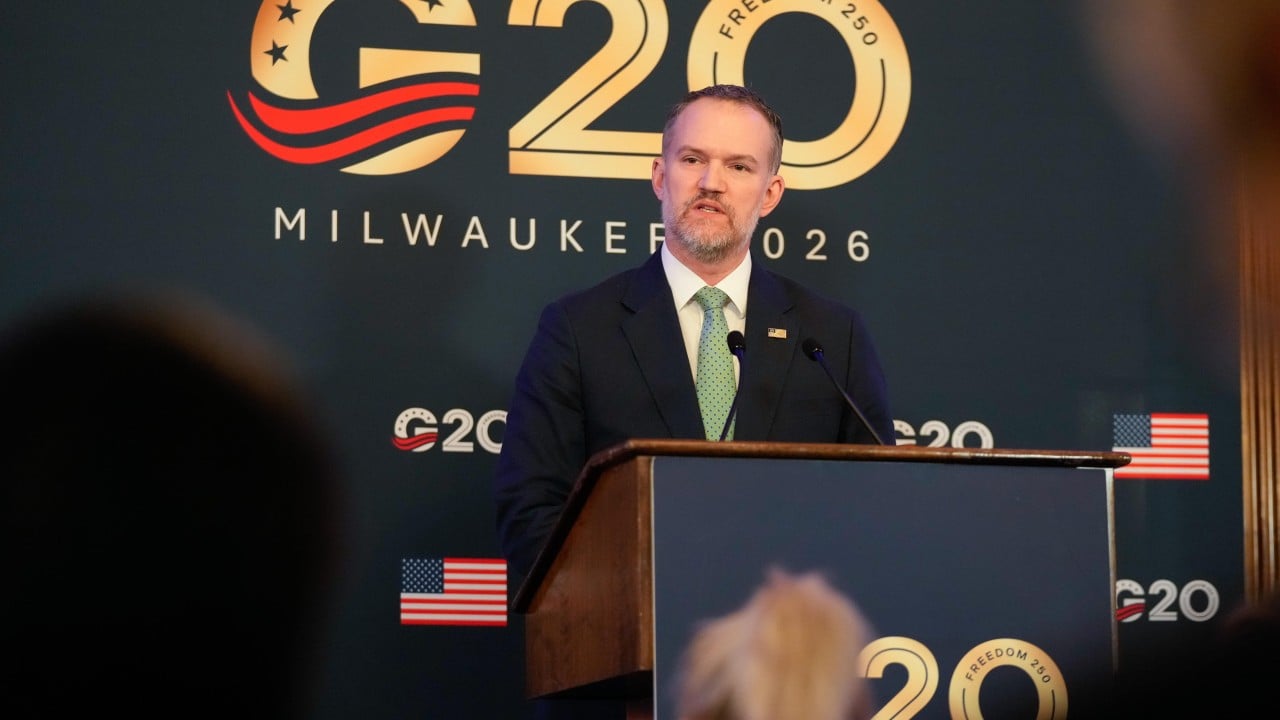
U.S. Trade Representative Jamieson Greer stated on Thursday that there is currently no set timeline for implementing the US-China Board of Trade mechanism, a key economic outcome from Chinese President Xi Jinping's visit to Washington. Speaking at the Group of 20 Trade Ministers' meeting in Milwaukee, Wisconsin, Greer explained that the tariff reductions under the mechanism are a policy decision that must go through a legal process before implementation.
He mentioned that the US government could share the Board of Trade recommendations with the public, followed by a "common process" where the government could negotiate before deciding on a legal basis to adopt them.
At last week's summit, both Beijing and Washington launched the Board of Trade mechanism and revealed lists of non-sensitive products worth up to $30 billion each that would be eligible for tariff reductions. The US list included 77 categories of Chinese imports into the US, while China's list primarily featured agricultural products, coal, timber, and medical devices such as hearing aids and pacemakers.
China's Ministry of Commerce announced on Monday that more than 90% of the covered products would receive most-favored nation tariff rates, with reciprocal tariffs fully waived.
The two sides also agreed to maintain the Busan trade truce until January 10, 2027, extending it by two months beyond its original November 10 expiry. However, the G20 Trade Ministers' meeting in Milwaukee failed to reach consensus on forced labor and excess capacity, which are major priorities for the US in its 2026 presidency of the forum.
Greer expressed disappointment in these outcomes, highlighting that countries within the G20 do not want to commit to prohibiting the import of goods made with forced labor. He also noted that excess capacity, particularly in steel, automotive production, batteries, and solar panels, is a concern for nearly all countries. The US has proposed a new global framework to address excess steel production capacity, which has been adopted by the Global Forum on Steel Excess Capacity, excluding China.
Written by urgent.news from Reuters Business via SCMP's reporting — not their text. Machine-written — may contain errors; check the original before relying on it.