Google DeepMind watermarks AI proteins as Demis Hassabis warns of biosecurity risks
Google DeepMind has unveiled a groundbreaking technique named SynthID Bio to watermark proteins created by AI. This innovative approach seeks to bolster biosecurity as synthetic biology harnesses the power of artificial intelligence. By embedding an invisible digital tag into biological sequences, functionality remains intact. This tool is poised to help researchers fend off potential biosecurity…
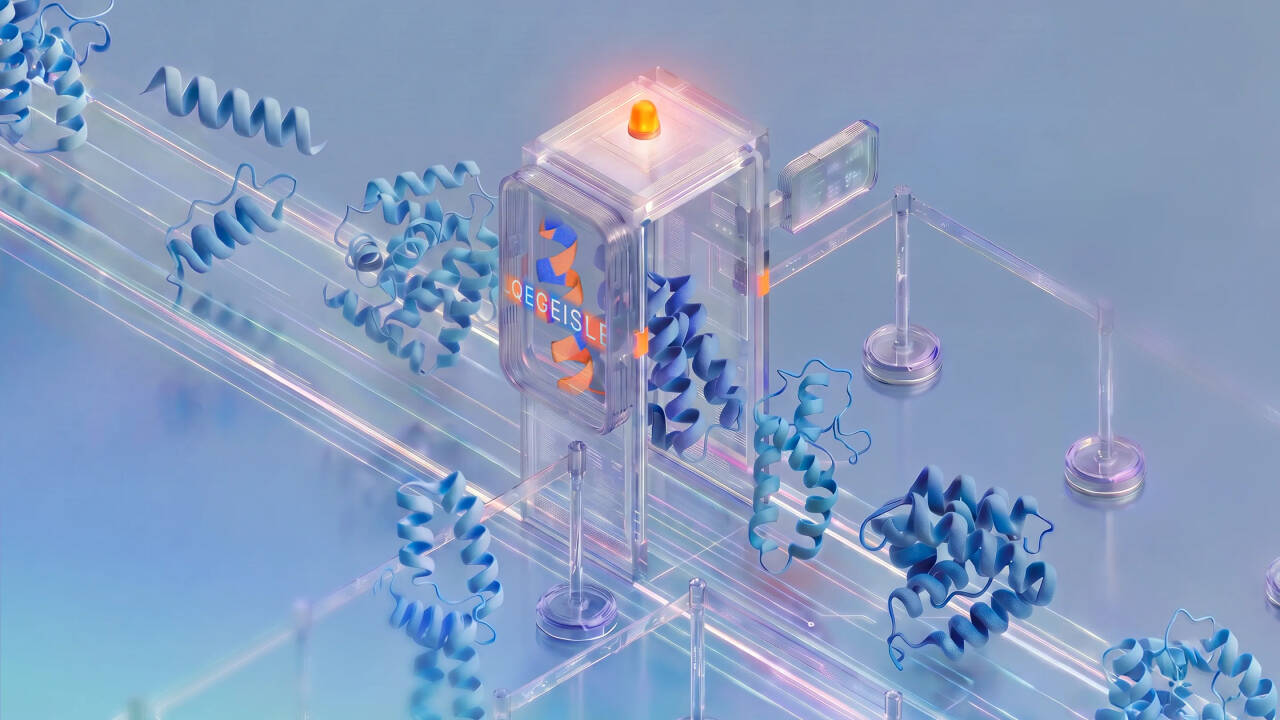
Google DeepMind, the AI lab of Alphabet Inc., has achieved a groundbreaking milestone in synthetic biology through the development of SynthID Bio, a method to watermark AI-generated proteins. This innovation, published in the prestigious journal Nature, addresses a critical issue in the rapidly advancing field of biological machine learning.
The technology enables the embedding of a non-intrusive, verifiable digital identifier within biological sequences and predicted molecular structures, ensuring their functional utility remains unaffected during laboratory tests.
The rollout of SynthID Bio coincides with the increasing use of AI tools like AlphaFold 3, AlphaProteo, and ProteinMPNN, which can predict intricate folding patterns and engineer functional binders. However, these generative capabilities have also heightened biosecurity risks, as unfamiliar machine-generated sequences can bypass standard gene-synthesis filters and potentially contaminate open-access scientific repositories with unverified synthetic structural data.
Demis Hassabis, Google DeepMind's Chief AI Scientist, emphasized the urgency of biosecurity in the AI era, stating that SynthID Bio is a critical step in safeguarding frontier AI. Pushmeet Kohli, Vice President of Science at DeepMind and Chief Scientist at Google Cloud, highlighted the practical application of this technology, mentioning that the team has achieved the synthesis of AI-designed proteins that are both functional and watermarked.
SynthID Bio operates through two modules: SynthIDBio-sequence, which subtly influences the selection of amino acid building blocks during sequence generation, and SynthIDBio-structure, an enhanced version of AlphaFold 3 that inserts an imperceptible watermark into atomic coordinate arrays. This watermark remains undetected in the digital blueprint but becomes fully detectable on the physical protein after synthesis.
The technology is open-source, encouraging further research and development within the scientific community.
Written by urgent.news from Times of India's reporting — not their text. Machine-written — may contain errors; check the original before relying on it.