Five Agric Colleges receive digital tools to drive climate-smart farming (Photos)
Five colleges of Agriculture in Ghana are witnessing a major transformation in teaching and learning with the introduction of digital technologies designed to prepare students for the changing demands of the agricultural sector. The initiative, supported by the Korea International Cooperation Agency, and the World Food Programme, in partnership with the Agric Ministry will provide […]
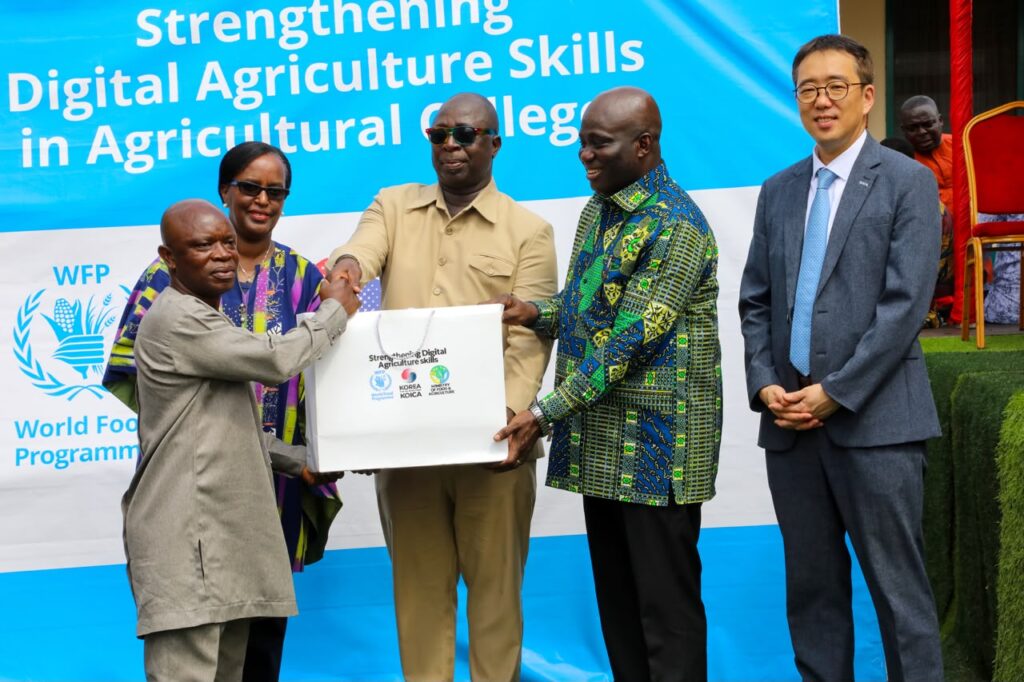
Five Colleges of Agriculture in Ghana have embraced digital tools to revolutionize their teaching and learning methodologies, aiming to equip students with the skills required for modern agricultural practices. Supported by the Korea International Cooperation Agency (KOICA) and the World Food Programme (WFP), alongside the Ghanaian Ministry of Agriculture, this initiative provides students and instructors with access to advanced climate-smart agricultural technologies.
The digital tools encompass essential equipment such as moisture meters, soil testers, greenhouse environmental-control kits, IoT sensor education kits, weather station starter kits, GPS devices, spraying systems, drone-flight simulation systems, and agricultural data-processing software.
Ghana's agricultural sector grapples with challenges like climate variability, dwindling productivity, pest and disease outbreaks, post-harvest losses, and insufficient access to timely market information. Globally, technologies such as drones, Geographic Information Systems, IoT sensors, artificial intelligence, and digital farm-management platforms are being leveraged to enhance agricultural decision-making and productivity; however, their adoption in Ghana, particularly among smallholder farmers, remains constrained by a lack of digital skills, hands-on experience, and access to suitable technologies.
The introduction of these technologies to the five agricultural colleges—Kwadaso, Damongo, Wenchi, Ohawu, and Ejura—aims to bridge this gap. Eric Opoku, the Food and Agriculture Minister, anticipates that the equipment will offer students practical experience with technologies increasingly utilized throughout the agricultural value chain.
"We are progressing towards a future where farmers can evaluate soil conditions before nutrient application; where weather forecasts guide planting and farm management decisions; where soil moisture monitoring enhances water-use efficiency and loss reduction; and where drones, sensors, digital platforms, and data analytics become indispensable tools for boosting productivity," he commented.
Aurore Rusiga, the Country Director of WFP, emphasized the selection of these colleges to bolster their capacity, thus positively impacting the quality of agricultural services delivered to farmers. "Agricultural colleges serve as a vital starting point for cultivating the skills necessary to employ technologies effectively. They prepare numerous extension officers, agricultural technicians, professionals, and entrepreneurs who will directly engage with farmers and other stakeholders across the agricultural value chain," she explained.
Rusiga further stated that the aim is to ensure that graduates from these colleges possess the essential skills and knowledge to employ mechanization and digital technologies to elevate productivity, efficiency, and resilience across the agricultural sector.
Dong Wan Woo, the Country Director for KOICA Ghana, urged the colleges to integrate these technologies into their practical training programs, ensuring students gain meaningful exposure to them. "The true value of this equipment hinges on its application. We urge the colleges to incorporate these tools into practical training, maintain them diligently, and provide students with opportunities to utilize them.
KOICA is dedicated to collaborating with the Ghanaian government and people for sustainable and inclusive development," he affirmed.
The instructional staff at these colleges will also undergo a three- to four-week practical drone-training program, with the Digital Agriculture Training Programme progressively extending to students across the five agricultural colleges. Principal Albert Appiah Amoako of Kwadaso College of Agriculture expressed gratitude for the provided items, highlighting their significance in aligning the institution's pedagogy with the evolving demands of the agricultural sector.
Written by urgent.news from Adom Online's reporting — not their text. Machine-written — may contain errors; check the original before relying on it.
This story
This is one outlet's version. Read the fullest account.