Exercise Keeps Astronaut Hearts in Fighting Shape for the Journey to Mars
Getting a human body to Mars will take a toll on it. NASA and other space agencies have been concerned for years that the 6-9 month travel time to get to the Red Planet could have such a deleterious impact on human anatomy that any crewed mission would fail before it even began. But a new study, co-led by Dr. Benjamin Levine of the University of Texas Southwestern Medical Center and published in…
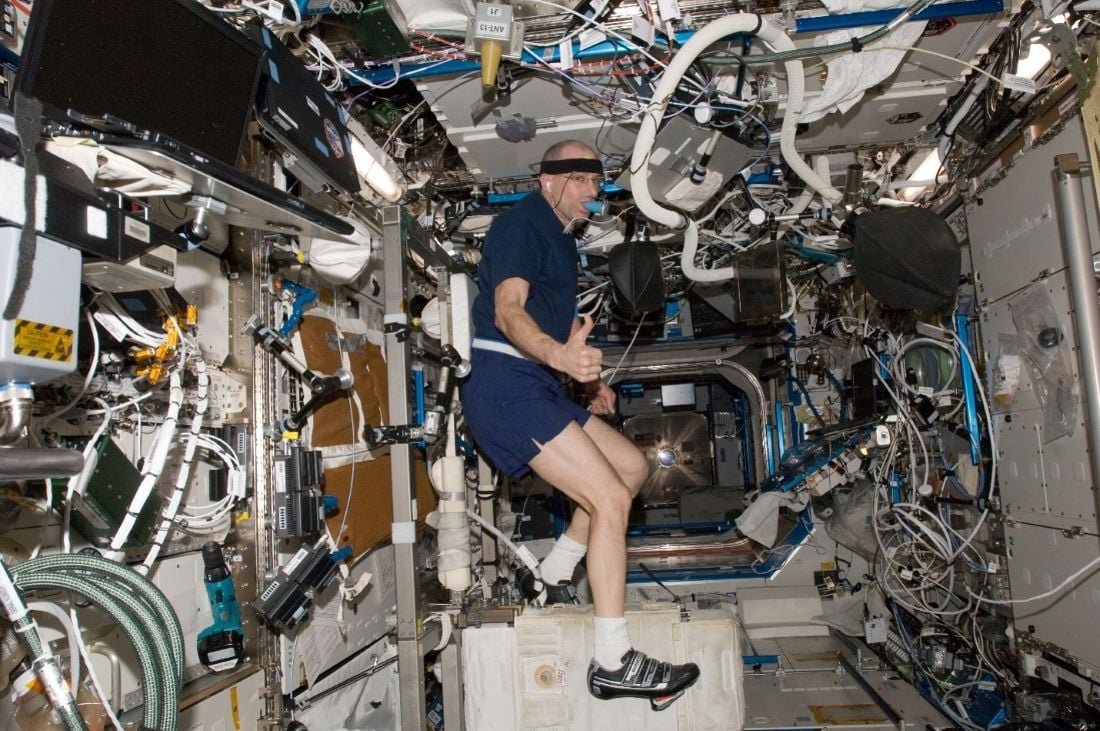
A recent study published in the journal Circulation has provided reassurance for future Mars missions. Led by Dr. Benjamin Levine from the University of Texas Southwestern Medical Center, the research indicates that adequate exercise routines in low gravity can help maintain astronauts' cardiac health during the 6-9 month journey to the Red Planet.
The zero gravity environment experienced by astronauts causes their heart to function differently compared to Earth, resulting in physical changes such as a decrease in size. This could potentially lead to low blood pressure, reduced stamina, and even fainting upon arrival on Mars, jeopardizing the mission before it begins. However, the study found that with a rigorous exercise regimen, astronauts should be able to operate on Mars without major cardiac issues.
The researchers monitored the heart health of 13 astronauts over a six-month period aboard the International Space Station (ISS), using echocardiography equipment to track changes in cardiac volume, blood flow, and muscle strain. The astronauts followed a daily routine of vigorous physical exercise, including cardiovascular and resistance training.
The study revealed that during the early stages of the mission, there was a noticeable decrease in the volume of blood pumped by the heart and the size of the heart itself. However, as the astronauts adhered to a more regular exercise routine, their heart function returned to its pre-flight baseline. Additionally, the researchers simulated Martian gravity by having the astronauts lie on a 22-degree tilt table, and found that their heart strength remained intact.
This study removes a significant concern for mission planners, as it demonstrates that with proper exercise, astronauts should be able to withstand the challenges of landing on Mars and begin their scientific endeavors without the risk of cardiac failure.
Written by urgent.news from Universe Today's reporting — not their text. Machine-written — may contain errors; check the original before relying on it.