Endangered dolphins survive in a Bangladesh river so polluted it’s ‘not livable’ for fish
At least 20 endangered Ganges river dolphins still survive in Bangladesh’s extremely polluted Buriganga River, a 12-month study found, reports contributor Md Jahidul Islam for Mongabay. Skirting the southern edge of the country’s capital, Dhaka, the 29-kilometer (18-mile) river is recognized as one of the most contaminated urban waterways globally. Researchers surveyed a 27-km (16.7-mi) […]
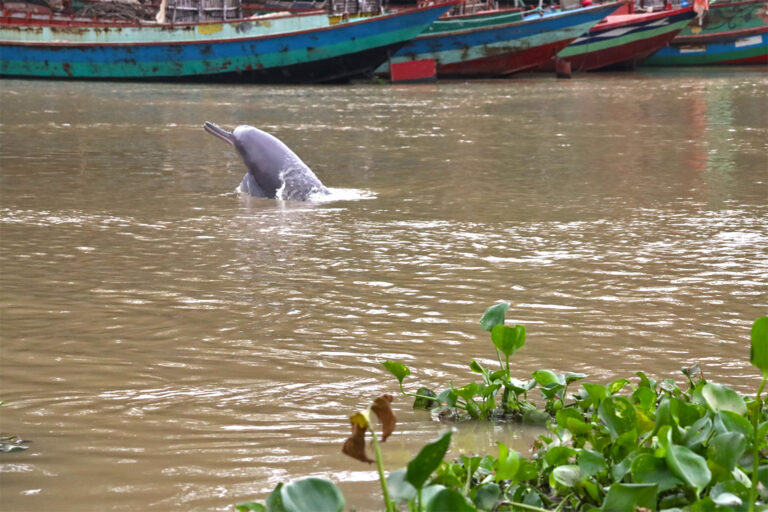
An extensive 12-month study reveals that at least 20 endangered Ganges river dolphins persist in Bangladesh's Buriganga River, despite its status as one of the most polluted urban waterways globally. The 29-kilometer (18-mile) river, which skirts the southern edge of Dhaka, the country's capital, was surveyed between September 2023 and August 2024.
Researchers observed Ganges river dolphins (Platanista gangetica) in 10 out of the 12 survey months, with group sizes averaging around four individuals, and calves accounting for nearly 16% of sightings, suggesting active reproduction despite the severe ecological degradation.
Md. Aminur Rahman, co-author of the study, expressed amazement at the dolphins' presence given the river's inability to sustain native fish species. The Buriganga River is heavily polluted by untreated industrial effluent from tanneries, textile dyeing plants, battery factories, and municipal sewage. The study conducted in 2025 revealed that toxic heavy metals, including lead, chromium, and cadmium, frequently exceed World Health Organization safety limits.
This pollution results in dissolved oxygen levels nearing zero during the dry season. Rahman noted that while native fish species have been nearly wiped out, pollution-tolerant invasive suckermouth catfish (Hypostomus plecostomus), native to South America, have proliferated rapidly. Co-author Mohammad Abdul Aziz from Jahangirnagar University in Dhaka suggested that the dolphins may have adapted their diet to survive primarily on these invasive species.
Written by urgent.news from Mongabay's reporting — not their text. Machine-written — may contain errors; check the original before relying on it.