Carney pitches oil pipeline as a response to US-Canada trade war
Mark Carney has announced that Canada will fast-track the approval process for a 1,250km (775 mile) oil pipeline project to the Pacific coast.
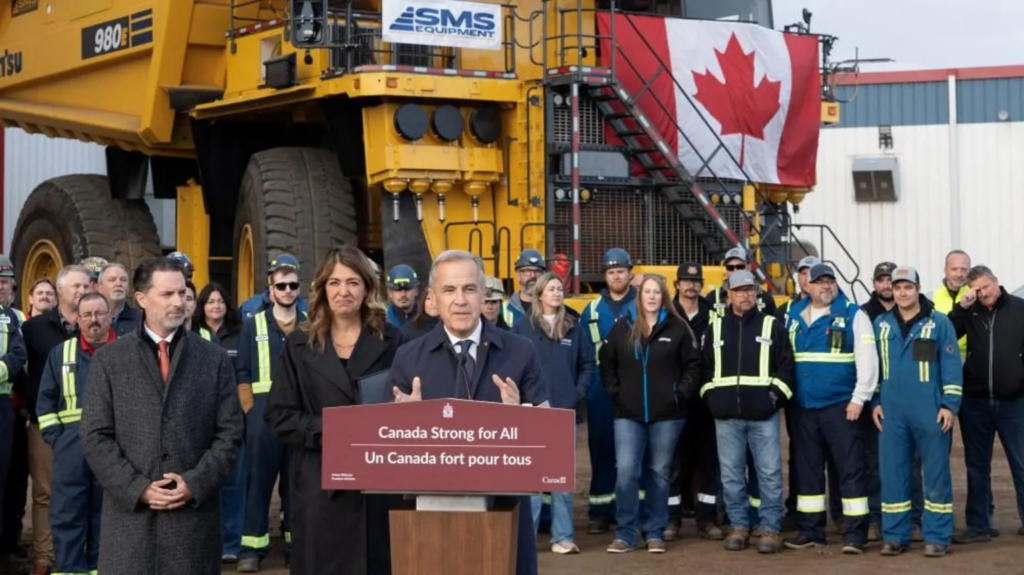
Canadian Prime Minister Mark Carney has announced the fast-tracking of a 1,250km (775-mile) oil pipeline project, the Pacific Link, which aims to diversify Canada's oil markets away from the United States. The project is seen as a crucial step toward transforming Canada's economy and achieving its goal of doubling non-US exports over the next decade.
Carney believes the pipeline will boost Canada's GDP by up to C$30bn ($21bn; £16bn) annually and create 140,000 jobs. If approved, the pipeline would reduce Canada's dependency on the US for oil, potentially lowering it to 65-70%.
The Pacific Link pipeline would carry approximately one million barrels of crude oil per day from Bruderheim, Alberta, to a deep-water port near Delta, British Columbia. From there, the oil would be shipped to global markets. The project includes marine berths capable of accommodating vessels carrying up to two million barrels of oil, allowing for shipments to Asia-Pacific markets, such as South Korea, China, and Japan.
The Liberal government introduced a new law last year to fast-track the federal approvals and regulatory reviews of major projects, hoping to provide investors with a clear yes or no decision within a year. This move stems from opposition against lengthy and complex review processes, which led to the cancellation of past pipeline projects.
Carney hopes that Pacific Link will demonstrate Canada's ability to move quickly on major projects, positioning the country as a global energy "superpower." The pipeline project is also anticipated to appease Alberta, which is seeking to develop its resources following a referendum on independence. Carney acknowledged that the project could face opposition from environmental groups and indigenous communities, but he emphasized that discussions have already taken place, with more consultations planned for the future.
Construction is expected to commence by 2032 if the pipeline receives final approval. Currently, the governments of Canada and Alberta, along with the Pembina Pipeline Corporation, support the project, with a minimum of 10% ownership being offered to indigenous groups. To address environmental concerns, Alberta has committed to developing the world's largest carbon capture program, and Ottawa has prioritized ocean protection funding and rules to safeguard marine life from increased coastal tanker traffic, including the endangered Southern Resident killer whales.
Written by urgent.news from MyJoyOnline Ghana's reporting — not their text. Machine-written — may contain errors; check the original before relying on it.