AI adoption across key Qatar sectors driving operational efficiency, growth
Artificial intelligence (AI) is emerging as a critical dual-function driver across key economic sectors in Qatar, acting simultaneously as a massive consumer of electrical power and a central tool for...
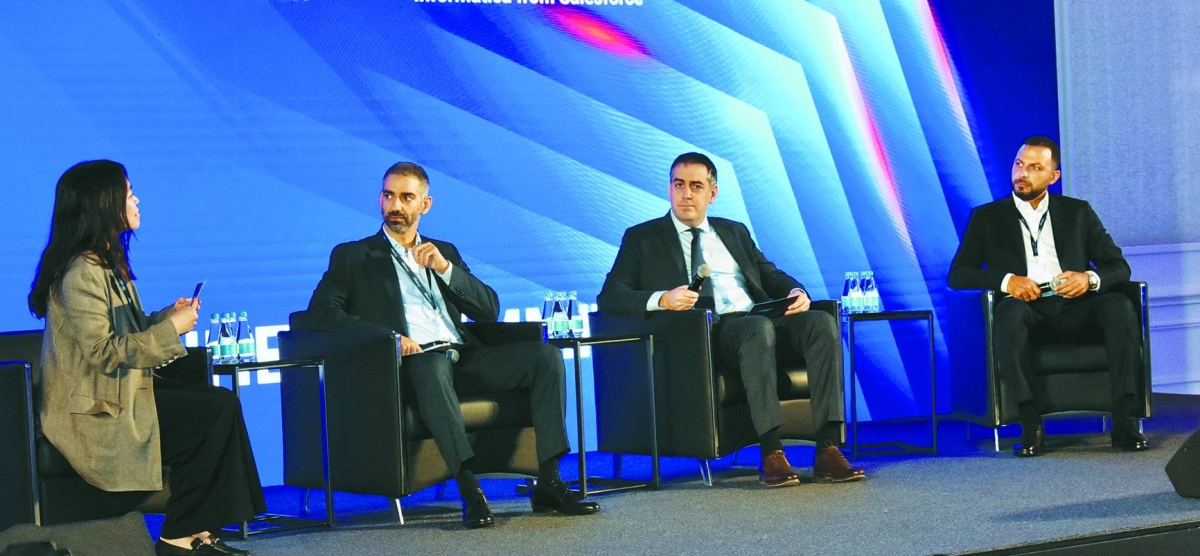
Artificial intelligence (AI) is rapidly transforming Qatar's key economic sectors, serving as both a significant energy consumer and a cornerstone for operational optimisation. Data centres globally consume about 500 terawatt-hours of electricity annually, representing nearly 2% of global electricity demand, according to Karim el-Hayek, Data Consulting director and Energy Sector Lead at Artefact.
Speaking at the Artefact AI Connect Summit Doha 2026, el-Hayek highlighted that current energy investments are focusing on predictive analytics and system optimisation. Within Qatar's hydrocarbons sector, predictive maintenance on critical capital assets such as compressors and turbines allows operators to foresee potential equipment failures, thereby preventing costly operational disruptions.
This predictive approach has slashed unplanned downtime by nearly 30% in major industrial operations. In field development, advanced algorithmic models scrutinise seismic and geological KPIs to hasten reservoir characterisation, optimise well production, and refine output predictions. These applications exemplify broader industry trends across national energy operations, incorporating predictive maintenance, trend budgeting, and reservoir characterisation for liquefied natural gas projects.
In the utilities sector, AI is pivotal for demand forecasting of power and water resources. Qatar's 800-megawatt Al Kharsaah solar power plant, which supplies up to 10% of the country's peak electricity load, employs AI to monitor panel degradation and cleaning efficiency across its 1.8 million solar panels. For water desalination, algorithmic models optimise operational parameters to enhance production costs and energy consumption per cubic metre.
Samy Hegazy, regional vice president for the Middle East and Saudi Arabia at Informatica, stressed that a robust, governed data foundation is essential before AI deployment. Hegazy emphasised that fragmented internal data leads to low accuracy and adoption issues, irrespective of GPU or AI model investments. He pointed to the National Planning Council's national data initiative in Qatar as a prime example of establishing a high-quality, governed data architecture, which has resulted in improved productivity by 40% for SME projects and up to 70% lead conversion rates for banking institutions.
Michel Barakat, partner and Financial Services lead at Artefact, noted that financial institutions have been early adopters of AI, utilising thousands of predictive models for personalised customer offers, risk management, and employee productivity. He stressed that while AI excels at document review and data synthesis, strategic judgment, deal evaluation, and ethical considerations must remain under human supervision.
Hegazy and Barakat recommended that enterprise leaders establish dedicated AI governance committees and appoint Chief AI Officers to steer organisational strategy and workforce change management. Rahul Arya, CEO and managing partner for Artefact Middle East, Southeast Asia & India, concluded by noting that local businesses are now shifting from AI discussions to practical implementation, focusing on data, use cases, and execution.
Rewritten by urgent.news; may contain errors — check the original.
Source: gulf-times.com