A Speed Gun That Would Rather Say Nothing: What Building Paceball Taught Me About False Precision
Paceball measures cricket bowling speed from phone video while exposing uncertainty, rejecting unseen bounces, and avoiding false precision.
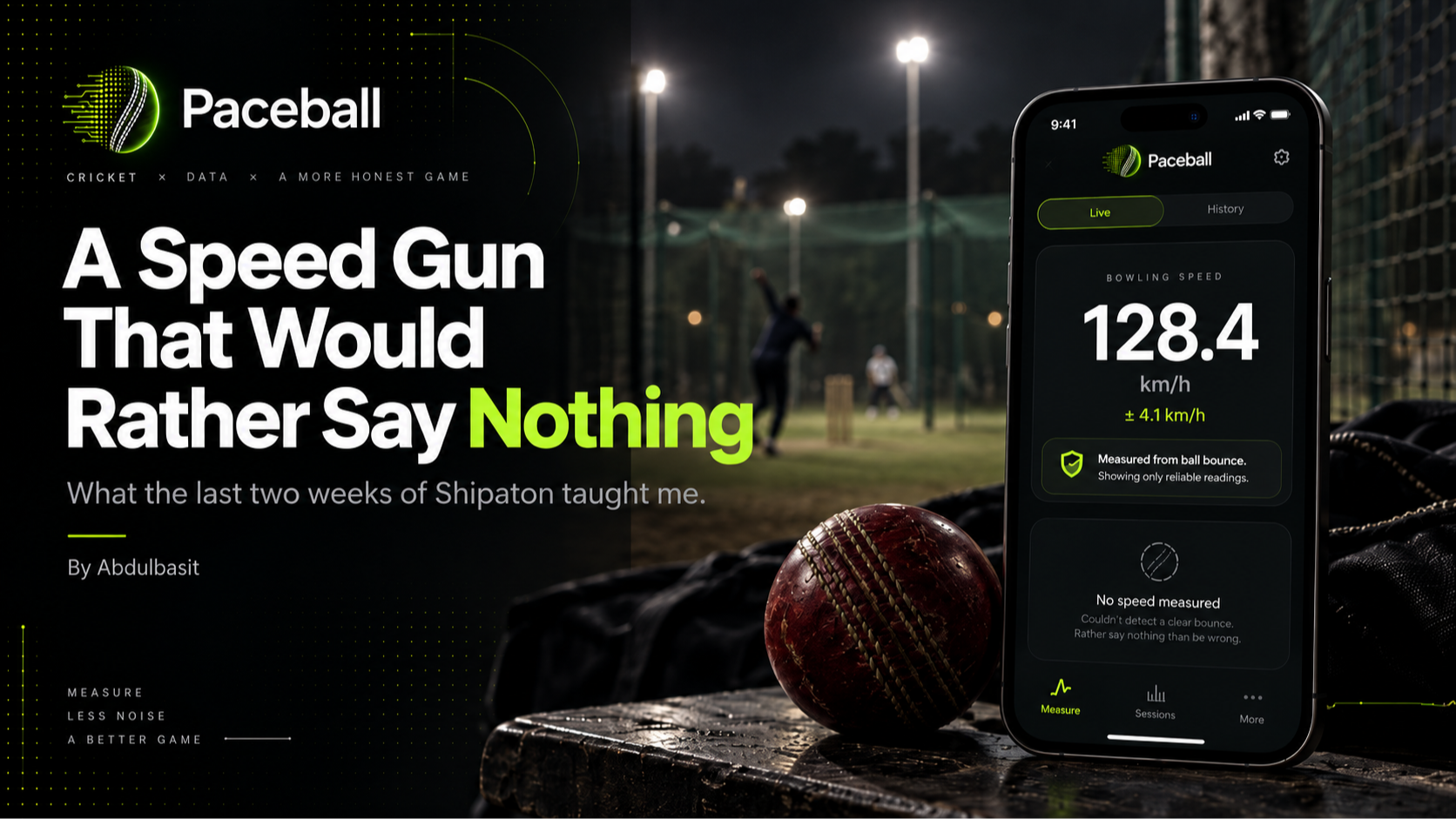
Abdulbasit, a 19-year-old from Rawalpindi, built the Android app Paceball to measure the speed of cricket balls using only a phone's video. The app requires the user to film a delivery side-on, mark the ball's departure and bounce, and then calculates the speed based on the distance and frame count. Paceball is the result of Abdulbasit's first mobile app, developed with partner Mustafa for RevenueCat's Shipaton 2026.
The app's development was shaped by two rules: if the ball's bounce isn't visible, the app won't show a speed, and every reading must include an error range based on the frame timing, reference length, and precision of the measurements. RevenueCat provided a hackathon grant, and the app was designed with a clean, minimalist interface where numbers are the focus.
The app also includes a paywall with a free trial and clear language for user actions. After extensive testing and code audits, the app successfully went live in the Next Gen award category for student builders, despite initial setbacks with purchase failures and audio-related bugs.
Written by urgent.news from HackerNoon's reporting — not their text. Machine-written — may contain errors; check the original before relying on it.