Why is our exam system failing the AI generation? As a teacher, I look to Tagore for answers
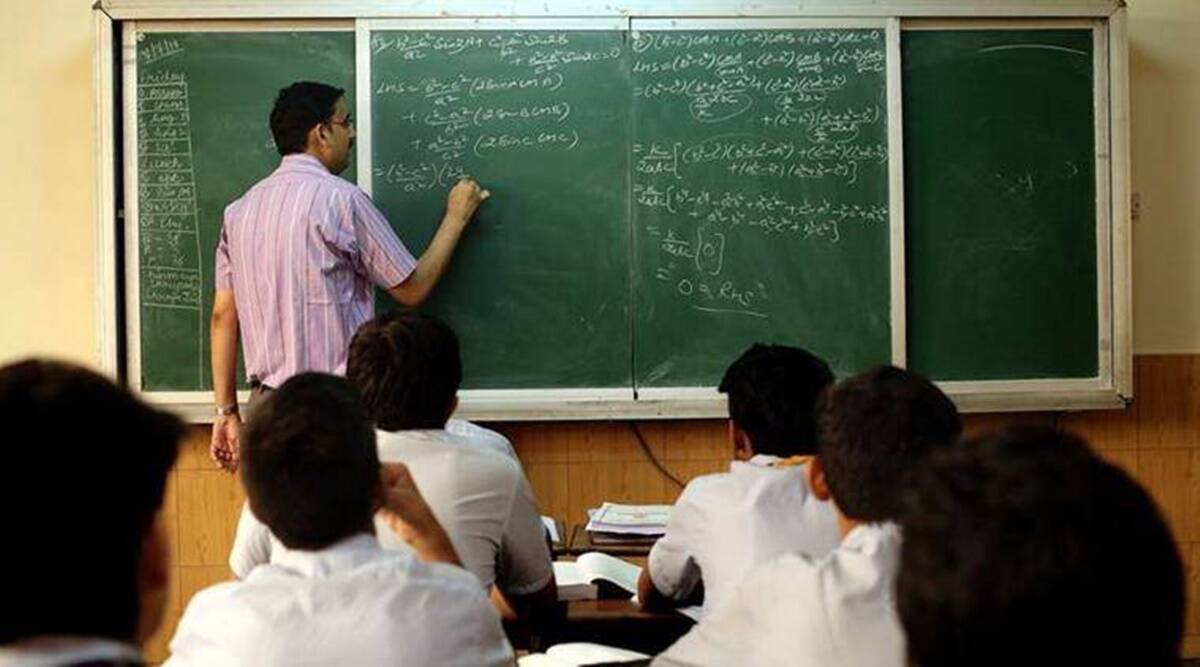
The Indian examination system has become a focal point of public scrutiny in recent times. Technology plays a dual role, acting as both a challenge and a potential remedy. Tagore's perspective on education is revisited to reassess the concept of examinations within the Indian education landscape. In a seminal piece on education, Tagore poses a thought-provoking question: "For what else but can we call the theft of a degree by rote-learning a book, devoid of its true essence; how is that any better than smuggling the book itself into the examination room, concealed within one's garments?"
This critique resonates more strongly than ever before. The educational landscape has undergone a seismic shift in recent times, unlike any before. It becomes challenging to pinpoint a single catalyst — be it social, economic, technological, cultural, or political — responsible for this metamorphosis. The ripple effects are palpable across various facets, encompassing curricula, classrooms, pedagogy, technology, delivery methods (both in-person and online), physical infrastructure, libraries, and the aspirations and backgrounds of the student population.
Yet, the examination system remains largely unaltered. The examination's fundamental premise of testing a singular "correct" answer has not been significantly revised. John Dewey, a proponent of progressive education in the United States, cautioned that the "static, sterile vision of knowledge is antithetical to the development of education.
It not only renders occasions for thought idle, but also inundates thinking." This sentiment was echoed more explicitly by Benjamin Bloom in the mid-20th century through the introduction of his learning hierarchy: Remember or recall, understand, apply, analyze, evaluate, and create. Every educator should strive to foster the highest echelon of learning.
However, a considerable number of examinations in Indian higher education are confined to the lowest echelon of Bloom's hierarchy: merely remembering and recalling. With the advent of the technological revolution, a new cohort of students preparing for examinations now enjoys unprecedented access to an overwhelming volume of information.
The compactness of devices used to store (or conceal) information often eludes the vigilant gaze of invigilators. The latest innovations in Artificial Intelligence (AI) introduce a new set of complexities. A surgical procedure can even embed a tool (neural implants) within the human brain to augment cognitive abilities. Surveillance measures have not kept pace with the proliferation of such storage and assistive devices.
The question at hand is not whether technological advancement is welcome or undesirable; rather, as an educator and writer, grappling with the implications of these advancements is the real conundrum. Should one rely on more sophisticated technology to detect hidden devices carried by students? Would the implementation of physical frisking before examinations become pertinent in an era where neural implants are readily accessible?
The National Education Policy 2020 advocates a departure from "high-stakes examinations" towards "continuous and comprehensive evaluation." However, translating this policy vision into practical reality proves to be a formidable task. Tagore and Dewey's convictions that education should not merely serve as a means to an end, but an end in itself, compel the author to revisit their own teaching methodologies.
They question the nature of the questions posed in examinations. How can they formulate inquiries that prioritize understanding, analysis, evaluation, and creativity, rather than relying on rote memorization? The answer eludes them. Seeking guidance for these "apparent nonsensical" inquiries becomes a daunting prospect. Should they turn to their own veteran teachers, peers, students, parents, employers, the state, or perhaps even a chatbot?
Written by urgent.news from The Indian Express's reporting — not their text. Machine-written — may contain errors; check the original before relying on it.