Where Fire Ends, Chemistry Begins
Once smoke is generated, chemical reactions reshape its gaseous and particulate constituents, altering what travels downwind and what people, ecosystems, and the climate are exposed to.
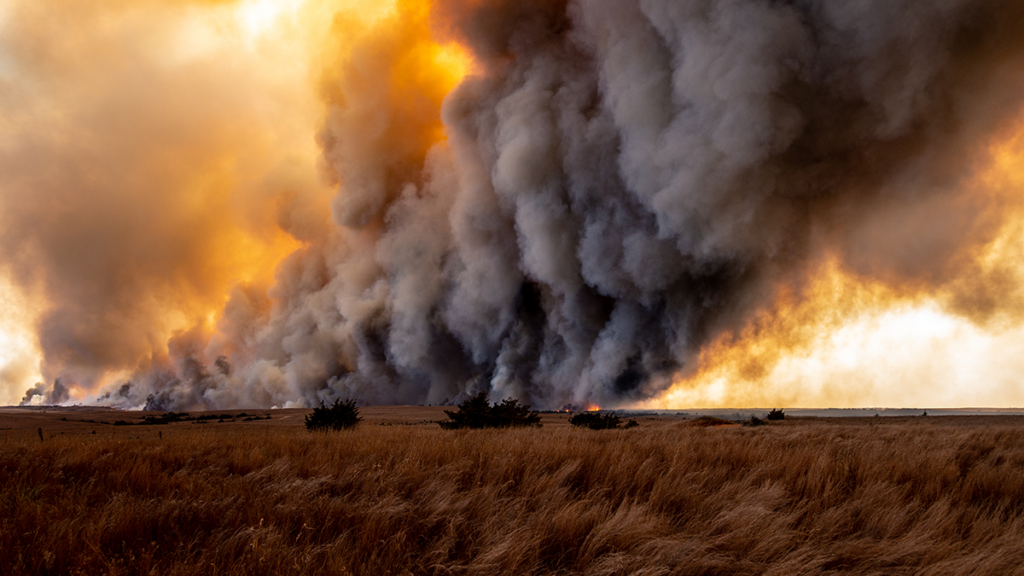
When wildfires rage across the globe with increasing frequency and intensity, understanding the chemical reactions taking place within the smoke plumes becomes crucial. A new article in Reviews of Geophysics, authored by experts, delves into the complex chemistry of these fire plumes and their implications.
Fire plumes are essentially hot masses of air, gases, and particles that rise from vegetation and other materials being burned. They appear as towering smoke columns, but their chemical makeup remains invisible to the naked eye. The composition of a plume varies depending on the intensity of the fire and the type of fuel being burned, such as forests, grasslands, or buildings. Each fuel type releases distinct pollutants and chemicals into the atmosphere.
Understanding the chemical transformations that occur within plumes is essential because it goes beyond just measuring smoke concentration. While smoke alone indicates the presence of pollutants, plume chemistry reveals the specific compounds people and ecosystems are exposed to as smoke travels. This knowledge helps forecast air quality, estimate downwind exposure, and assess the health and climate impacts of wildfire smoke.
Scientists investigate plume chemistry using a combination of methods. Ground stations continuously monitor gases and particles in the air, while research aircraft collect samples within and around plumes at varying distances from the fire source. These "online" methods provide real-time data, while air filters collected during fire events, analyzed later, offer an "offline" approach. Controlled lab experiments and satellite observations also contribute to the understanding of plume chemistry, albeit with limitations.
The review identifies major gases and particles present in fire plumes. Gases include carbon dioxide and monoxide, methane, nitrogen oxides, and volatile organic compounds (VOCs). Particles within the plume consist of soot, organic material, ash, and trace metals. The review emphasizes the importance of black and brown carbon, as well as organic particles that can change over time as the smoke ages.
Beyond the direct emissions, chemical reactions occurring within the plume generate new pollutants such as ozone and secondary organic aerosols. To gain a comprehensive understanding of plume chemistry, scientists must consider both the initial emissions and the secondary products formed. Atmospheric models are used to test possible chemical pathways and investigate changes that cannot be directly measured.
Several factors influence the chemistry inside fire plumes. The type of vegetation and materials burning, the intensity of the fire, temperature, oxygen availability, plume size, and injection height all play a role. These factors interact, leading to chemically distinct smoke plumes even from fires of similar size. Understanding these influences is crucial for accurately assessing the impacts of wildfire smoke on air quality, climate, and public health.
In conclusion, fire plumes are not just visible smoke columns; they represent a complex chemical system with far-reaching consequences. By studying the chemistry within plumes, scientists can improve air-quality forecasts, estimate downwind exposure, investigate health and climate impacts, and inform management decisions related to wildfires. As wildfire activity continues to escalate globally, unraveling the chemistry of fire plumes becomes an increasingly vital endeavor.
Written by urgent.news from Eos's reporting — not their text. Machine-written — may contain errors; check the original before relying on it.