US-Militär in Nahost: Alle US-Truppen aus dem Irak abgezogen
Die Kurdenregion war einer der letzten Standorte für das US-Militär im Irak, nun ziehen dort die letzten Soldaten ab. Werden bewaffnete Gruppen das so entstehende Machtvakuum ausnutzen?
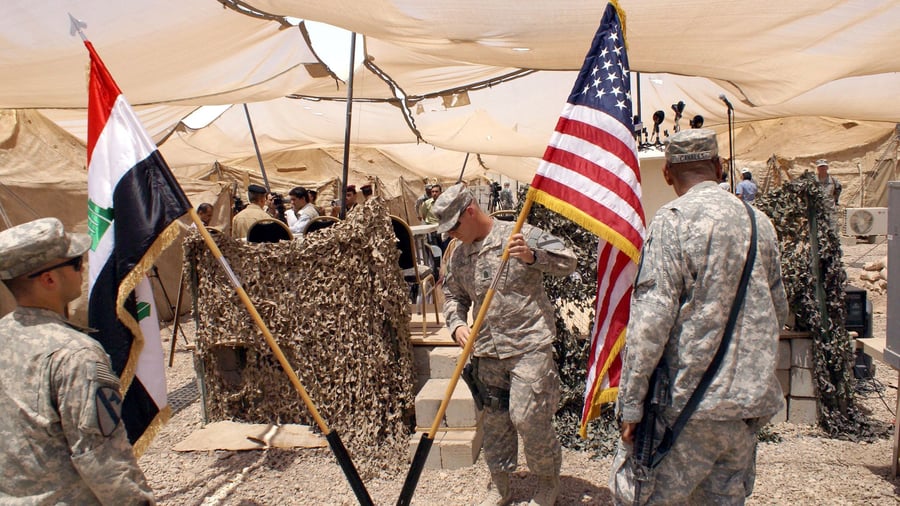
The United States military has completed its withdrawal from Iraq, with the final troop departure taking place earlier today, according to the Pentagon. This marks the end of a 12-year campaign that aimed to defeat ISIS, overthrow former leader Saddam Hussein, and combat terrorist activities in the region. The Pentagon stated that this milestone reflects the success of the operation, which eliminated ISIS as a military threat in Iraq and the broader region.
The Iraqi government now bears the primary responsibility for addressing security challenges within the country. These challenges include remnants of the ISIS terrorist group and allied militias, which threaten Iraq's sovereignty and regional stability. The Pentagon reported the departure of around 2,500 remaining US soldiers from Iraq, which had been stationed in Erbil, the Kurdish region, near Baghdad's airport, and the city's Green Zone.
In recent years, the Pentagon stated that around 2,500 US soldiers were still located in Iraq, primarily in Erbil, a Kurdish-controlled area, near Baghdad's airport, and in the Green Zone, the capital's government district. Iraqi local media reported that defensive systems were relocated in recent weeks. Since 2014, the US has been fighting ISIS alongside allied nations in Iraq and Syria, declaring ISIS militarily defeated in 2017 and 2019.
However, ISIS cells continue to operate in the region, carrying out occasional attacks. Although ISIS lost control of major areas in both countries, its influence remains in the region.
The United States and Iran have been engaged in a long-standing conflict in Iraq, with both sides often on the brink of war. In 2020, the US killed Iranian General Ghassem Soleimani and Kataib Hezbollah leader Abu Mahdi al-Muhandis in a drone strike in Baghdad. This led to weeks of military tensions. The ongoing Iran war, which began in February jointly with Israel, has worsened the security situation in Iraq.
The country, responsible for about 4% of the world's oil supply, has been a frequent target of attacks by Iran-allied militias. The militias have attacked US embassies, including in Baghdad, and Erbil, a US military base, among other targets. In response, the US has targeted militia positions within Iraq. The planned disarming of the powerful militias, which are allied with Iran, has been postponed until June, as they currently refuse to disarm.
If carried out forcefully, this could trigger further violence between the groups. Saudi Arabia was also attacked during the ongoing war, with a significant oil pipeline damaged in the kingdom. Concerns about potential attacks persist in the Kurdish region, which has been heavily shelled during the Iran war. Militias from Yemen and Lebanon, including the Houthis and Hisbollah, are also active in Iraq.
The US military presence in Iraq, including its role alongside the Bundeswehr in Erbil, is expected to persist beyond the current multinational deployment until January. However, Defense Minister Johann Wadephul anticipates that the Bundeswehr may remain in Erbil even after the multinational deployment concludes.
Written by urgent.news from Handelsblatt's reporting — not their text. Machine-written — may contain errors; check the original before relying on it.
This story
This is one outlet's version. Read the fullest account.