Ukraine wanted a fresh start with Hungary. It got a new kind of standoff
Ukrainian officials had looked for a reset with Budapest after Viktor Orban's defeat. Instead, Hungary's new prime minister, Peter Magyar, has taken a hard line of his own. After a promising start, Budapest is yet again stalling Kyiv's EU bid until Ukraine puts into effect earlier agreements on the rights of its roughly 80,000-strong Hungarian community. As the standoff has dragged on, Magyar has…
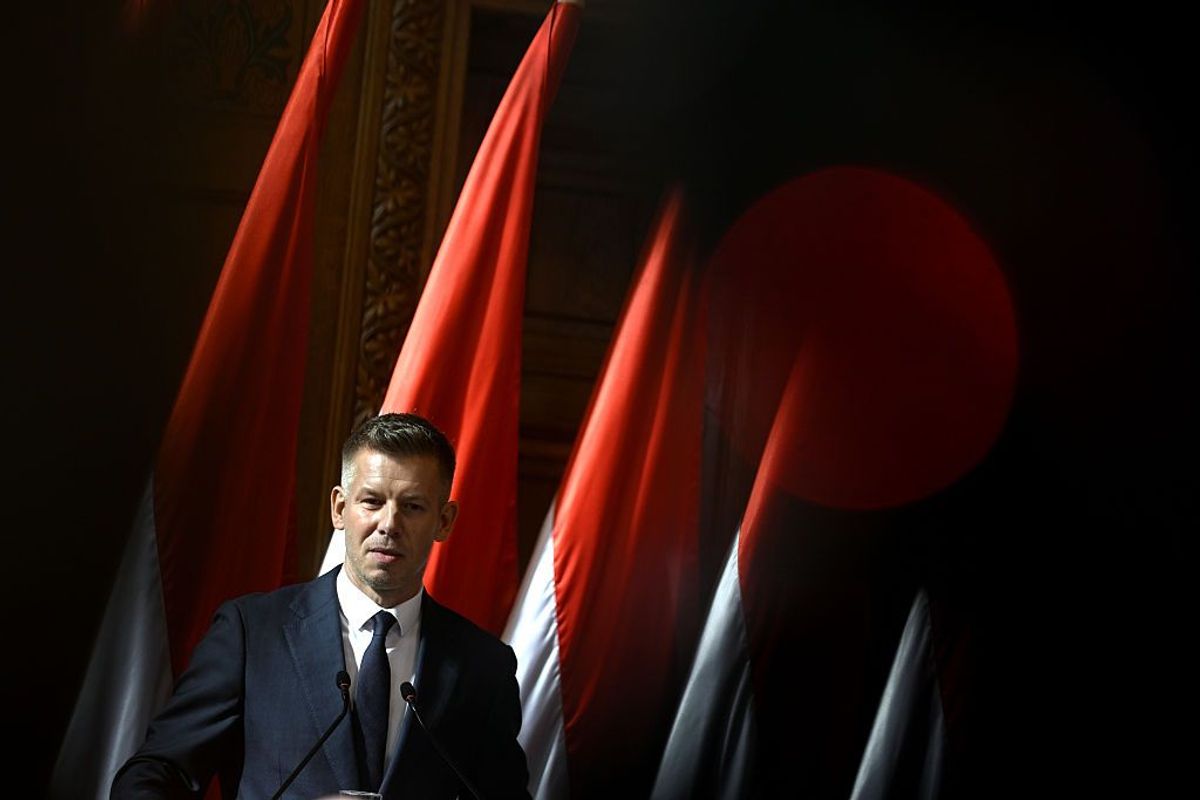
Ukrainian officials had long desired to mend relations with Hungary following the departure of Viktor Orban. However, Hungary's new prime minister, Peter Magyar, has stubbornly maintained a tough stance. Despite a promising beginning, Budapest remains reluctant to advance Ukraine's EU aspirations until the country enforces earlier agreements regarding the rights of its sizable Hungarian minority.
As the stalemate continues, Magyar has escalated the situation: he missed a summit hosted by Ukraine, exchanged hostile remarks with Ukrainian officials online, and outright refused a proposal to enhance cross-border energy cooperation. Yet, the underlying differences between Hungary's current leader and his former pro-Kremlin counterpart are stark.
While Orban leveraged Ukraine for his political advantage, Magyar might genuinely wish to resolve the issue — albeit utilizing any available leverage, according to experts. A draft law on national minority education rights, drafted by Ukraine based on a June deal with Hungary, could pave the way forward; it may reach parliament as early as October.
However, both sides must fundamentally reassess their diplomatic approaches and make genuine efforts to overcome the lingering shadow of Orban, according to Sergiy Solodkyy, director of the New Europe Center think tank in Kyiv. Magyar has made no secret that any thaw in ties with Ukraine is contingent upon certain conditions. Weeks after his election win, Hungary's new leader urged Kyiv to address alleged discrimination against its Hungarian ethnic minority, primarily residing in the western Zakarpattia Oblast.
Though initial interactions between Magyar's administration and Ukraine were promising, especially compared to Orban's openly hostile approach, talks have repeatedly stalled. Hungary re-imposed its blockade, insisting that Kyiv take additional steps to implement the June agreement before allowing more clusters to open. Ukraine's exasperation grew as Magyar avoided a summit with Zelensky, despite proposing it himself.
President Volodymyr Zelensky, addressing the Carpathian Eight Summit, suggested that Budapest should pass a relevant law based on the June agreement before unlocking EU talks. Days later, Magyar contradicted Zelensky by denying Hungary's participation in the Carpathian Eight, and refused the construction of Ukrainian oil storage facilities in Hungary despite prior agreements.
Ukrainian officials expressed confusion over Budapest's rejection of the Carpathian initiative, drawing comparisons to Orban's era of obstructionism. Magyar's response to Kyiv's claims about Hungary's participation further underscored his confrontational tone. The underlying issue, according to some experts, lies in Hungary's fixation on Ukraine through the prism of domestic politics.
Hungary's refusal to consider Hungary's interests in Ukraine beyond the Hungarian minority has led to its current standoff with Kyiv, as acknowledged by Daniel Hegedüs of the Institute for European Politics.
Written by urgent.news from Kyiv Independent's reporting — not their text. Machine-written — may contain errors; check the original before relying on it.