Traditional UX: Is It Coming to an End?
Traditional UX, as we know it today, may be largely extinct within the next two years.
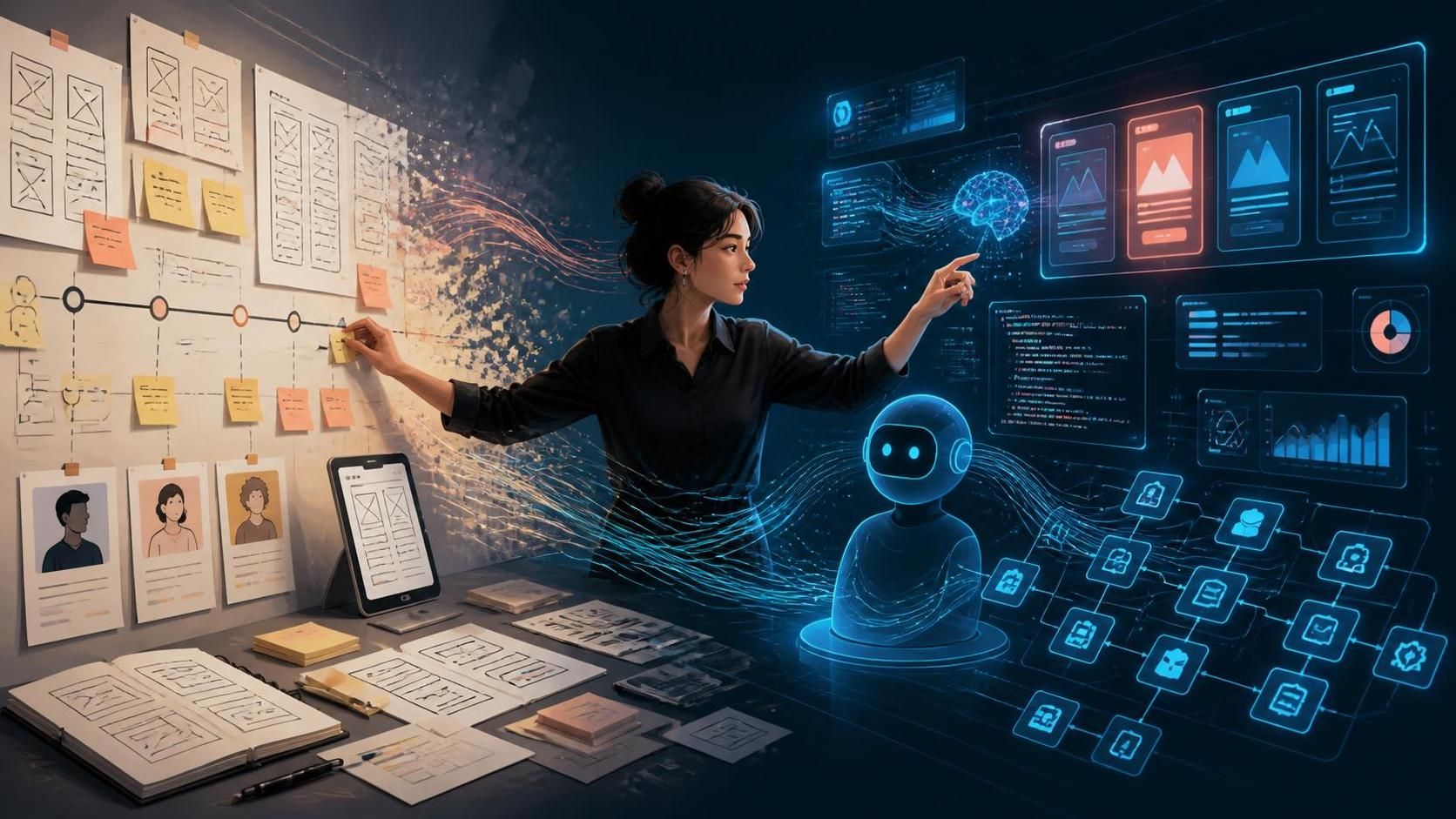
This article presents a perspective on the future of User Experience (UX) design, suggesting that traditional UX practices may be fading in the face of rapid technological advancements. The author, with extensive experience in UX consulting, argues that the discipline as it exists today could become largely obsolete within the next two years.
While user experience's core principles—understanding users, designing intuitive products, and creating seamless interactions—remain vital, the methods and roles that have defined UX for several decades may soon vanish.
The rapid evolution of AI is cited as the primary catalyst for this transformation. AI's impact extends far beyond being just another tool in the UX toolkit. It is fundamentally reshaping how products are envisioned, developed, tested, personalized, and maintained. Modern UX tools are already leveraging AI to accelerate tasks such as layout generation, prototype creation, research summarization, content development, pattern identification, and alternative exploration.
However, the author emphasizes that the integration of AI into UX is not merely about speeding up existing activities. It represents a fundamental shift in the broader ecosystem where products are created. This shift is characterized by the blurring of roles and responsibilities, with AI compressing the distance between strategy, design, content, code, data, and production.
Consequently, a practitioner who can navigate this multidisciplinary landscape—comprehending user problems, manipulating data, prototyping interactions, generating functional code, testing experiences, and interpreting behavioral results—will become increasingly valuable.
This evolution toward a new paradigm—referred to as UX Engineering—does not necessitate a complete abandonment of human-centered design. Instead, it requires an elevation of technology skills to a level comparable to that of software engineers, encompassing knowledge of HTML, CSS, JavaScript, APIs, databases, analytics, automation, prototyping environments, accessibility, and machine-learning concepts.
It also entails a deeper understanding of technical constraints to design solutions that extend beyond mere presentations or static prototypes.
The transition to UX Engineering is likely to face resistance, as professionals and organizations cling to familiar job descriptions and established methods. However, the market does not preserve roles merely for historical significance. Instead, adaptability will be key. Those who broaden their definition of design—linking user needs to technical possibilities, business outcomes, data, and implementation—will thrive.
They will utilize AI not solely to produce more artifacts but to make better decisions and create superior products.
While some may find occasional work under traditional UX titles, their opportunities will become more limited, competitive, and susceptible to automation. The real concern, according to the author, is not that UX is dying but that a traditional definition of UX is becoming obsolete. The future and present already belong to practitioners who can seamlessly blend the roles of researchers, designers, technologists, strategists, and builders.
Ultimately, UX will endure, but those who succeed will need to evolve at a pace unmatched by any discipline in its history.
Written by urgent.news from HackerNoon's reporting — not their text. Machine-written — may contain errors; check the original before relying on it.