The British Pound rallies on a UK growth upgrade and gives more than half back
Markets put a better than 80% chance on the Bank of England (BoE) raising the UK's Bank Rate from 3.75% on November 5, and GBP/USD still couldn't close above 1.3300.
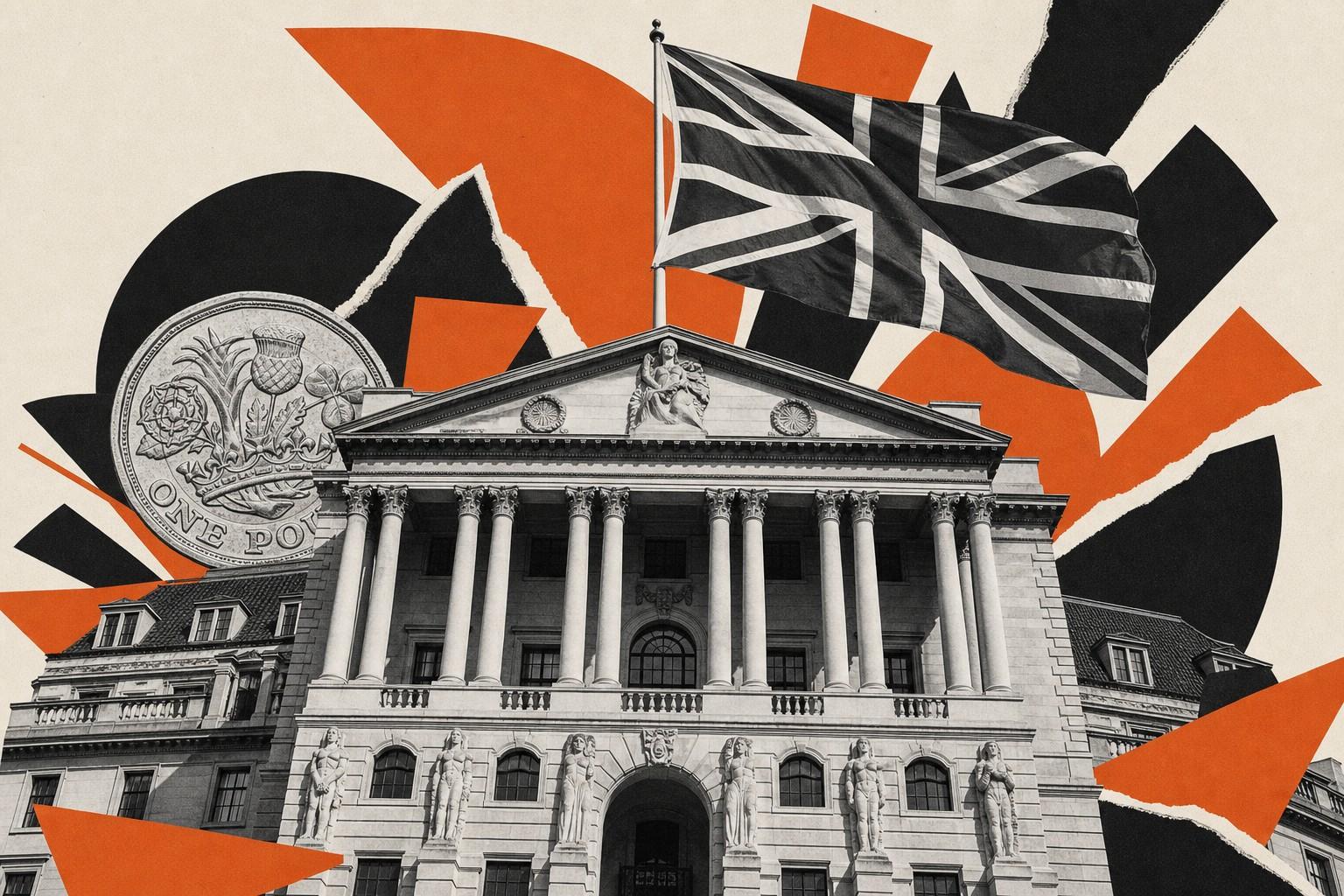
Markets gave the British Pound a boost after the UK's GDP for the second quarter was revised upward, though the rally was short-lived as it regained only half of its gains by the market close. The Bank of England (BoE) had voted six to three to maintain the Bank Rate at 3.75% on September 17, but the upgrade hinted at a possible hike.
The UK economy grew 0.5% in the second quarter, up from the previous 0.4%, and 1.4% year-on-year, up from 1.2%. The revision was mainly driven by a 2.8% increase in exports compared to a mere 0.3% growth in household spending. BoE Governor Bailey and Deputy Governor Ramsden have warned that persistent high energy prices would make it difficult to keep rates unchanged.
The difference in interest rates between the UK and the US determines the movement of GBP/USD. As the Bank Rate stands at 3.75% against the Fed's range of 3.75-4.00%, a slightly stronger UK economy is beneficial for the Pound Sterling, but it doesn't significantly impact the currency pair, priced based on the yield gap to US yields.
External speaker Mann is expected to speak on Thursday at 12:00 GMT, while the Institute for Supply Management (ISM) factory survey will be released at 14:00 GMT, with a forecast of 55. Five Fed officials will speak later the same day. The Nonfarm Payrolls report on Friday, where the forecast is 90K against the previous 162K, could widen the rate gap, further affecting GBP/USD.
After touching 1.3300 on Wednesday, the Pound Sterling pushed back above the level, but has struggled to surpass 1.3350 since the drop on September 23. Support levels are at 1.3200, the September 29 low, and 1.3150. A short bias is expected while the Pound holds above 1.3300, with 1.3200 as the first target and 1.3150 as the second.
The Stochastic Relative Strength Index (Stoch RSI) on the daily chart is near 9 at the bottom of its range, indicating potential for a bounce without altering the overall view. A daily close above 1.3350 would change this outlook. The British Pound Sterling, the oldest currency globally, is issued by the Bank of England, with its primary objective being price stability, maintaining an inflation rate of around 2%.
The BoE adjusts interest rates to achieve this goal. Higher interest rates make the UK more attractive for global investors, strengthening the Pound. Conversely, lower inflation signals slowing economic growth, prompting the BoE to lower interest rates to stimulate borrowing and investment. Various economic indicators, such as GDP, PMIs, and employment data, influence the value of the Pound Sterling.
A robust economy attracts foreign investment and may prompt the BoE to raise interest rates, strengthening GBP. However, weak economic data could lead to the Pound Sterling falling. Another crucial data release is the Trade Balance, measuring the difference between a country's export earnings and import spending. A positive net Trade Balance strengthens a currency, while a negative balance weakens it.
Joshua is joining the FXStreet team as an Economics and Finance major with twelve years of experience in independent trading using technical analysis. The Australian Dollar declined 0.57% against the US Dollar on Wednesday, despite US data easing hawkish expectations for the Federal Reserve. Meanwhile, dovish comments from the Reserve Bank of Australia’s Governor Michele Bullock added pressure on the Australian currency.
At the time of writing, AUD/USD traded at 0.6947, after peaking at 0.6995. USD/JPY also declined below 157.00 in the Asian session due to hawkish Bank of Japan expectations and potential intervention risks, despite poor domestic factory output and retail sales data. A broader US Dollar decline also contributed to the downward pressure on the pair.
Gold reversed course and moved towards the $4,150 level on Wednesday after earlier breaking past the crucial $4,200 level. The precious metal retreated slightly as the US Dollar mitigated some of its daily losses amid mixed US Treasury yields. EUR/USD fell to its lowest level since May 2025, but a fresh inflation shock in the Eurozone could provide an unexpected boost to the Euro.
The pair hit 1.1312 on Wednesday and is trading below its January high of 1.2082, reflecting the combined impact of US Dollar strength and a powerful Eurozone inflation shock.
Written by urgent.news from FXStreet's reporting — not their text. Machine-written — may contain errors; check the original before relying on it.