Terrorism, with plausible deniability
EDITORIAL: Pakistan’s accusation at the UN General Assembly that India has turned terrorism into an instrument of policy would once have been comfortably dismissed in New Delhi as another instalment in the familiar hostility between two old adversaries. That response has become considerably harder to sustain. Pakistan has spent years presenting evidence of Indian involvement in violence on its…
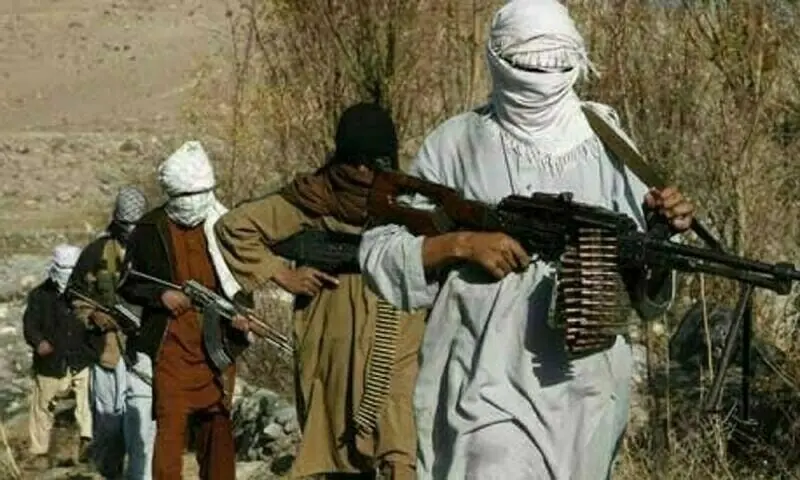
Tensions between India and Pakistan have escalated, with Pakistan accusing India of turning terrorism into a policy tool. This assertion is gaining traction beyond South Asia, reaching influential nations like the United States and Canada. The accusations stem from incidents involving Indian-linked militant groups, including the TTP and BLA, against Pakistan. The allegations against India have particularly intensified during the BJP-led era in New Delhi since 2014.
A significant case involves Kulbhushan Jadhav, a former Indian naval officer convicted in Pakistan on espionage and terrorism charges. India acknowledges Jadhav's nationality but disputes Pakistan's portrayal of his activities and arrest. The International Court of Justice addressed India's complaint over consular rights but did not determine the truth of the conflicting claims about Jadhav's involvement.
In the United States, Nikhil Gupta, an Indian national, pleaded guilty to a murder-for-hire plot aimed at assassinating a Sikh separatist leader in New York. US authorities allege Gupta acted under the direction of Vikash Yadav, an Indian government employee charged separately and facing accusations of directing the operation from within India. India denies having any government involvement.
Similarly, Canada has accused Indian agents of involvement in the 2023 killing of Sikh activist Hardeep Singh Nijjar in British Columbia, a claim India rejects. These American and Canadian cases have fundamentally altered the context in which Pakistan's longstanding allegations must be considered. Islamabad can no longer be portrayed solely as the only country alleging that India is pursuing covert policies beyond its borders.
Pakistan's claim that nearly 100,000 Pakistanis have been killed by terrorism since the turn of the century underscores the immense human cost associated with the broader terrorist threat. While responsibility for this toll cannot be solely attributed to India, Pakistan's specific allegations of Indian sponsorship must be subjected to investigation rather than being dismissed outright due to their origin in Islamabad.
The issue raises a broader principle: states cannot simultaneously claim sovereign protection while making another country's sovereignty negotiable when an adversary, dissident, or separatist is present there. If governments begin normalizing assassination plots, proxy violence, or covert sponsorship as foreign policy tools, the international rules they invoke for their own defense become increasingly irrelevant.
Pakistan has been making this argument about India for years, and the uncomfortable reality for New Delhi is that it is no longer the only country raising these questions.
Written by urgent.news from Business Recorder's reporting — not their text. Machine-written — may contain errors; check the original before relying on it.