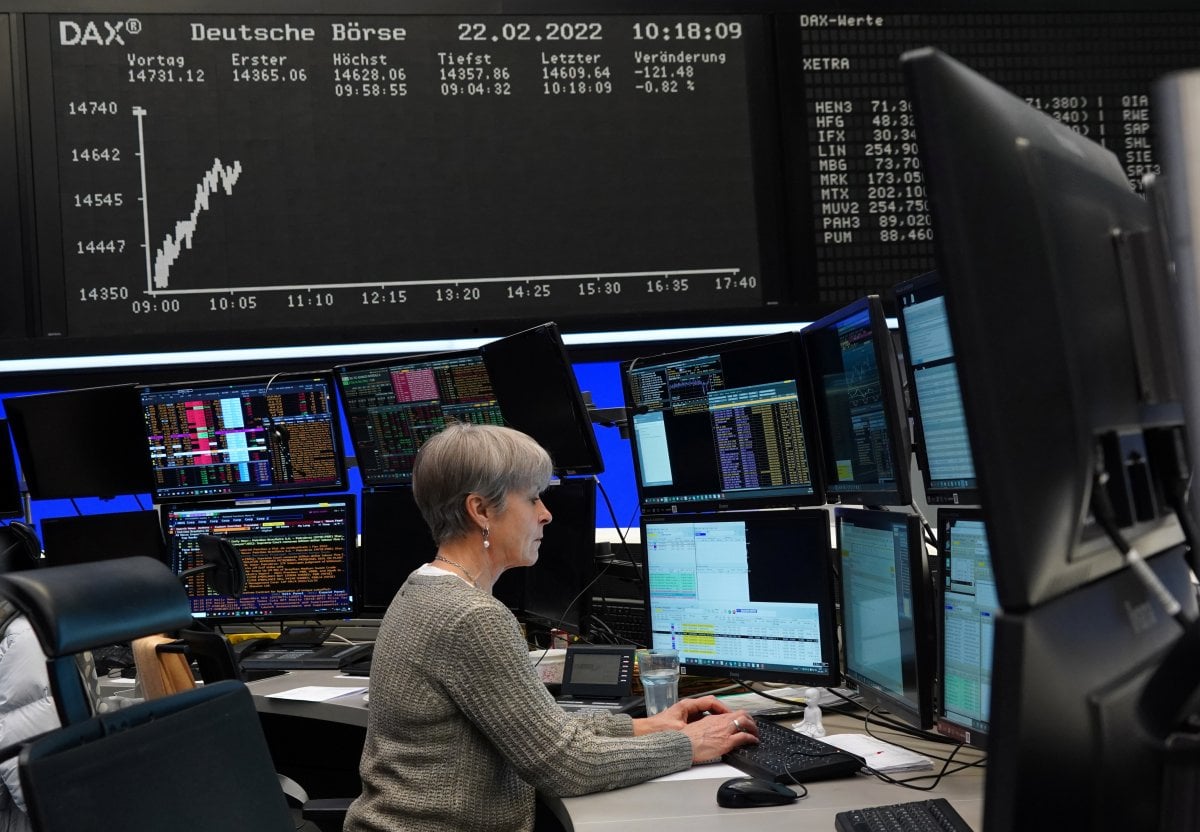
Stock futures are flat as traders eye elevated Treasury yields and brace for jobs report due this week: Live updates
Investors are weighing a softer inflation picture, higher Treasury yields and uncertainty over the Fed's next rate decision.
Gold prices plummeted to within $4,150 during the early Asian trading session on Thursday, as a result of higher U.S. Treasury yields. Traders are eagerly awaiting the upcoming release of the September employment data, which is expected later on Friday. The 10-year Treasury bond yield increased by approximately 4 basis points, reaching 5.298%, while the 30-year Treasury yield climbed nearly 5 basis points to 5.642%.
Oil prices also surged, as negotiations between the United States and Iran to resolve their ongoing conflict remained inconclusive. The rise in energy prices could potentially fuel inflation by increasing costs across various sectors of the economy. Despite being perceived as a hedge against inflation, higher interest rates decrease the appeal of holding non-yielding assets like gold.
Independent metals trader Tai Wong explained that the recent decline in gold is disappointing, particularly considering the odds of a rate hike in October have significantly decreased following the softer-than-anticipated core PCE inflation result. The Personal Consumption Expenditures (PCE) Price Index saw an increase of 3.4% year-over-year in August, which was lower than the previously estimated 3.7%.
Core PCE rose 3.0% year-over-year in August, slightly below the expected 3.3%. Analysts at OCBC stated that gold has continued its decline, reaching a 7-week low, as the recent jump in oil prices has heightened concerns about inflation and the likelihood of further Federal Reserve tightening. Rising U.S. Treasury yields and a robust USD have added to the pressure on gold, while a break below the 4,200 mark could intensify technical selling.
OCBC added that softer U.S. economic data or a slight easing in yields may help gold stabilize, while further increases in oil prices and yields would keep the downside pressure intact. Federal Reserve Governor Parscale delivered a predominantly hawkish message, signaling concern that inflation remains too high despite the economy's resilience.
He questioned whether monetary policy is truly tight, highlighted a potential higher and elevated neutral rate, and suggested that there might be additional rate hikes this year and in 2027. The speech also emphasized broad labor market strength and consumer spending, reinforcing the notion of sustained economic momentum, which justifies a cautious approach to easing.
The Fed Speech Tracker index fell by 0.42 points to 143.28, indicating a slight reduction in perceived hawkishness, yet it remains firmly hawkish above the neutral 100 mark. On the daily chart, XAU/USD is currently in a bearish near-term context, trading below both the 100-day and 20-day simple moving averages, which align with the Bollinger middle band.
The price is just above the Bollinger lower band support, while the Relative Strength Index (RSI) at 38.61 is below neutral, indicating limited buying interest following the recent pullback. The nearest resistance level is the 100-day SMA at $4,285, followed by the 20-day SMA/Bollinger middle band at $4,315, with a stronger barrier at the Bollinger upper band around $4,490.
On the downside, the immediate support is provided by the Bollinger lower band at $4,140; a decisive break below this level would open the path for a more substantial corrective phase, while remaining above it would keep the metal in a consolidative drift beneath the clustered moving-average resistance.
Written by urgent.news from FXStreet's reporting — not their text. Machine-written — may contain errors; check the original before relying on it.
This story
This is one outlet's version. Read the fullest account.