Prosperity Architecture: Drawing II – Organising institutions for shared prosperity
In the first drawing of Prosperity Architecture, I argued that Africa already possesses much of the knowledge required to build prosperity.

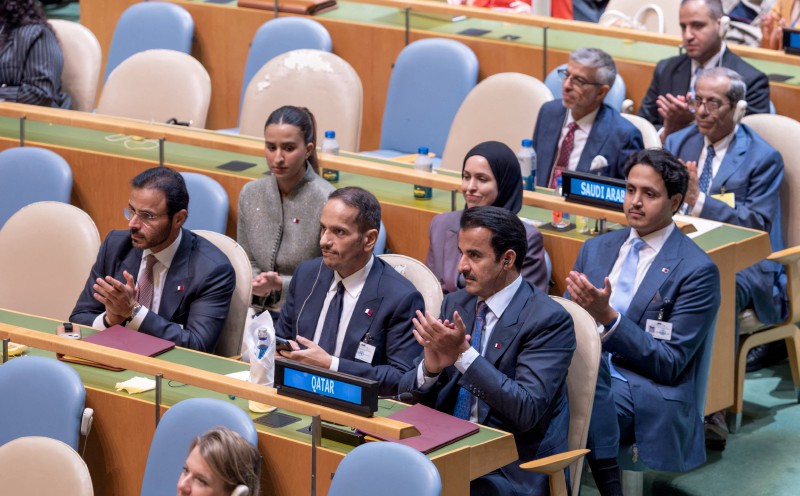
As the United Nations General Assembly High-Level Week concludes, global leaders have emphasized the necessity for stronger collaboration and quicker actions to tackle pressing international issues. The overarching objective is clear: institutions must produce tangible results for people. However, in practice, achieving these goals does not stem solely from declarations.
It hinges on institutions' ability to transform shared aspirations into unified decisions, investments, and observable enhancements in people's lives. This sentiment applies equally at national and global levels. In the initial drawing of Prosperity Architecture, it was asserted that Africa already possesses a significant portion of the knowledge necessary to foster prosperity.
Governments, universities, businesses, development institutions, and communities have amassed years of expertise in boosting productivity, reinforcing markets, and enhancing resilience. The challenge, however, lies not only in what Africa knows but also in how its institutions can leverage that knowledge. Knowledge proves valuable when institutions can access, link, and convert it into improved decisions, investment prospects, innovation, and higher returns.
Consequently, Africa's institutional challenge revolves around alignment: facilitating cooperation among governments, businesses, research institutions, financiers, development actors, and communities to utilize dispersed knowledge as a collective asset for prosperity. Prior to a processor expanding a factory or a bank financing a value chain, a farmer embarks on the initial investment.
This entails dedicating land, labor, capital, and time. Once the crop is established, a substantial portion of that investment becomes irretrievable, while the return remains subject to external factors such as weather, input costs, prices, and market availability. From an economic standpoint, the farmer is not merely a recipient of the food system.
She is the foremost and most invested stakeholder. Once this realization is achieved, the institutional question undergoes a transformation. The task extends beyond merely supporting production. It involves organizing the conditions that enable farming enterprises to generate consistent returns and instill confidence in other investors to follow suit.
These conditions extend beyond agriculture alone. They encompass energy, roads, irrigation, finance, insurance, information, standards, research, skills, and predictable policy. Integration is not merely a program label; it signifies whether complementary support reaches the same location, value chain, and individuals at the appropriate time.
However, coordination alone is insufficient. Increased production becomes prosperity only when value is generated and retained. Institutions must address where margins are retained, where markets falter, and how public decisions can assist farming enterprises in progressing from merely producing more to earning more. Transformation commences when productivity evolves into income, supports processing and services, generates productive employment, and renders nutritious food more affordable.
Farmer prosperity consequently acts as a catalyst for broader economic development. An area does not prosper solely due to the presence of roads, electricity, or financing products in isolation. Prosperity emerges when these investments are interconnected around a common economic outcome: more reliable farmer incomes, viable enterprises, functional markets, and strengthened livelihoods.
Coordination does not entail every institution performing every function. Instead, it implies that institutions make decisions based on a shared prosperity goal, ensuring that one investment enhances the return on another. This places Ministries of Finance at the forefront of discussions, not to dictate every sector, but because budgets reveal whether conflicting priorities collectively form a coherent prosperity strategy.
The crux of the Institutional Drawing revolves around three key questions. Firstly, who is responsible for the prosperity outcome? Farmer prosperity cannot be solely the domain of the Agriculture Ministry. Shared ownership begins by defining the economic outcome and identifying which institutions bear accountability for creating the necessary conditions to achieve it.
Secondly, what must institutions collectively accomplish? The benchmark is whether policy, budgets, and investments reinforce one another, whether risks become more manageable, and whether more value is retained within the economy. Lastly, how should collective action be structured? The aim is not to bring everyone to every table.
Rather, it involves connecting those who hold authority, control budgets, bring capital, assume risk, contribute knowledge, and remain accountable for outcomes. These questions form the basis of AGRA's call for a Renewed Alliance: a pragmatic pact aligning public, private, research, farmer, and development institutions around measurable prosperity outcomes.
Its purpose is to convert shared knowledge into coordinated investments and establish the conditions for farmers and enterprises to invest and reinvest. Ultimately, the enduring query following UNGA no longer concerns whether the world can articulate greater ambition. It revolves around whether our institutions can align themselves to deliver it.
Farmer prosperity is not merely an outcome of Africa's transformation; it serves as a litmus test for our institutions and has the potential to become one of the engines driving our broader prosperity.
Written by urgent.news from MyJoyOnline Ghana's reporting — not their text. Machine-written — may contain errors; check the original before relying on it.