Powell cleared in handling of Fed renovations
Welcome to The Hill's Business & Economy newsletter {beacon} Business & Economy Business & Economy The Big Story Powell cleared in handling of Fed renovations Former Federal Reserve Chair Jerome Powell and Fed officials did not violate criminal law during their handling of the central bank’s ongoing multimillion-dollar renovation project, the Fed’s internal watchdog...
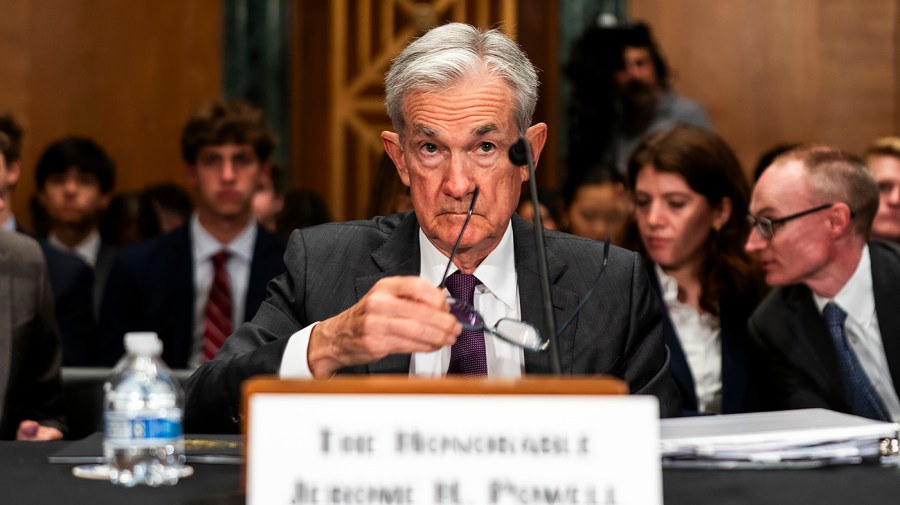
President Donald Trump publicly and privately criticized Jerome Powell, the head of the United States central bank, after Powell failed to deliver the interest-rate cuts that Trump desired. The tensions between Trump and Powell intensified in 2025, during Trump's second term, when cost overruns in the renovation of the Fed's Washington headquarters became a focal point for efforts to remove Powell from his position, or at least pressure him into adopting a more accommodating monetary policy. These efforts ultimately proved unsuccessful.
The renovation project began in 2021 with the approval of an initial budget for both the Eccles Building, constructed between 1935 and 1937, and the 1951 Constitution Avenue Building, built in 1932. Both structures are situated on the National Mall and are listed on the National Register of Historic Places. The Fed's Inspector General conducted audits in 2021 and 2022, to which the Fed indicated it had complied with the watchdog's recommendations on project management.
However, news reports soon surfaced about the spiraling costs of these ornate renovations, reaching an estimated $2.46 billion by December 17, 2024, up from $1.88 billion in the previous budget.
Elon Musk, then head of the Trump administration's Department of Government Efficiency, called for an investigation into the cost overruns. Senate Banking Committee Chair Tim Scott questioned Powell about the lavish renovations during a hearing on monetary policy. Powell defended the projects, citing the old age of the buildings and safety concerns, and denied reports of luxurious upgrades.
Director of the Office of Management and Budget Russell Vought informed Powell in a letter that he was extremely troubled by the cost overruns. Democratic Senator Elizabeth Warren suggested the complaints were a clear pretext to fire Fed Chair Powell.
Powell attributed much of the rising costs to the post-pandemic surge in inflation and to design changes mandated by the national planning commission and unanticipated expenses, such as the handling of asbestos. Trump visited the construction site and threatened to fire any project manager responsible for cost overruns of a comparable scale.
Powell sought the Fed Board's Inspector General, Michael Horowitz, to reevaluate the project's cost. Trump considered filing a lawsuit against Powell over the renovations, according to a White House spokeswoman.
In a highly unusual Sunday evening video statement, Powell disclosed that the Department of Justice had issued grand jury subpoenas threatening a criminal indictment related to the renovations. Powell labeled this an unprecedented attempt at intimidation. Republican Senator Thom Tillis vowed to block Trump's nomination of Kevin Warsh as Powell's successor until the matter was resolved, emphasizing the importance of maintaining Fed independence.
Chief US District Judge James Boasberg blocked the subpoenas, siding with Powell that they were issued for improper purposes aimed at pressuring him into lowering interest rates or resigning. The DOJ declared it would close its investigation into the Fed's cost overruns once Powell confirmed that the probe would not be reopened without a criminal referral from the Fed's Inspector General. Tillis allowed the Warsh nomination to proceed.
Powell announced his intention to remain at the Fed after his term as chair ended in May, pending the conclusion of this investigation, emphasizing transparency and finality. The DOJ reassured Powell that it would not reopen the probe unless there was a criminal referral from the Inspector General. Eventually, Warsh ascended to become the Fed chairman, while Powell continued to serve on the Fed Board, participating in private deliberations on monetary policy and voting on interest rates but maintaining a low public profile.
The Inspector General's Office issued a report identifying deficiencies in the Fed Board's oversight of the project but found no evidence of misconduct or grounds for a criminal referral.
Written by urgent.news from Investing.com's reporting — not their text. Machine-written — may contain errors; check the original before relying on it.
This story
This is one outlet's version. Read the fullest account.