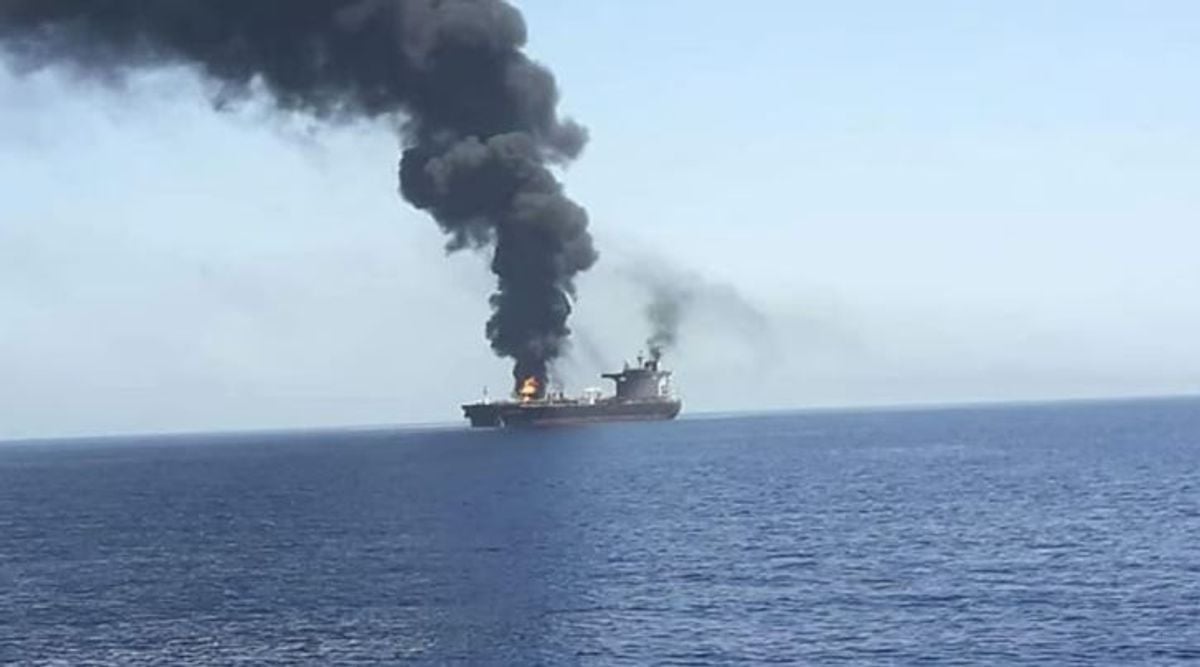
LNG tanker hit by unidentified projectile in Strait of Hormuz
A British maritime authority reported an LNG tanker was struck by an unidentified projectile in the Strait of Hormuz, prompting an official investigation.
Iran's ability to maintain control over the Strait of Hormuz has diminished significantly, potentially leading to a long-term problem for global oil markets. Despite considerable support from the US Navy, Gulf oil producers have been able to maintain robust flows through the critical chokepoint, averaging 13.1 million barrels per day last week, which is nearly 80 percent of the 17.1 million barrels daily before the conflict began.
Overall, Middle Eastern crude flows have rebounded to 98 percent of prewar levels, according to JPMorgan.
This new status quo is the result of a sophisticated operation involving military-escorted shuttles conducting clandestine "dark" transits, which have helped restore significant flows for Middle East oil producers. Additionally, Saudi Arabia's oil, previously diverted to the Red Sea, has returned, making up for the loss caused by the Houthis' attack on a major Saudi oil pipeline earlier this month.
However, a crucial question remains: how long can the current situation persist? The US military is investing significant resources in ensuring oil reaches its destinations while global inventories continue to dwindle towards operational lows, and fuel prices remain at or near record highs. Iran, feeling increasingly cornered, is responding with countermeasures.
The oil market remains creative in its efforts to get oil to global customers amidst the unprecedented supply shock. Global oil inventories have shrunk by around 2 billion barrels during the Iran war, yet the market has managed to withstand this challenge through various means, including pipeline diversions and military-backed shuttles, as well as increased production from outside the Gulf.
However, the current situation in Hormuz cannot last indefinitely, as oil is a physical commodity, and at some point, market forces will prevail. Eventually, with more crude coming out of inventories than entering, the balance may be tipped, and stockpiles will fall short of meeting demand. At this point, oil prices will likely surge to curb demand. However, no one can predict precisely when this tipping point will occur.
Written by urgent.news from Egypt Independent's reporting — not their text. Machine-written — may contain errors; check the original before relying on it.
This story
This is one outlet's version. Read the fullest account.
- Iran has lost considerable leverage in the Strait of Hormuz. It can’t go on like this forever egyptindependent.com
- L’Imad maps port expansion beyond Strait of Hormuz thearabianpost.com
- Iran’s IRGC says it attacks ships daily in Strait of Hormuz middleeasteye.net
- ‘Economic war’: Is Iran losing its leverage over the Strait of Hormuz? aljazeera.com