Just sun, wind and time — Ng Kwan Hoong
SEPTEMBER 30 — I recently came across a sight that is becoming increasingly rare.In an open field in Taiping, rows...
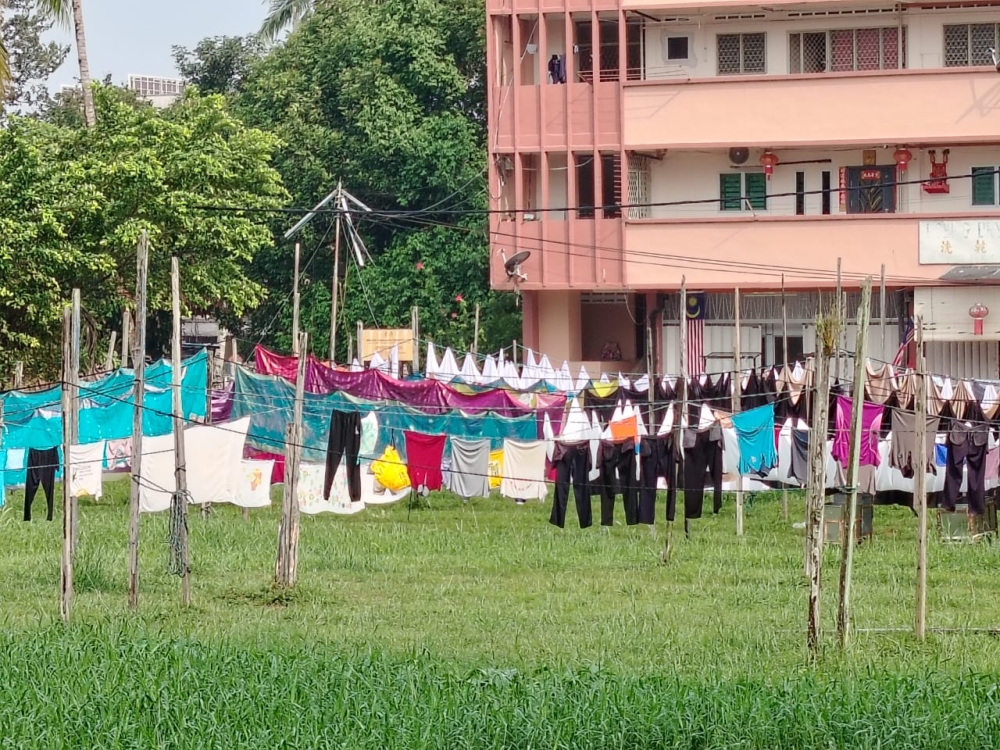
On September 30, a sight emerged in Taiping that remains increasingly uncommon. Rows of freshly laundered garments hung from simple poles and clotheslines, their movement swaying gently in the afternoon breeze. Towels, blankets, shirts, trousers, and large pieces of fabric stretched beneath the open sky, absorbing the warmth of the sun. Tumble dryers were absent, replaced by the natural elements of sun, wind, and time.
The experience of watching clothes dry naturally prompted reflection on the evolution of laundry practices. For most of human history, washing clothes was a physically demanding task, requiring soaking, scrubbing, rinsing, wringing by hand, and carrying the wet garments outside to dry. This labor-intensive process built physical strength and fostered community interactions, with families gathering by water sources to wash clothes, sharing news, conversation, and laughter.
Professional laundry workers, known as dhobis, brought their expertise from the Indian subcontinent to South-east Asia, including Malaya. They washed, dried, and ironed clothes for households that relied on their skills and hard work. However, their trade has largely vanished, supplanted by washing machines, laundries, and 24-hour self-service laundromats.
Observing the clothes drying in Taiping, the author realized that the dhobi embodied a time when ordinary work harmoniously partnered with nature. The sun was integral, the wind assisted, and time dictated when clothes could dry, not a program or timer. Modern technology has revolutionized laundry, sparing us hours of manual labor.
Spin cycles remove excess water, electric dryers work regardless of weather, and life has become easier for busy families. Yet, the author questions whether such convenience disconnects us from the natural world that sustains us.
The author, a biomedical imaging professor and Merdeka Award recipient, advocates for a balance between technology and nature. While modern appliances offer significant benefits, they can make everyday tasks invisible, disconnecting us from the natural rhythms of the world. The simple clothesline serves as a reminder that effective technologies often work in harmony with nature, just as a sailboat harnesses the wind or solar panels capture sunlight.
Progress is most beneficial when it encourages us to live more wisely with the environment, rather than forgetting its presence altogether. In the end, all it takes is just sun, wind, and time.
Written by urgent.news from Malay Mail's reporting — not their text. Machine-written — may contain errors; check the original before relying on it.