Inside the $100M AI bet to track wildlife across the Amazon in real time
Hobbled by a lack of data, scientists have been unable to track biodiversity across much of the planet. A new initiative called Amazon.ia shows how technology might help solve the problem.
In 2025, the Amazon rainforest lost 1.63 million hectares, but the extent of wildlife loss remains unknown. This highlights the challenge of tracking biodiversity in the area. Satellites provide a global view, but monitoring species in the Amazon feels like studying a distant galaxy through a pinhole. Amy Rosenthal, head of conservation at Planet Labs, explains that while a tree falling anywhere in the world is often known within days, little is known about changes to biodiversity below the canopy.
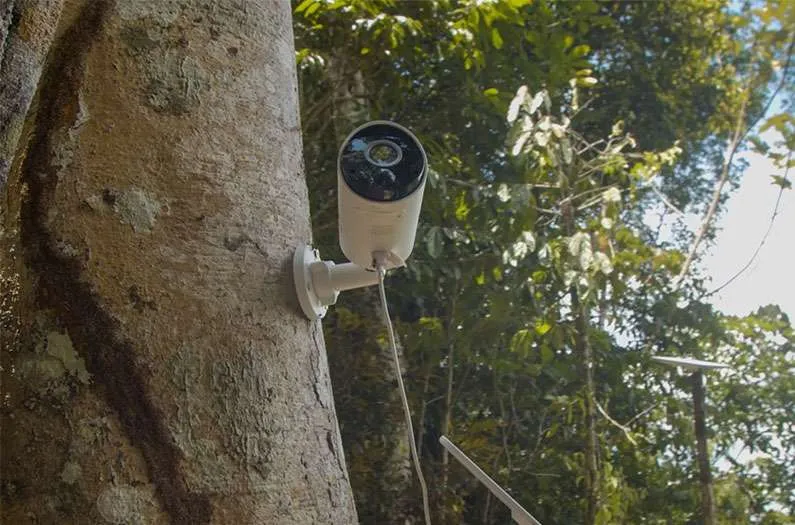
The Amazon.ia project aims to change this by deploying a network of wildlife-tracking instruments across the Amazon. The plan, announced last week, envisions 10 to 30 sites equipped with camera and audio recorders, insect traps, and links to data processing computers. The goal is to generate a near real-time, high-resolution picture of the region's biodiversity, updated continuously.
While still in its early stages, recent advances in technology suggest the project is feasible. Amy Berger-Wolf, an Ohio State University computational ecologist, notes that monitoring everything at once is now a realistic goal.
Scientists are developing new technologies to improve wildlife monitoring. Cheap, durable audio recorders and motion-activated cameras are analyzed by AI to identify species and patterns. Automated field labs can collect and sequence wildlife DNA, and hyperspectral imaging satellites can detect environmental stress. A recent XPrize competition demonstrated these tools' capabilities, documenting hundreds of species in a small Amazon patch within 24 hours.
The Amazon.ia initiative will equip core sites with the necessary technology. Several South American research groups, including those in Peru, Ecuador, and Brazil, are involved. These stations will feed data into the network, providing a regional perspective. Corine Vriesendorp, head of science at Conservación Amazónica, explains that the program will help identify regional trends and inform political action.
However, the project's success depends on securing $100 million for a 10-year run, with $20 million already raised from the Bezos Earth Fund.
The initiative faces technical limitations, such as the inability of acoustic data to accurately determine bird population sizes. Additionally, creating a detailed view of the entire Amazon, spanning 7 million square kilometers, presents significant challenges. Even with advanced models and many observation points, understanding the full scope of biodiversity changes will likely remain difficult.
Written by urgent.news from Anthropocene Magazine's reporting — not their text. Machine-written — may contain errors; check the original before relying on it.