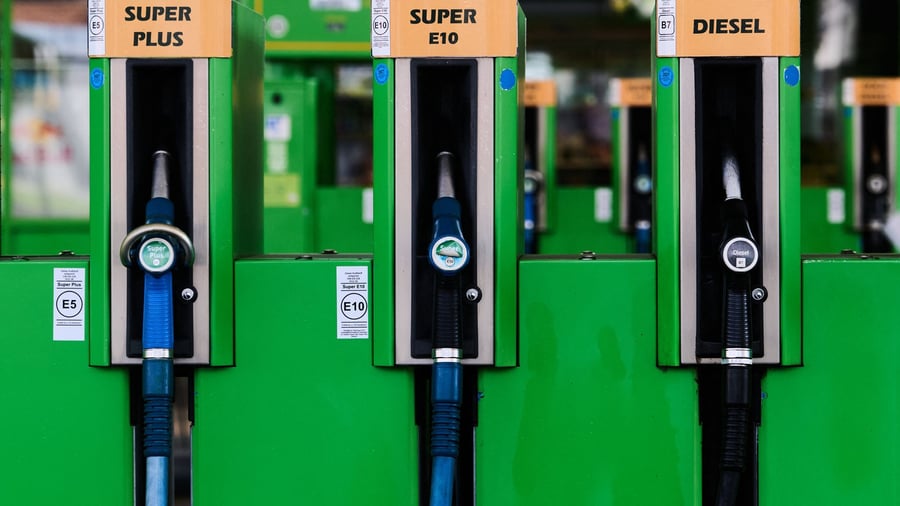
Inflation: Price increase in Germany rises to 3.3 percent
Inflation in Germany jumps to its highest level in almost three years. Alarmingly for the ECB, consumer prices are rising faster than expected across the euro zone.
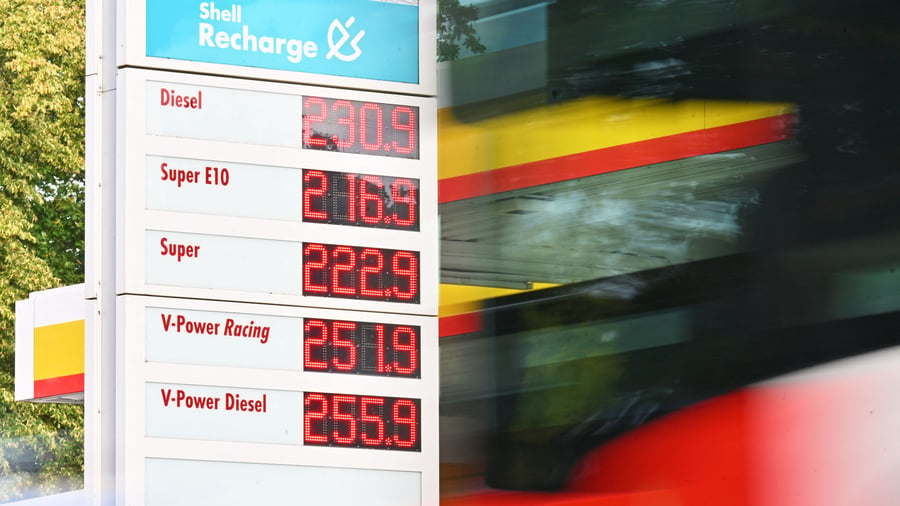
Deutsche Inflation continues to rise sharply, reaching 3.3 percent in September compared to a year ago, according to the Federal Statistical Office. This figure is the highest since December 2023. Experts surveyed by Bloomberg had predicted a modest increase of 2.9 to 3.0 percent in the Harmonized Consumer Price Index (HVPI) and 3.1 percent in the national calculation (VPI).
However, the VPI also rose to 3.3 percent. Investors are reacting with uncertainty as first data from individual states hint at a significant inflation surge. German government bond yields are climbing and bond prices falling due to expectations of further interest rate hikes and bond sales. Inflation is increasing across the Eurozone, with Spain seeing the rate rise from 4.6 to 5.0 percent and Italy from 3.2 to 4.1 percent, both the highest values since 2023.
France is experiencing a two-year high of 3.4 percent. No major Euro countries had anticipated such steep increases. The inflation for the Eurozone as a whole has moved far away from the ECB's 2 percent target, reaching 3.2 percent in August. The Eurostat projection for the initial estimation by the Statistical Office is 3.5 percent.
While energy prices remain the main driver of price growth, experts warn that inflation is becoming more widespread, and the recent fuel rebate will only marginally dampen inflation from October to December. With oil and gas prices up 14.9 percent year-on-year, imported intermediate goods have also become significantly more expensive than a year ago, with statisticians registering double-digit price hikes in commodities such as copper, precious metals, aluminum, plastics, and electronic components.
Overall, import prices rose as strongly as in nearly four years, by 8.3 percent, slightly more than expected. Company expectations for prices are also rising, as reported by the Ifo Institute. Companies plan to pass on higher energy prices to consumers. This means that "price pressure on many goods and services will continue to increase," said Ifo Chief Economist Timo Wollmershäuser.
The Ifo Institute and four other institutes predict an average inflation rate of 3.2 percent for the coming year, largely due to higher heating oil, gas, and electricity prices for private households, which were still falling in the first half of 2026 according to the statistics office.
Written by urgent.news from Handelsblatt's reporting — not their text. Machine-written — may contain errors; check the original before relying on it.