Hurricane Polo hits the Sonora coast after making landfall and crossing the Baja Peninsula
Based on press reports and preliminary statements from authorities, the storm caused more damage as a Category 1 hurricane on the mainland coast then it did as a supposedly much stronger Category 3 as it crossed the Baja Peninsula. The post Hurricane Polo hits the Sonora coast after making landfall and crossing the Baja Peninsula appeared first on Mexico News Daily
Hurricane Polo, once a formidable force off Mexico's west coast, made landfall in Baja California Sur on Monday night, unleashing heavy rain and causing minimal damage before continuing its journey across the Peninsula and into the Gulf of California, where it struck the Sonora coast on Tuesday morning. The city of Guaymas and nearby Empalme experienced flooding, power outages, and tree damage, while storm-generated waves crashed over the Guaymas boardwalk, inundating streets.
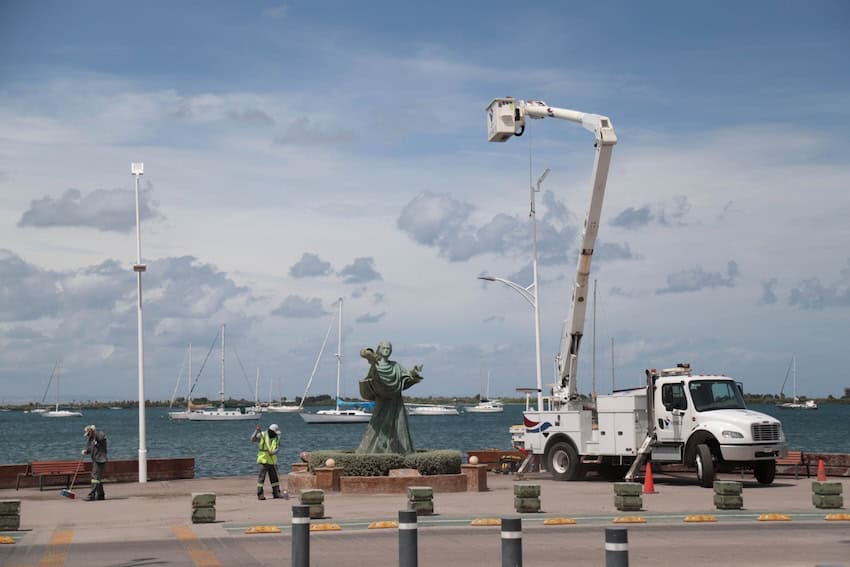
In anticipation of Polo's arrival, La Paz, the capital of Baja California Sur, had prepared city employees. Governor Víctor Manuel Castro Cosío reported a "white balance" with no deaths or injuries, attributing the absence of significant harm to the ocean's strength outweighing the hurricane's. Despite landfalling as a Category 1 storm, Polo unexpectedly strengthened to a Category 3 in Baja California Sur, eliciting relief among state authorities.
The Mexican Navy had personnel ready along the northern Pacific coast, and three vessels were deployed to provide aid to isolated coastal communities. Local authorities along the Baja California Peninsula had shelters prepared. Travel was suspended in areas expected to receive the hurricane, and ports were closed. Polo was anticipated to weaken later on Tuesday as it moved inland, according to the U.S. National Hurricane Center.
Mexican authorities advised residents to stay indoors in high-risk zones, and hundreds had been evacuated. Although the hurricane brought sustained winds of 150 to 170 km/h with gusts of 180 to 200 km/h and waves 7 to 9 meters high to the Peninsula, the Mexican National Meterological Weather Service reported "more water than wind," resulting in only minor damage and an overall capacity to manage the situation.
Written by urgent.news from Mexico News Daily's reporting — not their text. Machine-written — may contain errors; check the original before relying on it.