How the pipa frog hunts prey by touch
Each of the frog’s eight fingers branches into 16 ultra-sensitive tips, which together function as a fovea—potentially the first demonstration of this type of sensory structure outside of mammals.
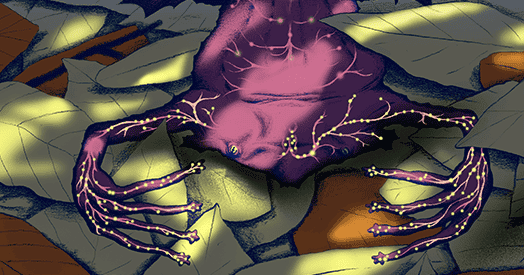
The Pipa pipa frog is a skilled hunter that employs its sense of touch to capture prey, rather than chasing it. Each of the frog’s eight fingers branches into 16 ultra-sensitive tips, functioning as a fovea—potentially the first discovery of this type of sensory structure outside of mammals. The Pipa pipa utilizes high-speed camera recordings to capture its prey, such as fish and worms, which swim near but do not touch its hands.
The frog’s sense of touch plays a crucial role in its hunting success. The researchers from UCLA found that the fingertips compose only 8% of the forelimbs’ surface area, yet their representation occupies 34% of the forelimb space in the optic tectum of the frog's brain, similar to a fovea found in mammals. The fingertips' heightened sensitivity and receptor density suggest that they act as a fovea, a sensory structure with specialized processing of specific information.
This fovea-like structure could demonstrate how animals dedicate specific areas of their sensory system to dedicated functions, providing a more straightforward communication line from the external world to the brain. Next, the researchers aim to investigate the development of the fovea in Pipa pipa frogs, specifically how the representation within the CNS changes as the fingertips become more elaborate.
Written by urgent.news from The Transmitter's reporting — not their text. Machine-written — may contain errors; check the original before relying on it.