How ‘Industry 5.0’ integrates human expertise with artificial intelligence
[The content of this article has been produced by our advertising partner.] The European Commission defines Industry 5.0 as placing human-centricity, sustainability and resilience at the core of industrial progress. In practice, this means AI-powered robots take on repetitive, physically demanding or hazardous work while people focus on critical thinking and higher-value decisions. The future of…
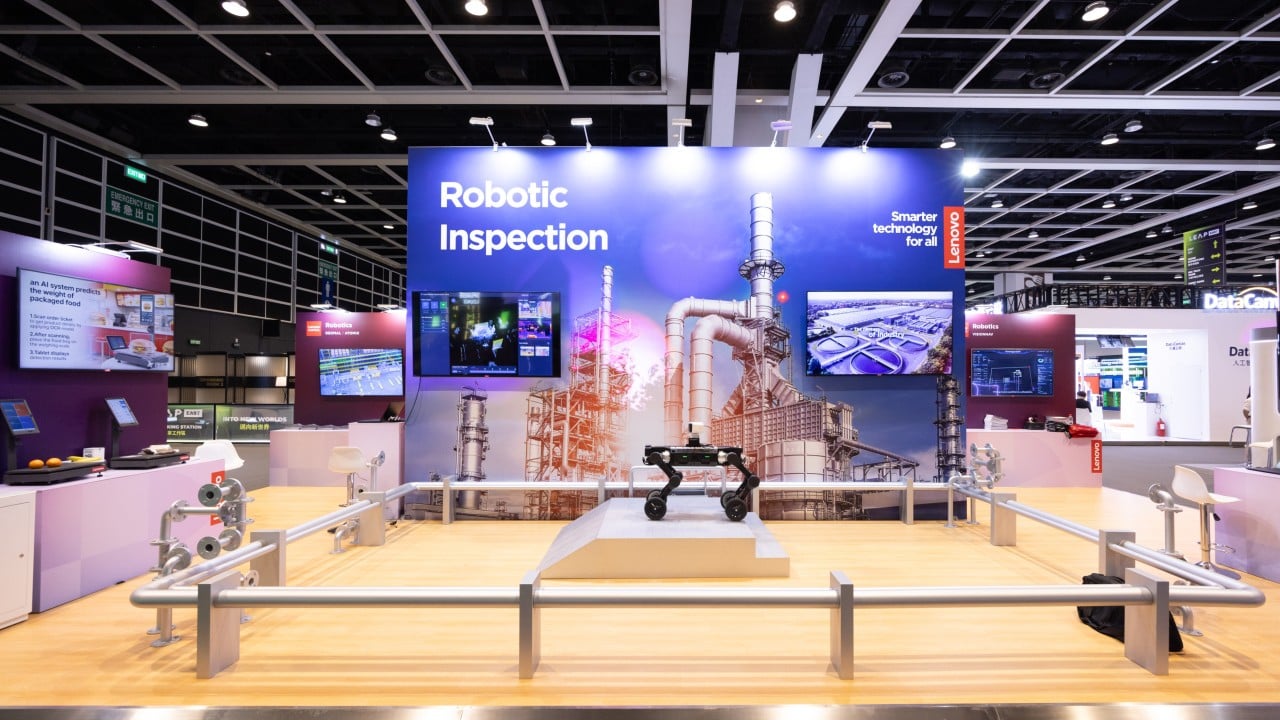
Industry 5.0 merges human expertise with artificial intelligence, placing emphasis on human-centricity, sustainability, and resilience. This is achieved by AI-powered robots taking over repetitive, physically demanding, or hazardous tasks, while humans focus on critical thinking and higher-value decisions. Physical AI and agentic AI play crucial roles in this evolution.
Physical AI gives digital intelligence the capability to act in the physical world, integrating robotics, sensors, edge computing, and simulation. This enables machines to process various types of data, augment human processing, and make real-time adaptive decisions. Lenovo's robotic inspection solution, for instance, navigates complex or hazardous environments with minimal human intervention, reducing employee exposure to risk and enhancing workplace safety.
Agentic AI connects the actions of machines to decisions and workflows across the wider operation. It can reason across data, coordinate processes, and determine subsequent actions. This transforms the relationship between people and machines, allowing for shared environments where machines can perceive proximity, movement, and changing conditions.
Lenovo's pick-assist autonomous mobile robot is an example, combining human intelligence and dexterity with AMR payload capability and movement endurance, driving higher productivity.
In smart warehouses, AI can make logistics more responsive, identify quality issues early, and detect safety risks. At a leading logistics company in Singapore, integrating AI and autonomous robots resulted in up to 40% faster order processing and 30% reduction in energy consumption. Similarly, Yili Group, a large-scale dairy producer, uses AI-driven customer insights and supply-chain control to turn fragmented information into timely decisions, reflecting the shift towards operational intelligence in Industry 5.0.
However, achieving Industry 5.0 resilience requires intelligent operations across suppliers, planning, manufacturing, logistics, and fulfilment. Lenovo iChain, a supply chain extension model, connects data, decisions, and execution, helping organizations anticipate disruptions rather than react to them. By improving the accuracy of its delivery system by 30% and reducing order-to-ship lead times by around 20%, Lenovo's iChain implementation saved over US$150 million in 2025.
Ultimately, winning in the Industry 5.0 era is about recognizing where technology can enhance human capabilities, making businesses adaptable, sustainable, and resilient.
Written by urgent.news from SCMP Tech's reporting — not their text. Machine-written — may contain errors; check the original before relying on it.