Francis Fukuyama on why we’re better than our ancestors
In 1675, Madame de Sévigné wrote a letter to her daughter about a musician “broken on the wheel.” This meant being strapped to an X-shaped cross, where an executioner would systematically break the victim’s bones, leaving him to die slowly from blood loss or dehydration. And then, within a few lines, she’s talking about her neighbor Madame de Tarente enjoying the woods in enchanting weather. In…
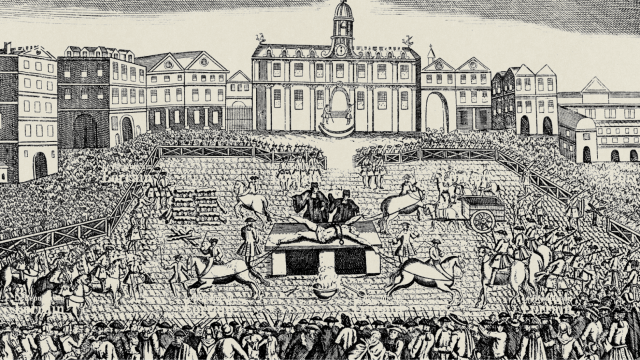
In 1675, Madame de Sévigné lamented a musician "broken on the wheel," a gruesome punishment involving breaking bones and eventual death by blood loss or dehydration. Later, in 1849, Charles Dickens observed thousands gathered to watch a husband and wife executed in Southwark, where they sang a song to the condemned prisoners. Thomas Thistlewood, an overseer in Jamaica from 1750 to 1786, detailed in his 14,000-page diary the torture of enslaved people and his sexual assaults of over 100 women.
Francis Fukuyama, in his new book, In the Realm of the Last Man, argues that these stories demonstrate societal progress - that we are making "better" societies. However, what exactly has changed? Looking back at these instances, we see societies that either coldly accepted violence or took cold pleasure in the torture of others.
These societies normalized inhumanity, making the poor, criminals, and outsiders moral inferiors. Fukuyama contends that this isn't the norm anymore. Though people still engage in cruelty, the norm today is universality - most people, globally, believe that human beings deserve at least some moral consideration. Even 73% of people worldwide think human rights exist.
Most countries have abolished the death penalty, and 80% of people consider torture universally wrong. Fukuyama acknowledges that this progress is not linear, with setbacks such as world wars, genocide, and violent crime. However, the world is still better off than it was 50 or 100 years prior. When asked about applying universalism or global cosmopolitanism, Fukuyama argues that people's love for those close to them can't be easily replaced by abstract moral obligations.
Furthermore, enforced universalism would undermine the nation-state, a necessary political structure to protect communities and enforce laws effectively. Therefore, while moral progress may be uncertain in the political sphere, there is still a noticeable trend towards better societies.
Written by urgent.news from Big Think's reporting — not their text. Machine-written — may contain errors; check the original before relying on it.