China’s R&D spending hits record 2.8% of GDP, beating OECD average for the first time
For the first time, China’s spending on research and development as a share of gross domestic product has surpassed the average for Organisation for Economic Cooperation and Development (OECD) members – a trend one analyst expects to continue as Beijing seeks to strengthen technological self-reliance amid intensifying global competition. R&D expenditure exceeded 3.92 trillion yuan (US$584.8…
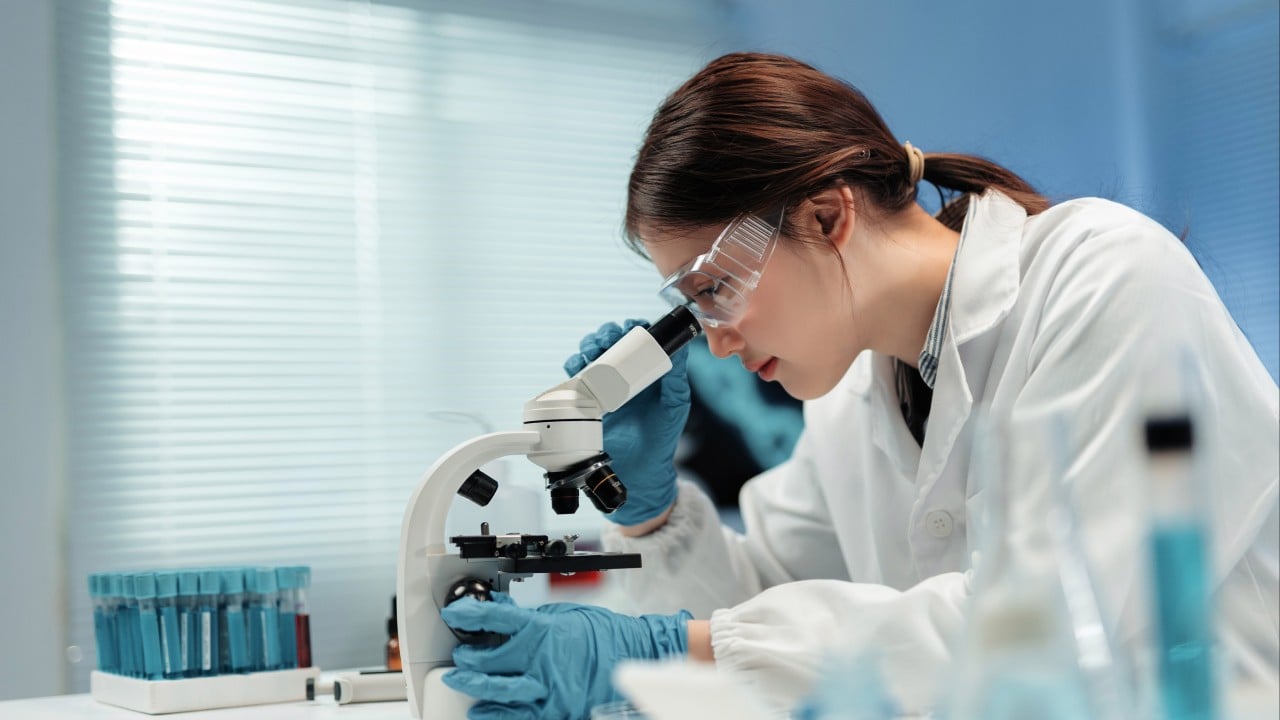
In 2025, China's investment in research and development (R&D) as a percentage of its gross domestic product (GDP) reached an all-time high, surpassing the Organisation for Economic Cooperation and Development (OECD) average for the first time. The Chinese Ministry of Science and Technology reported that R&D expenditure totaled 3.92 trillion yuan (US$584.8 billion), accounting for 2.8% of GDP.
The OECD average for that year stood at 2.7%. Wang Peng, an associate researcher at the Beijing Academy of Social Sciences, hailed this achievement as evidence that China's investment in innovation now matches that of developed economies and projected a continued rise in the R&D share of GDP, emphasizing the need to optimize funding allocation and enhance research efficiency.
Wang specifically urged a greater focus on "zero-to-one" innovation – original, high-risk discoveries that drive breakthroughs and industry transformation. Beijing's push for technological self-reliance remains strong, fueled by global competition, particularly with the United States in areas like advanced chips and artificial intelligence.
The government also faces scrutiny over strategic industries such as clean energy, electric vehicles, and critical minerals. Minister Yin Hejun stressed the importance of basic scientific research in achieving technological breakthroughs and addressing national security and other strategic priorities. Beijing plans to bolster funding in critical sectors like semiconductors, industrial machinery, and high-end instruments while expanding support for frontier technologies such as AI, quantum technology, biotechnology, and brain-computer interfaces.
President Xi Jinping directed Sichuan University to leverage its interdisciplinary expertise in the humanities, sciences, engineering, and medicine to advance China's national strategy. The Ministry of Education announced plans to increase undergraduate places at top-tier universities between 2027 and 2030, focusing on high-demand fields including AI, semiconductors, biomedicine, and new energy.
Written by urgent.news from South China Morning Post's reporting — not their text. Machine-written — may contain errors; check the original before relying on it.