Bogota’s Public Lighting Enters Modernization Phase, With More Taxes
Bogota is moving toward becoming a more modern, innovative and competitive city. The City Council has just approved Agreement 724 of 2026, for a “Smart City,” which provides for the implementation of a smart public lighting system. The purpose is to modernize more than 100,000 streetlights with LED technology. But this is not only about […]
Bogota is transitioning to a more modern and efficient cityscape with the approval of Agreement 724 of 2026. This agreement aims to modernize public lighting by replacing over 100,000 streetlights with LED technology, while also incorporating sensors, remote management, and monitoring systems. These enhancements will not only improve lighting efficiency but also support security, mobility, environmental management, and emergency response.
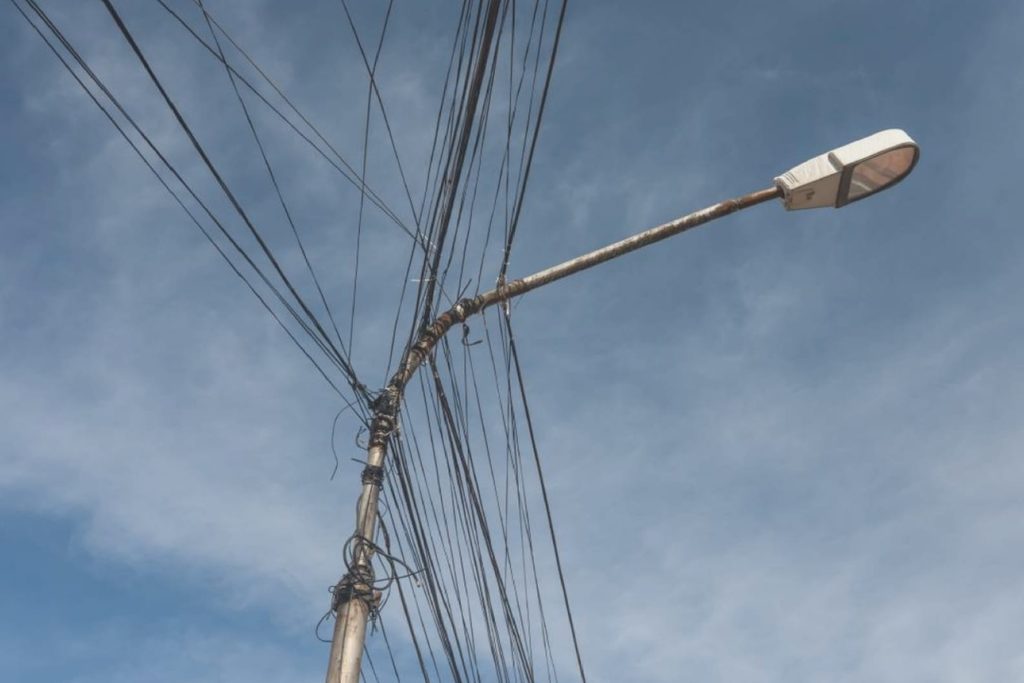
The outdated infrastructure, characterized by exposed cables and tangled networks, will be transformed as network operators identify and remove unused networks. This will lead to fewer cables near residential areas and the undergrounding of infrastructure, resulting in a cleaner and more organized cityscape.
A key aspect of the modernized system will be the installation of remote management nodes at each streetlight. These nodes will enable remote control of lighting intensity and schedules, optimizing energy consumption and facilitating quick detection and repair of any failures. Additionally, air quality sensors, fire sensors, and security cameras will be integrated into the poles, expanding the city’s monitoring capabilities and ensuring faster emergency response times.
The modernization efforts are projected to yield significant energy savings, with estimates suggesting a potential reduction of up to 70% in energy consumption compared to the current sodium-technology streetlights. The "Smart City" Agreement will be submitted to Bogota Mayor Carlos Fernando Galan for approval, after which it will be implemented starting January 1, 2027.
The implementation process will be funded through a surcharge on the unified property tax, which will only apply to socioeconomic strata 4, 5, and 6. The exact amount of the surcharge will depend on the property's taxable base and will not be uniform across all owners.
It is important to note that the surcharge will not be levied monthly on the electricity bill. Instead, it will be tied to the annual property tax assessment. In addition to residential properties, the surcharge will also apply to commercial, industrial, and financial properties, contingent upon the conditions outlined in the project.
The District Administration anticipates that these measures will attract US$23.541 billion in private investment and generate 215,000 jobs over the next decade, while also reorganizing parts of Bogota's tax structure.
Written by urgent.news from Colombia One's reporting — not their text. Machine-written — may contain errors; check the original before relying on it.