Beyond Coding: Why AI Makes Systems Thinking More Important For Engineers
Engineering education needs to move beyond writing code and equip students to understand how entire software systems work, according to…
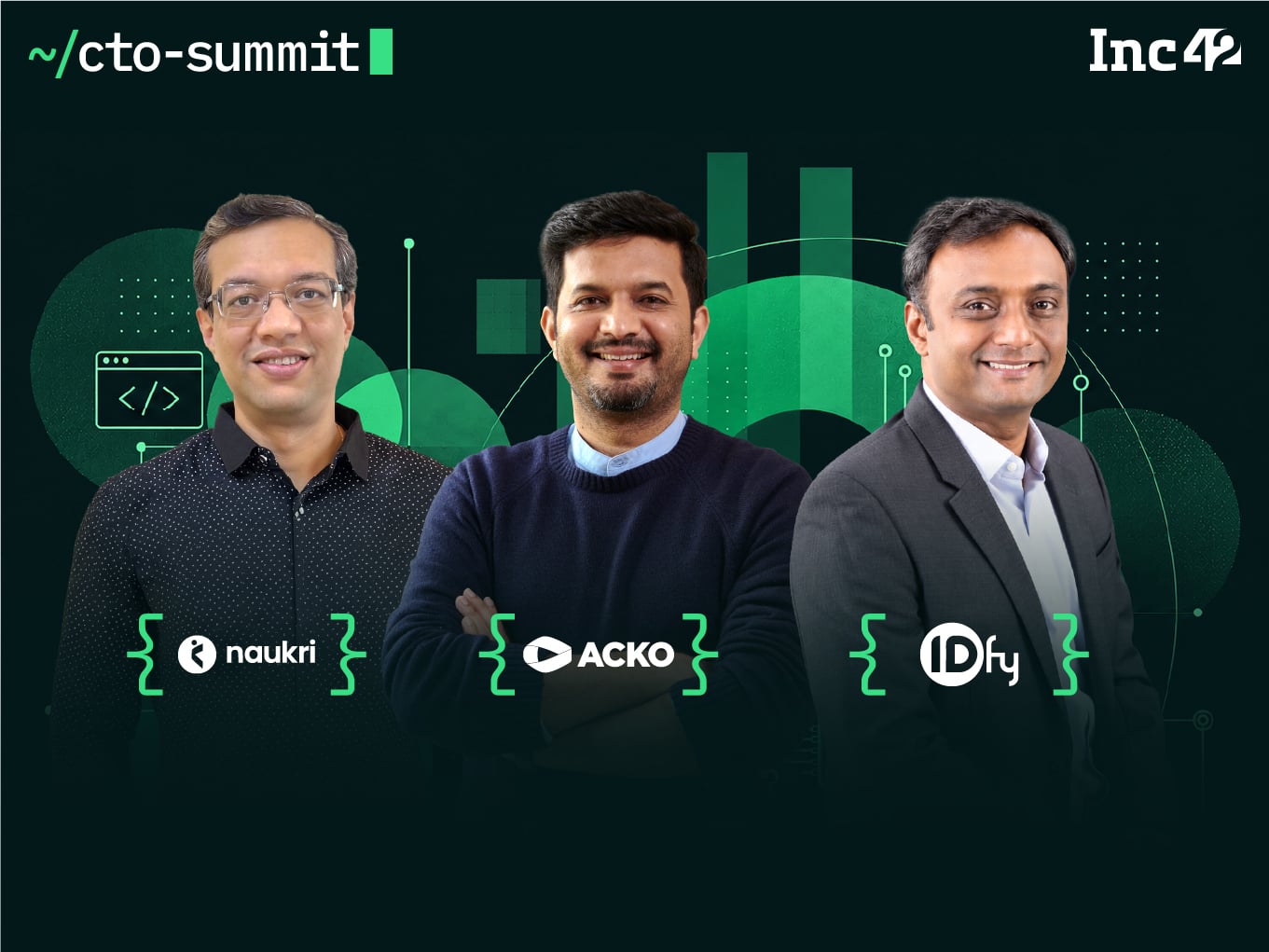
Engineering education must shift its focus away from merely code composition and instill in students the ability to grasp the intricacies of entire software systems, according to speakers at Inc42's inaugural 'The CTO Summit 2026'. Speaking during the panel 'The Great Engineering Reset: Teams, Talent & Leadership After AI', the panelists urged a greater emphasis on logical reasoning, philosophical concepts, and systems design to prepare engineers for a work landscape increasingly influenced by AI.
The discussion, moderated by Accel VP Anagh Prasad, featured Naukri.com CTO Arvind Heda, Acko cofounder and CPTO Vishwanath Ramarao, and IDfy CEO Ashok Hariharan.
The conversation revolved around how AI is reshaping engineering roles and team structures, with automation taking a larger share of repetitive coding and quality assurance tasks. Hariharan, drawing on his "old-school engineering background", highlighted how earlier generations of engineers had to contend with issues like memory management.
Over time, tools and software layers obscured those foundational processes from developers. He cautioned that AI-assisted development could exacerbate quality issues if engineers over-rely on tools to handle everything.
Hariharan's concern extends to the capabilities engineers will acquire in the years ahead. He noted that engineers may ascend into leadership positions before fully comprehending the responsibilities of a lead or manager, potentially becoming VPs. He expressed worry that this could lead to a similar issue where engineers are promoted without thoroughly understanding their new roles.
He pointed out that engineering teams now have fewer mid-level engineers, creating a skills gap between senior architects and junior developers. This raises a question about how junior engineers can acquire the skills to design systems when they may not be coding daily. "How do you teach systems design when they don't necessarily code on a daily basis?" he questioned.
The growing testing responsibilities also came up during the CTO Summit. Cashfree Payments CTO Ramkumar Venkatesan revealed that the company now allocates more resources to virtual environments for testing than to AI tools. For Hariharan, the shift towards AI-generated code intensifies the need for architects who possess expertise in deployment, security, and scaling.
He emphasized that automating routine implementation work does not diminish the responsibility to ensure the resulting systems are reliable and secure. "I think there's a huge number of security flaws that are going to be exposed. I am pretty sure that's a fear every CTO has," he stated.
Written by urgent.news from Inc42's reporting — not their text. Machine-written — may contain errors; check the original before relying on it.