Beschlüsse der Bundesländer: Innenminister beschließen nicht mehr zwingend einstimmig
Die Innenministerkonferenz verabschiedet sich vom Einstimmigkeitsprinzip. Künftig reichen 13 Stimmen für Beschlüsse – was steckt hinter der Änderung, und was hat das mit der AfD zu tun?
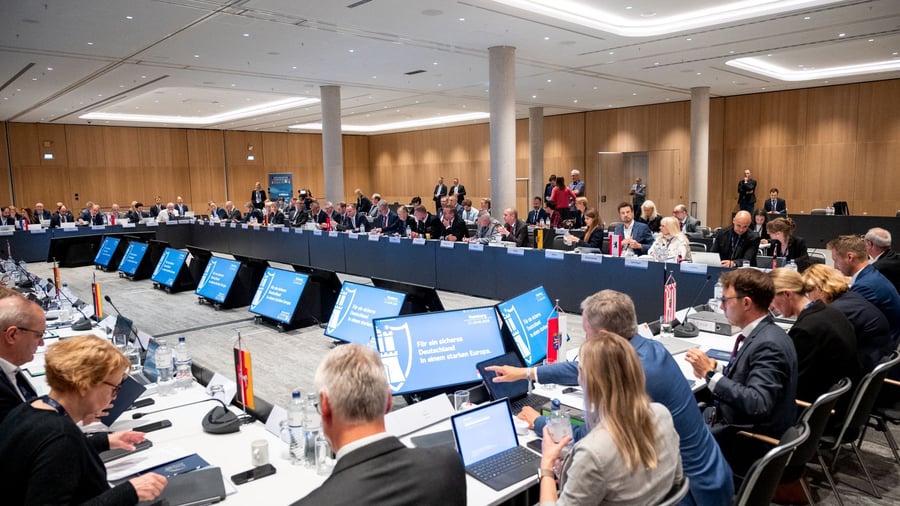
The Innenministerkonferenz (IMK), the conference of German state Interior Ministers, has abandoned its principle of unanimous decisions. According to the Deutsche Presse-Agentur, this decision was made through a roll-call vote a few days ago. From now on, any decision requiring a majority of at least 13 out of 16 votes will be considered concluded.
The Federal Government is only present as a guest at this conference. The question of whether this principle should be maintained in the event of an AfD Interior Minister has been under discussion within the IMK for some time. The IMK has no rules of procedure. The principle of unanimity, which allows for decisions even with abstentions, stems from longstanding practice.
The IMK is the permanent conference where state Interior Ministers and senators coordinate their policies and make joint decisions. While the Federal Interior Minister attends these meetings as a permanent guest with the right to speak and move motions, they do not have voting rights and bring the interests of the Federal Government into the deliberations.
The top security personnel of the Federal authorities attend the regular sessions, held twice a year, to provide an update on the current situation. Daniela Behrens, the Interior Minister of Lower Saxony (SPD), had said at the autumn conference in 2025 that in the case of AfD participation in government in a state, she assumed that the IMK would ensure "that we remain able to make decisions, so that the AfD cannot block important decisions".
Hesse's Interior Minister Roman Poseck (CDU) had said at the same conference that "an AfD representative in a place as important as security would be fatal". The IMK would do everything to remain capable of action in such a case. At the state election in Saxony-Anhalt on September 6th, the AfD became the strongest force with 43.8 percent, ahead of the CDU with 17.2 percent.
The AfD still missed three votes for an absolute majority. Siegmund himself had ruled out becoming the first AfD Interior Minister-President in December, as he had previously excluded governing without his own majority.
Written by urgent.news from Handelsblatt's reporting — not their text. Machine-written — may contain errors; check the original before relying on it.
This story
This is one outlet's version. Read the fullest account.