Asia Techonomics: Dieser Trend bereitet Chinas Staatsführung große Sorgen
Millionen Chinesen verreisen in der anstehenden „Goldenen Woche“. Die Staatsmedien bejubeln Reiserekorde. Doch in einer Touristenhochburg zeigt sich: Das ist nur die halbe Wahrheit.
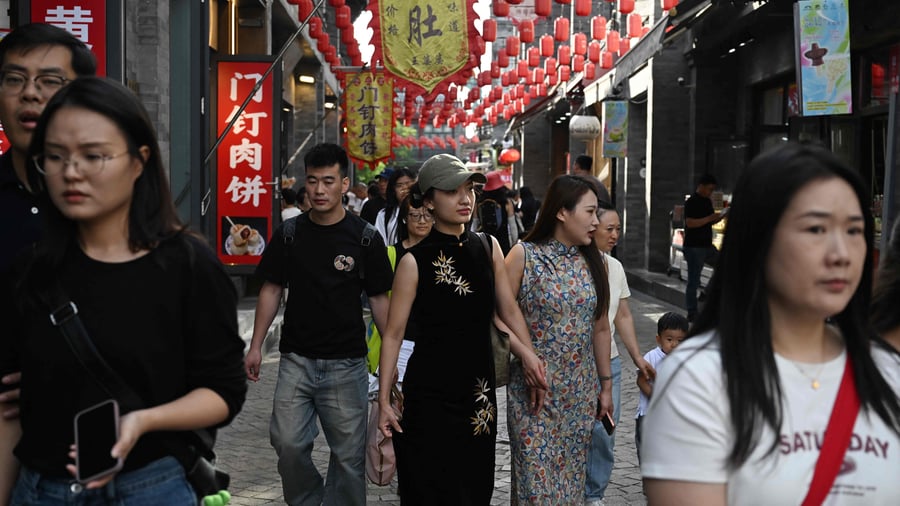
China's state-run Xinhua news agency has labeled the "Golden Week" around the country's National Day on October 1st as one of the "most important consumption windows of the year." This annual holiday, which stretches for 13 days with only three bridge days added for the upcoming Mid-Autumn Festival, has been dubbed the "longest vacation of the year."
Introduced in 1999 to boost domestic tourism and spending, the Golden Week sees a shift in Chinese travel habits compared to the spring Lunar New Year, when many Chinese citizens traditionally visit their families.
In contrast, during the October vacation period, tourism and consumption are the primary focus. Social media is flooded with images of crowds on the Great Wall, panda sightings in Chengdu, and crowds at Shanghai's harbor promenade. The spending during this week serves as a real-time gauge of consumer sentiment. However, there is a significant concern: Chinese consumers are saving more.
The economic situation is reportedly poor, as revealed by recent research conducted in Dali, a popular tourist destination in southwestern China's Sichuan province. The high-altitude town, known for its spring and autumn beauty, attracts millions of Chinese visitors each year. Yet, there are fewer tourists than in previous years, and those who do come are spending less money.
This sentiment echoes across conversations with hoteliers, tour guides, and taxi drivers, who all lament the economic decline.
Written by urgent.news from Handelsblatt's reporting — not their text. Machine-written — may contain errors; check the original before relying on it.
This story
This is one outlet's version. Read the fullest account.